

The Andes del Norte Corridor is Home to the Andean Tapir
08/29/2025
At more than 11,500 feet above sea level, a silent solitary species roams the highlands. The mountain tapir (Tapirus pinchaque), known locally as “ante”, a name rooted in the ancestral languages of the Andes. In northern Peru, this elusive species is more than just a part of the landscape; it helps shape it, dispersing seeds and supporting forest regeneration with every step.
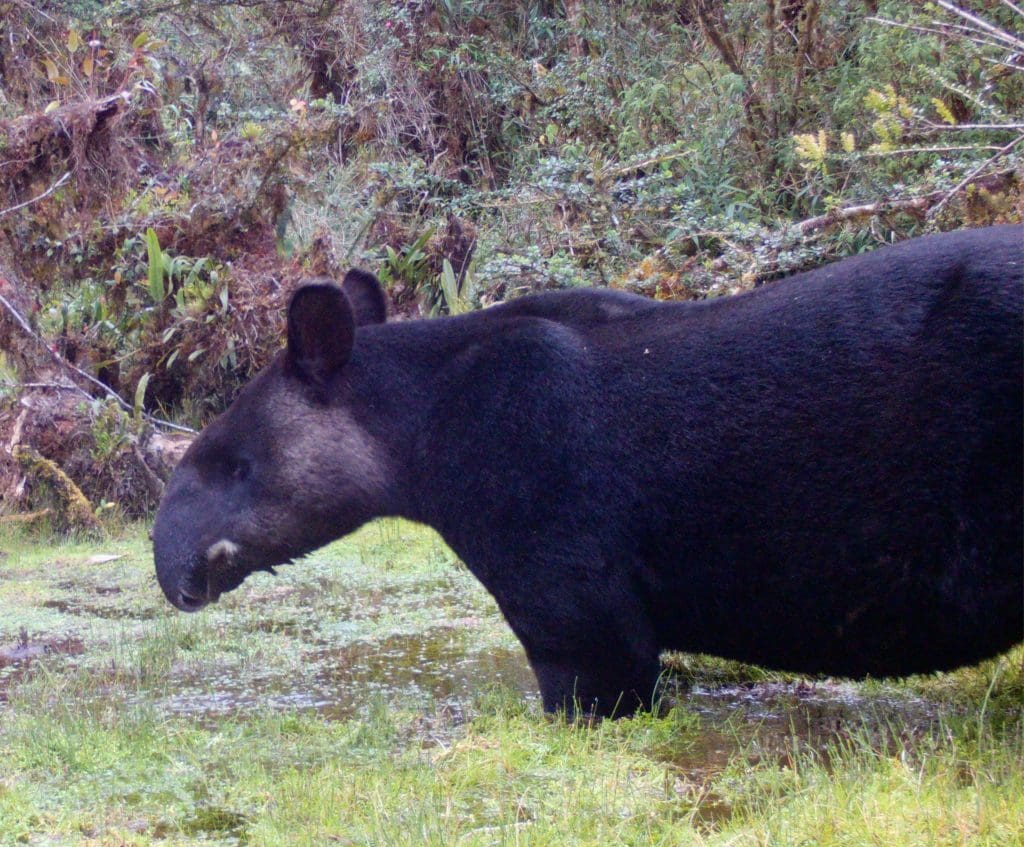
Credit: Nodo Conservation
Life Springs Forth Where the Tapir Walks,
Katty Carrillo, Biologist and Nature and Culture Project Manager, explains that there are only five species of tapir in the world, two of which are found in Peru. One is the Andean tapir (Tapirus pinchaque), and the other is the Amazonian tapir (Tapirus terrestris), known in the rainforest as the sachavaca.

The Andean tapir is the only tapir species adapted to life at high altitudes. In Peru, it is found in Ayabaca and Huancabamba in the Piura region; San Ignacio and Jaén in Cajamarca; and there is an isolated population in Lambayeque. The Andean tapir is critically endangered due to the expansion of human activity.
“Its role is so vital that its presence is considered an indicator of a healthy ecosystem. It needs well-preserved forests, clean water, and large natural areas,” explained Katty. “Protecting the tapir means protecting the water consumed by hundreds of families and the soil that supports crops and livestock.” She added, “Through its herbivorous diet and movement, the tapir transports seeds that help regenerate vegetation, ensuring the survival of native species and maintaining biodiversity.”

The Northern Andes Conservation Corridor: Home of the Andean Tapir
Since 2018 Nature and Culture, in partnership with local communities and regional authorities has brought the Andes del Norte Corridor to life. This network includes seven private conservation areas, two environmental conservation areas, two regional conservation areas in Cajamarca, and the Tabaconas Namballe National Sanctuary—together protecting around 150,000 hectares that make up the Northern Andes Conservation Corridor.
This corridor is more than a geographical area—it’s a living bridge. Its purpose is to link ecosystems, enabling tapirs and other species to move freely and ensuring their survival. This connectivity also benefits local communities by providing fundamental ecosystem services, such as water regulation and soil conservation.
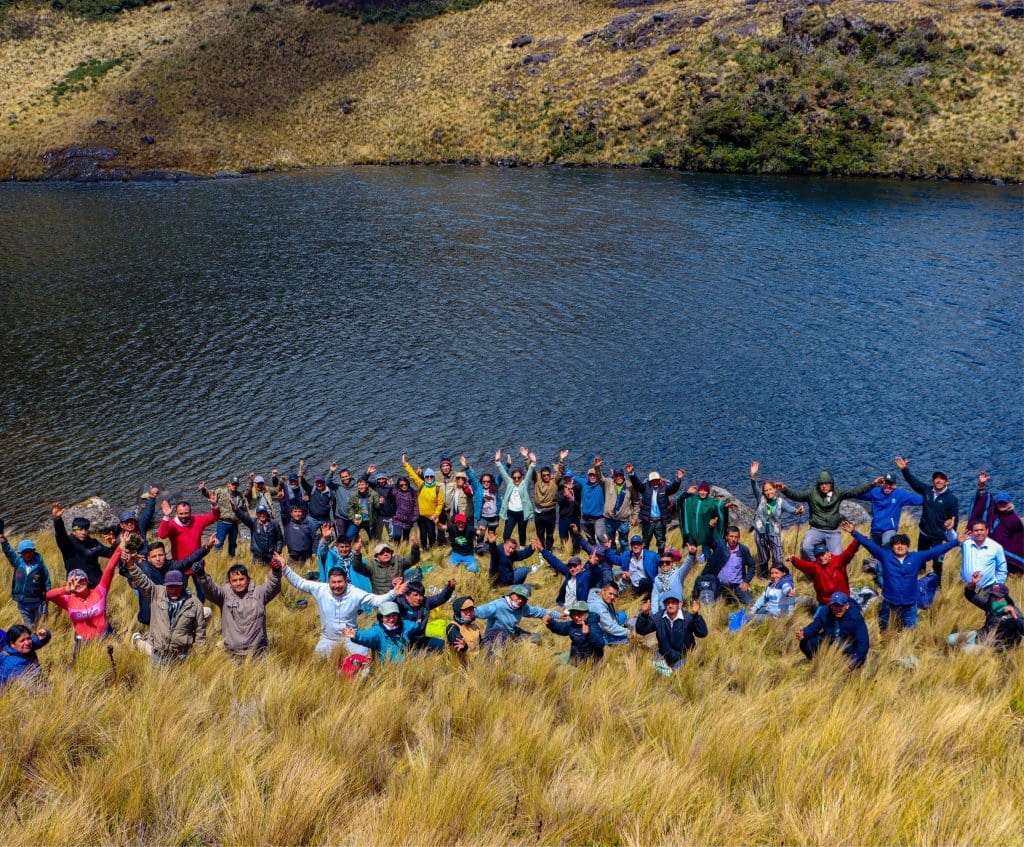
BiodiBiodiversity extends beyond international borders
According to Katty Carrillo, tapir conservation is boundless. For this reason, she highlights that Nature and Culture International are joining the Ministries of the Environment of Peru and Ecuador, SERNANP, the Binational Plan, and local and regional governments. With the support of the BLF Andean-Amazonian Project and other organizations, they are promoting the recognition of the Andean Bi-National Corridor (CCTAA), which integrates the Andes del Norte Corridor.
“This binational initiative seeks to protect 5 million acres, from Sangay National Park in Ecuador to the Tabaconas Namballe Sanctuary in Peru,” she said.
Currently in the process of official recognition, the CCTAA is shaping up to be a key tool for regional cooperation. By promoting ecosystem connectivity and the collaborative management of natural resources, it has become a living expression of the commitment signed between Ecuador and Peru in the Tumbes Presidential Declaration.
A vision for the future
The tapir’s footprint is also being felt in planning offices. In Peru, the National Andean Tapir Conservation Plan (2018-2028, SERFOR) articulates scientific, community, and governmental efforts to protect this endangered species.
Building on this, and as part of the implementation and in collaboration with national technical specialists on the species, we have formed the Northern Andes Mountain Tapir and Spectacled Bear Technical Group, together with organizations like Nodo Conservation, SBC, WWF, and BIOS. This demonstrates that conservation is a joint, inter-institutional, and long-term commitment. The group’s objective is to establish a solid scientific foundation that allows it to coordinate with the IUCN Specialist Group, through the Ministry of the Environment (MINAM).
In this context, local authorities are joining this coordinated effort, promoting collaboration with civil society to strengthen informed decision-making in the region. This includes efforts by regional governments, who are working on an ordinance to declare the protection of the mountain tapir a matter of public interest. “By taking an integrated approach, we can move toward the effective conservation of these emblematic species of the Andes and their ecosystems,” says Katty.
