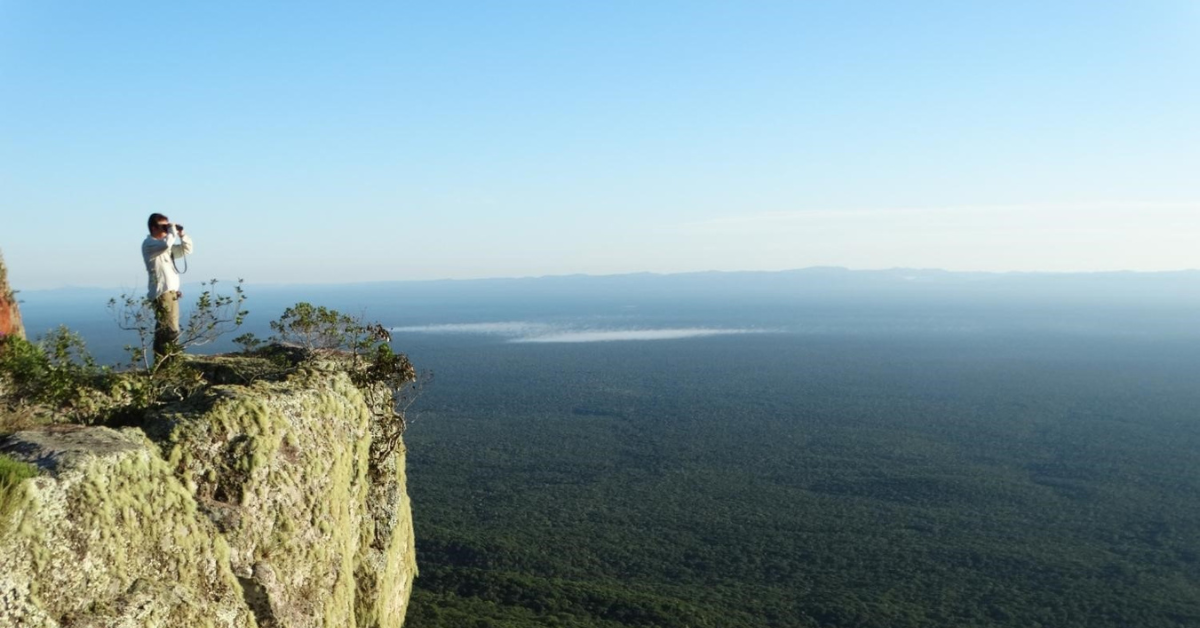

The Evolution of a Conservation Strategy: Connecting Landscapes over 30 Years
04/07/2026
A conversation with Renzo Paladines, Co-founder and Chief Conservation Officer, Nature and Culture
Some of the most important ideas don’t arrive fully formed. They take shape through experience, through small moments that turn out to matter more than anyone expected.
“It felt almost magical,” Renzo Paladines recalls, thinking back to the earliest days of Nature and Culture. “We were walking through a small forest with some donors. There were butterflies. The light was something else. And someone asked, ‘What can we do to protect this?'”
A simple question. But it changed everything.
Small Forests, Big Lessons: How Water Protection Shaped Our Strategy
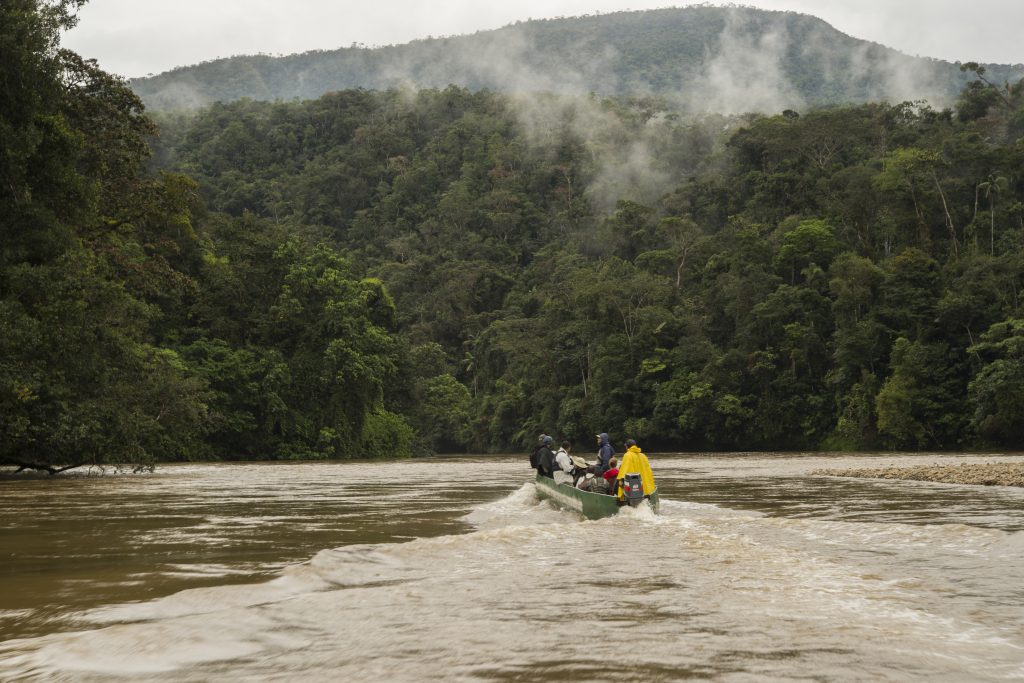
That walk didn’t just spark an idea; it revealed something fundamental. Small forest fragments, even ones easy to overlook, carry outsized importance. Not just for the wildlife within them, but for the people living alongside them. These patches of forest are where water comes from. They are, in a very practical sense, what keeps communities alive.
“We understood that these small areas were a priority for local communities. They’re the ones that produce water. They sustain life.”
From that understanding came a new direction. Nature and Culture began partnering with local governments to protect these areas, in some cases, before the laws to do so even existed. The organization’s first municipal protected areas took shape in Loja, Ecuador, pioneering a model of community-anchored conservation that eventually helped lay the groundwork for what Ecuador now formally recognizes as Areas of Conservation and Sustainable Use (ACUS).
There was no master plan. The work in Loja wasn’t a strategy designed in advance; it was a direct response to a real need, in a real place, with real communities.
Why Community-Led Conservation Outperforms Top-Down Models
If there’s one conviction that has defined Nature and Culture across three decades, it’s that conservation is local work. It can’t be done from a desk. It’s done by the people who live on the land.
For Nature and Culture, that has never been a philosophy statement — it’s been a practical commitment that shapes every partnership we build. Rather than treating protected areas as something imposed from the outside, our model has always been to protect alongside communities, not instead of them.
Local governments, Indigenous communities, and private landowners share something fundamental, Renzo explains. They live in these territories, they manage them, and they depend on them directly.
“If communities aren’t involved, you can’t do conservation.”

From Protected Areas to Connected Landscapes Across the Andes and Amazon
For years, the work focused on creating individual protected areas. But over time, the challenge evolved.
Managing dozens of scattered areas became complex. And science was making it clear that isolated patches aren’t enough — species need connectivity to survive and adapt.
“We realized that creating areas wasn’t sufficient. We had to connect them.”
That’s how the mosaic approach was born — landscapes where national protected areas, subnational zones, private reserves, and Indigenous territories work together as a unified system. Conservation at the scale that nature actually needs.
The Amazonian Platform and Andes Amazon Conservation Corridor: Scaling Forest Protection Across Borders
Mosaics solved the management problem. But connectivity at true Andes-Amazon scale required something larger. Nature and Culture’s two most ambitious programs grew from that recognition. The Amazonian Platform and the Andes Amazon Conservation Corridor bring together local governments, Indigenous organizations, and civil society across national borders, spanning ecosystems from the high Andes down through the Amazon basin, in pursuit of a shared goal.
“It was an evolution. Mosaics help with management. But when you’re talking about true connectivity and scale, you need a program vision.”

30 Years of Adaptive Conservation Strategy: What Worked, What Didn’t, and Why It Matters
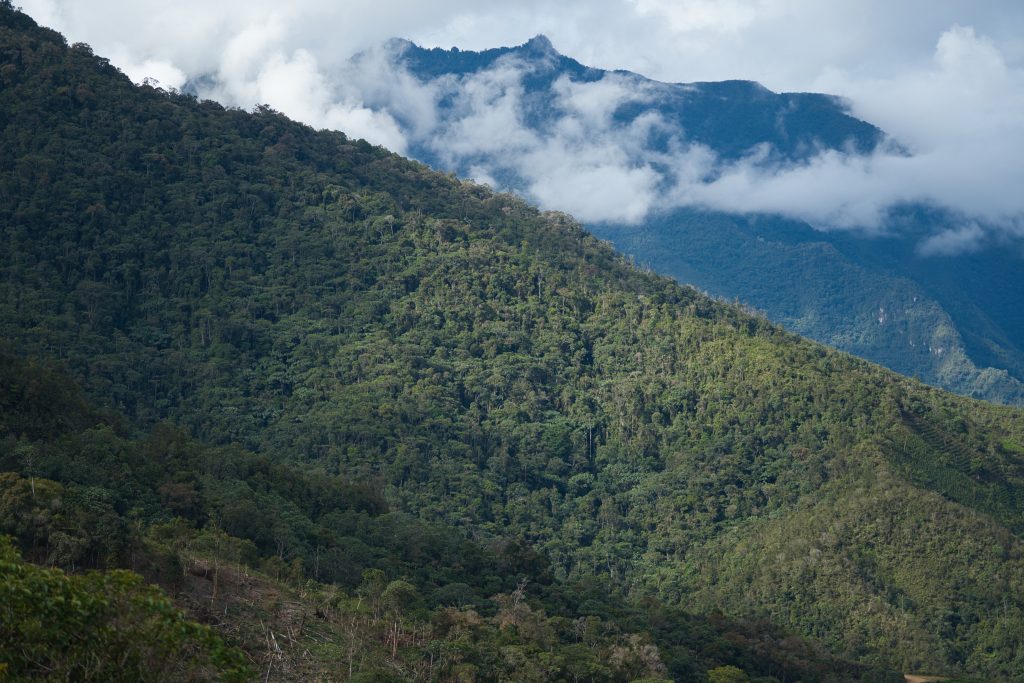
Nature and Culture’s story isn’t a straight line. Renzo describes it as a process of constant evolution. “We started by creating areas. Then we understood we needed sustainable financing, so water funds emerged. Then we realized governance was the key piece. All of it has been a learning process.”
Not every approach worked. Productive development projects proved harder than expected, not at the production level, but at market access. “The problem isn’t producing. It’s getting products to market. That’s where almost every project falls apart.”
Rather than persist with what wasn’t working, Nature and Culture sharpened its focus on where it could generate the greatest impact — creating and managing protected areas, strengthening governance, and building sustainable financing mechanisms. Those three pillars define the strategy today.
One of the clearest expressions of that financing work is the Amazon Future Fund. Built on the foundation of the Amazonian Platform, the fund places decision-making power equally in the hands of Indigenous nationalities and provincial governments, channeling resources directly to the people protecting the forest rather than filtering them through distant institutions. It is an early but significant step toward durable, locally owned conservation financing at Amazon scale.
Scaling Community-Based Conservation From Ecuador Across Latin America
“I never thought we’d be able to grow into other countries,” Renzo admits.
What began in Ecuador’s forests found resonance in Peru, Colombia, Mexico, and beyond — not because the model was imposed, but because the conversations with local leaders in each new country turned out to be, at their core, the same conversation about forests, water, and the communities that depend on both.
“It always comes back to our dependence on ecosystems.”
And the same three pillars that shaped the strategy in Ecuador — creating protected areas, strengthening local governance, and building sustainable financing — proved just as relevant everywhere else. Thirty years of applying that approach across Latin America has added up to 26.8 million acres protected and 3.9 billion tons of CO₂ equivalent stored — a contribution to climate stability that could only have been built from the ground up.
Forest Conservation in the Next 30 Years: Why the Stakes Have Never Been Higher
The future, without a doubt, won’t be simple.
Renzo names three pressing concerns going forward: growing pressure on natural resources, the weakening of international cooperation, and the accelerating impact of climate change, even in forests that appear intact and well-managed. “You can have a healthy forest, with rangers, with funding, and still lose species to climate change.”
That honesty is part of what thirty years of conservation work produces. Not cynicism, but clarity about what’s actually at stake — and what it takes to meet the moment. The threats are real. So is the foundation that’s been built to face them: millions of acres under protection, Indigenous and local governments with real governance power, and financing models designed to outlast any single donor cycle.
The question now isn’t whether this work matters. It’s whether it can grow fast enough.

A Collective Conservation Model, Built to Last
What comes through most clearly in this conversation is that Nature and Culture has never operated from the top-down. Every protected area, every governance structure, every financing mechanism has been built collectively — through relationships, through failures, through the hard-won trust of communities who had every reason to be skeptical of outside organizations.
“It’s been a collective effort. Experiences, learning, failures, and successes — all of it has shaped a different way of doing conservation. From the local level, with many partners, and with a long view.”
Thirty years later, that core is still intact.
And maybe it all started with a simple question, asked by someone standing in a small forest, watching the light come through the trees:
What can we do to protect this?
The answer, it turns out, takes thirty years to build. And it’s not finished yet.
