
Three New Frog Species Discovered in the Andes–Amazon Corridor
02/05/2026
Scientists find evidence of parallel evolution among three bamboo frogs in the rugged slopes of the Andes.
A recent scientific study describing three new frog species of the genus Pristimantis offers a powerful example of how collaboration between conservation organizations and research institutions supports both biodiversity protection and scientific discovery in regions vital to the planet’s health.

Partners Behind the Discovery
Collaboration is key to biodiversity protection, and conservation organizations like ours support scientific research not only to protect ecosystems today, but to better understand the region’s long-term health and future conservation needs. This discovery was made possible by decades of long-term conservation, the maintenance of connected protected areas, and a robust partnership between international research institutions.
The description of these new Andean bamboo frogs was published in the Zoological Journal of the Linnean Society (Oxford University Press). The article, titled “Three new bamboo-specialist frogs of the genus Pristimantis (Amphibia: Anura: Strabomantidae) from southern Ecuador reveal patterns of parallel evolution,” presents research carried out by scientists from the Universidad Técnica Particular de Loja, in collaboration with the National Institute of Biodiversity and Ovidius University of Constanța.
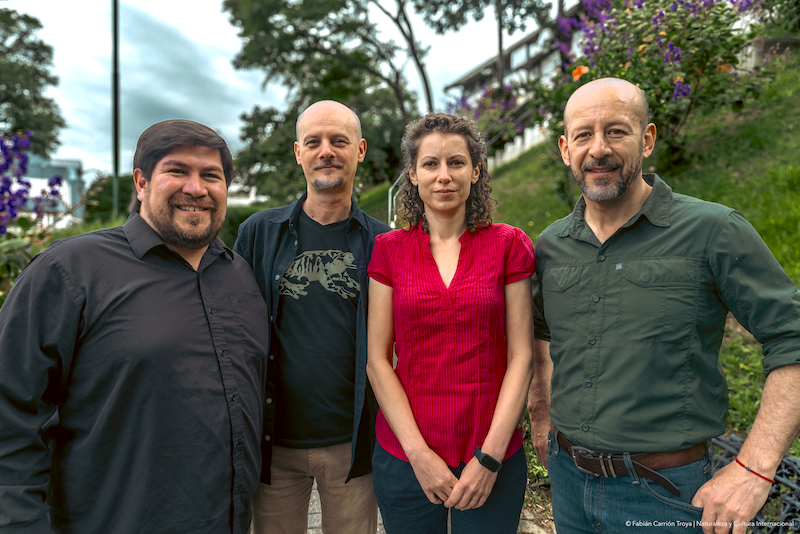
The study was led by Paul Székely, together with researchers Diego Armijos-Ojeda, Leonardo Ordóñez-Delgado, and Diana Székely. The research was made possible thanks to financial support from Rainforest Trust and Nature and Culture International, as well as the support of Fundación Jocotoco, which facilitated fieldwork at the Tapichalaca Reserve.
Decoding the DNA
The team used an integrative taxonomic approach that combined DNA sequencing, detailed physical measurements (morphology), and bioacoustic analysis of male frog calls. This allows scientists to distinguish between species that may appear very similar at first glance, but in reality, represent distinct and unique evolutionary lineages.
Where These Frogs Call Home
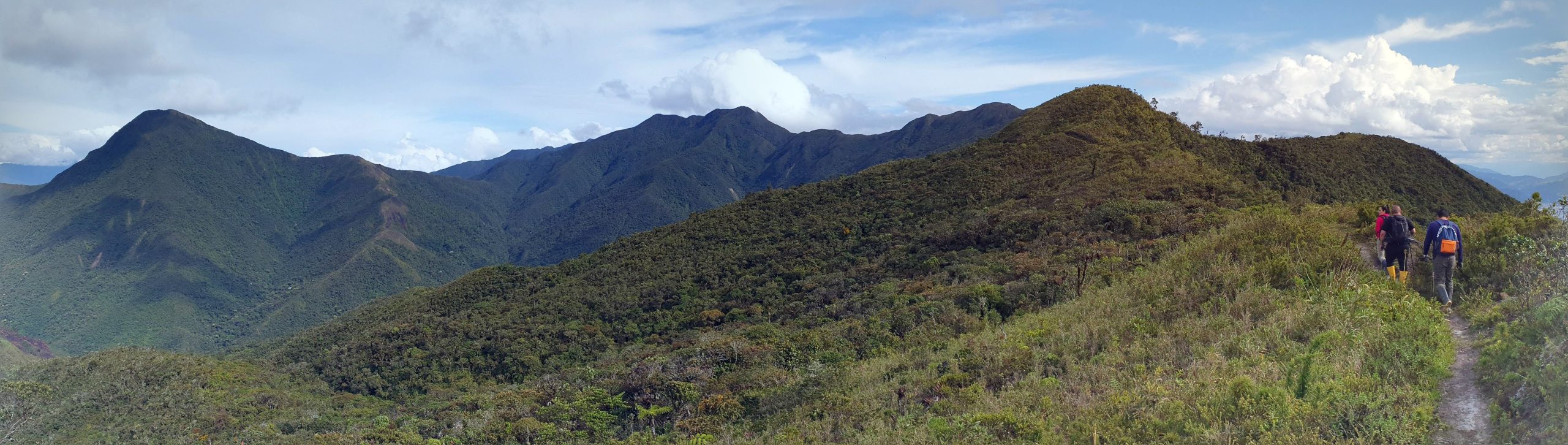
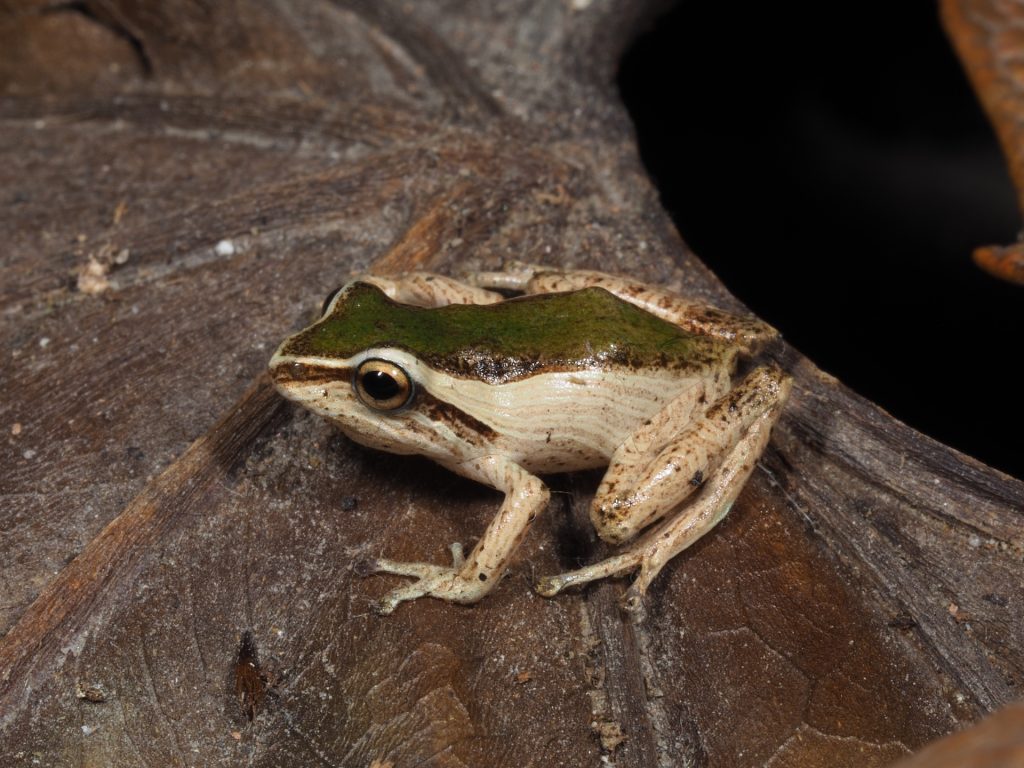
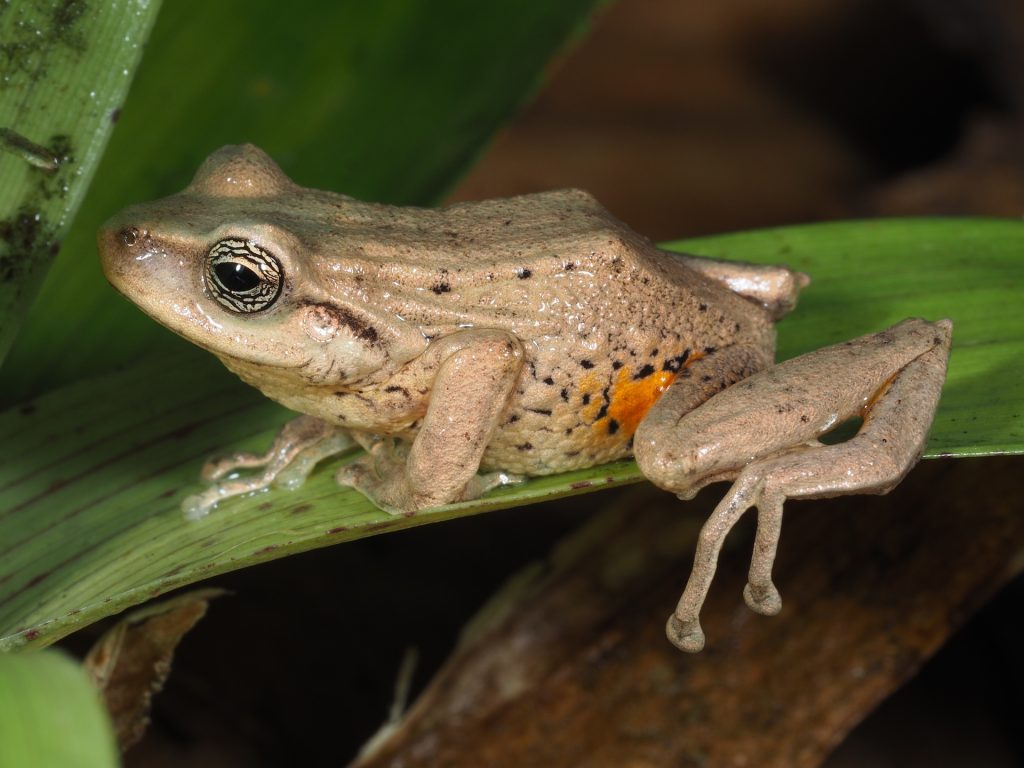
Records of these species span several protected areas in southern Ecuador, all of which are part of the Andes–Amazon Conservation Corridor, a binational initiative between Ecuador and Peru that connects more than 50 conservation areas and reserves, connecting headwater ecosystems in the Andes with the Amazon lowlands. Pristimantis chusquea was recorded in Abra de Zamora and Cerro Toledo; Pristimantis oculolineatus was found in Cajanuma, the Numbala Reserve, and Yacuri National Park, and Pristimantis translucidus in the Tapichalaca Reserve.

The Breakthrough: Parallel Evolution in Action
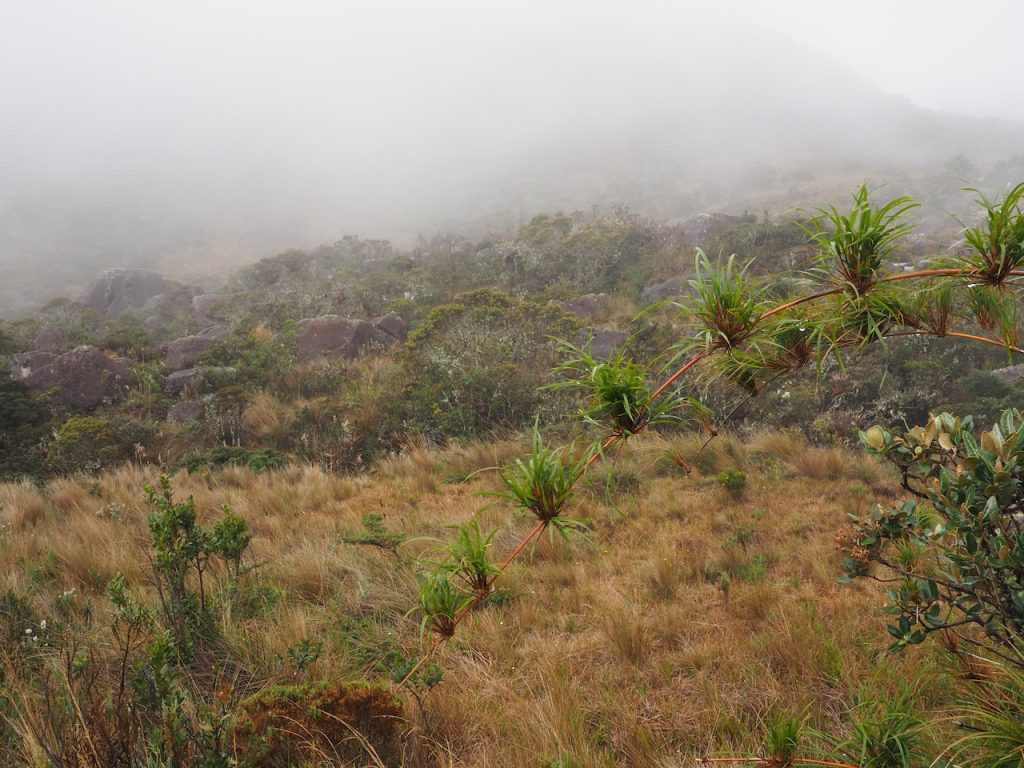
In the steep, vertical landscapes of the Andes, where landslides and rugged terrain create a mosaic of isolated habitats, bamboo establishes easily, creating conditions that favor ecological specialization. One of the most striking findings of this study is the evidence of parallel evolution. In different pockets of the Andes, bamboo-dwelling frogs evolved independently, yet arrived at nearly identical physical solutions to survive the same environmental pressures.
The fact that these frogs share similar physical traits—even though they evolved in different locations on both sides of the Andes—shows how species can independently develop similar adaptations when they face the same environmental challenges.
As researcher Diego Armijos-Ojeda explains, the study documents a total of five frog species that live exclusively on Andean bamboo leaves:
“In different parts of the mountain range, these species faced similar environmental conditions and independently developed very similar adaptations. They evolved bodies, colors, and shapes that allow them to camouflage among bamboo leaves and protect themselves from predators, as if each had solved the same evolutionary problem on its own.”
Why These Frogs Matter to Us
These frogs are considered habitat specialists. They live almost exclusively in Andean bamboo forests and are acutely adapted to this environment. Their colors and body shapes allow them to camouflage among bamboo leaves, to avoid predators, and move through vertical and dynamic environments.
The description of these three new frog species has important implications for conservation. These frogs could help function as umbrella species, since protecting them would also help conserve other organisms and the habitats they depend on. In other words, protecting these frogs also helps safeguard Andean bamboo–dominated ecosystems, which play a critical role in regulating and supplying water across the region.
According to researcher Diana Székely, scientific discovery is closely tied to conservation outcomes:
“Science has intrinsic value, similar to art: it allows us to better understand the natural world. But it also has practical implications. In the skin of some frog species, for example, there are compounds with potential relevance for public health. When we lose a species, we not only lose an organism, but also all the functions and benefits it could provide. Each species plays a role, and as a society we must invest in conservation and move toward development that does not go against nature, but is built alongside it, protecting the ecosystems that provide us with water, air, and well-being.“

This discovery is a reminder that conservation works best when it is connected, collaborative, and forward-looking. By protecting headwater landscapes and strengthening partnerships today, conservation efforts are not only safeguarding known biodiversity but also creating the conditions for discoveries that have yet to be made.
