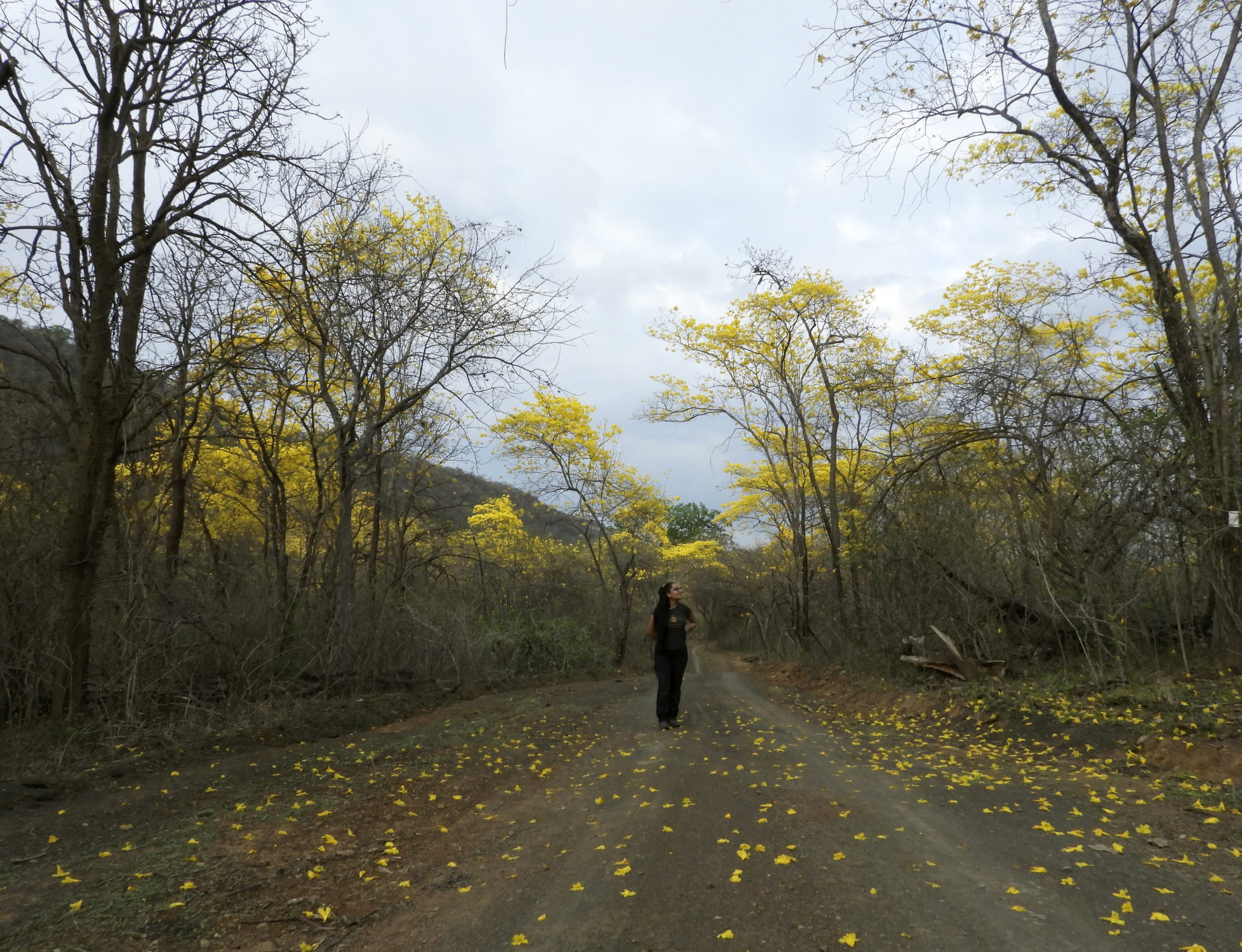

Witnessing A Fragile Forest in Full Bloom: the Guayacan Trees of Ecuador’s Dry Forest
01/28/2026
Nature and Culture Latin America Communications Specialist Aida Maldonado travels to southern Ecuador to witness the once-a-year guayacan bloom in the country’s fragile dry forest.
This is the second time I have witnessed the blooming of the guayacan trees in the province of Loja, in southern Ecuador, and without a doubt, every time reaffirms the magic of this place. However, on this occasion, what surprised me most was the realization that this natural phenomenon—one that occurs only once a year—is not only enjoyed by those of us who visit, but also by the many species that inhabit and depend on this ecosystem.
More Than a Spectacle: Why the Bloom Matters for the Dry Forest
The American crocodile (Crocodylus acutus), birds that fill the forest with song, squirrels, howler monkeys, pumas, and many other species are an essential part of this natural wonder. The blooming is not just a visual spectacle; it is a crucial moment for the life of the dry forest. It provides shelter, food, and favorable conditions for the regeneration of an ecosystem that has learned to endure.

A Fragile Ecosystem Under Pressure
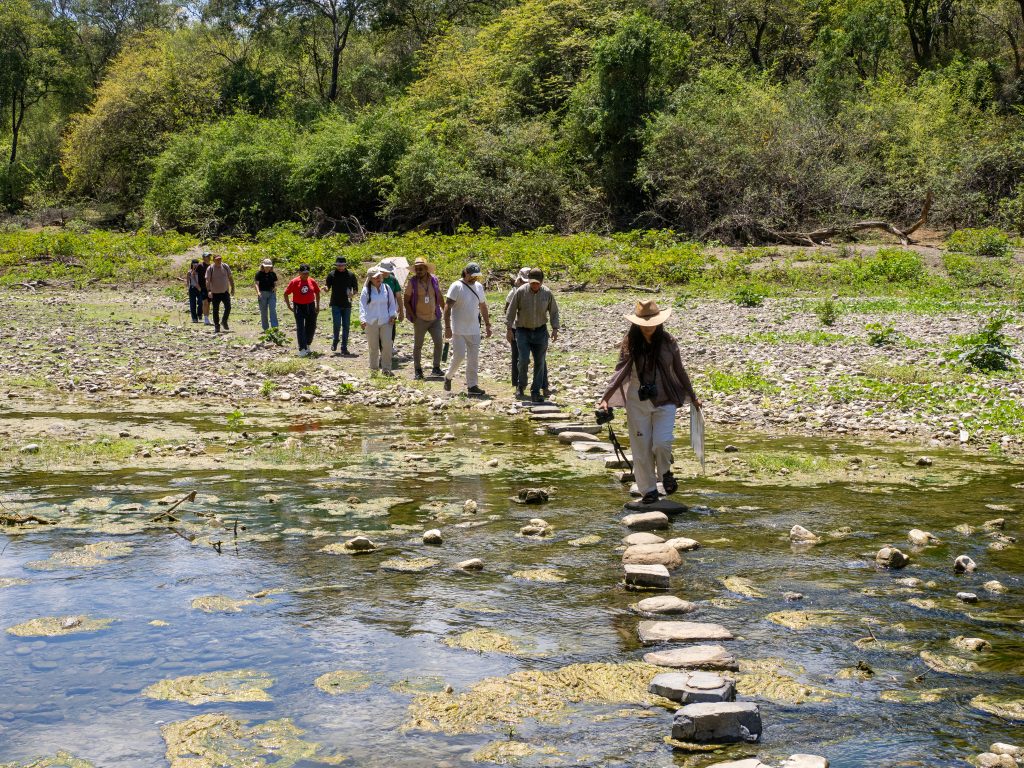
It was at this moment that I more clearly understood that the blooming of the guayacan trees occurs in one of the most fragile and top priority ecosystems in mainland Ecuador. As I walked through the area, I encountered other visitors who, like me, had questions about what was happening around us. We walked attentively, watching the landscape turn yellow as a gentle rain began to fall and wrapped us in the night, reminding us that this phenomenon depends on a seasonal balance and only occurs at the first rainfall of the year.
Each season, the increase in visitors to these areas—especially the Cazaderos Natural Reserve—brings greater pressure on the dry forest. For this reason, I chose to move through it slowly and quietly, trying to observe without disturbing and to listen without interrupting. Many of the impacts we cause are not always immediately visible, but they are permanent. If we are not aware of our impact, we may cause irreversible damage: leaving designated trails can destroy seedlings; excessive noise alters wildlife behavior; removing flowers, seeds, or branches disrupts essential natural processes; and even feeding wild animals affects their health and changes their habits.
When the Forest Turns Yellow
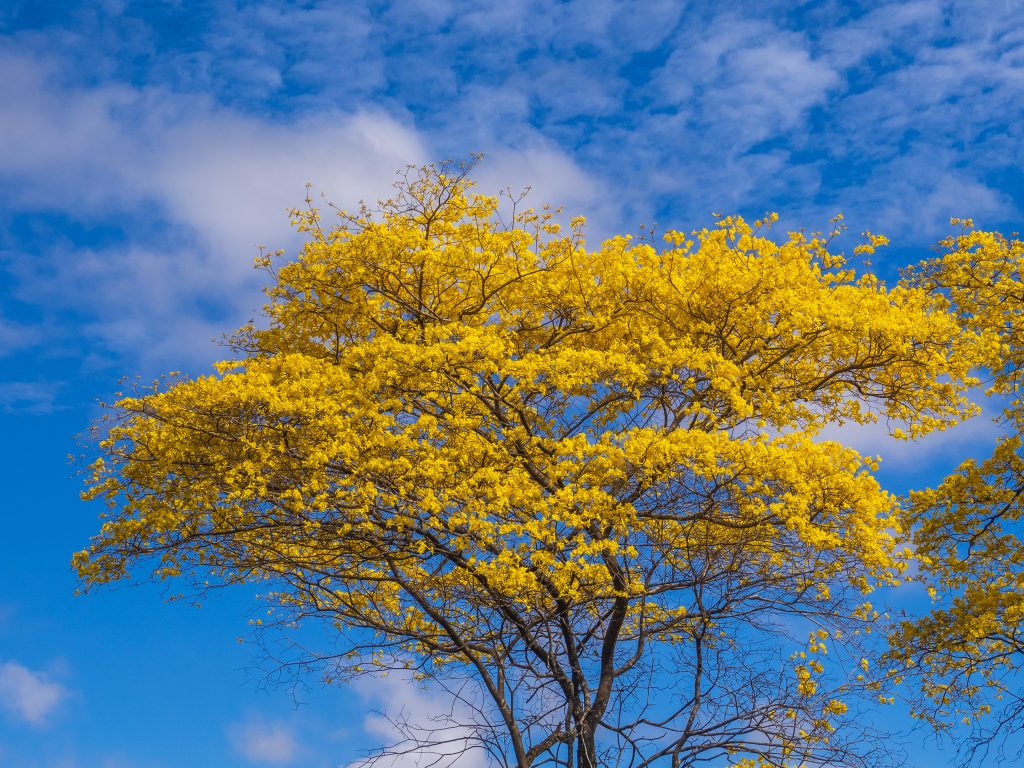
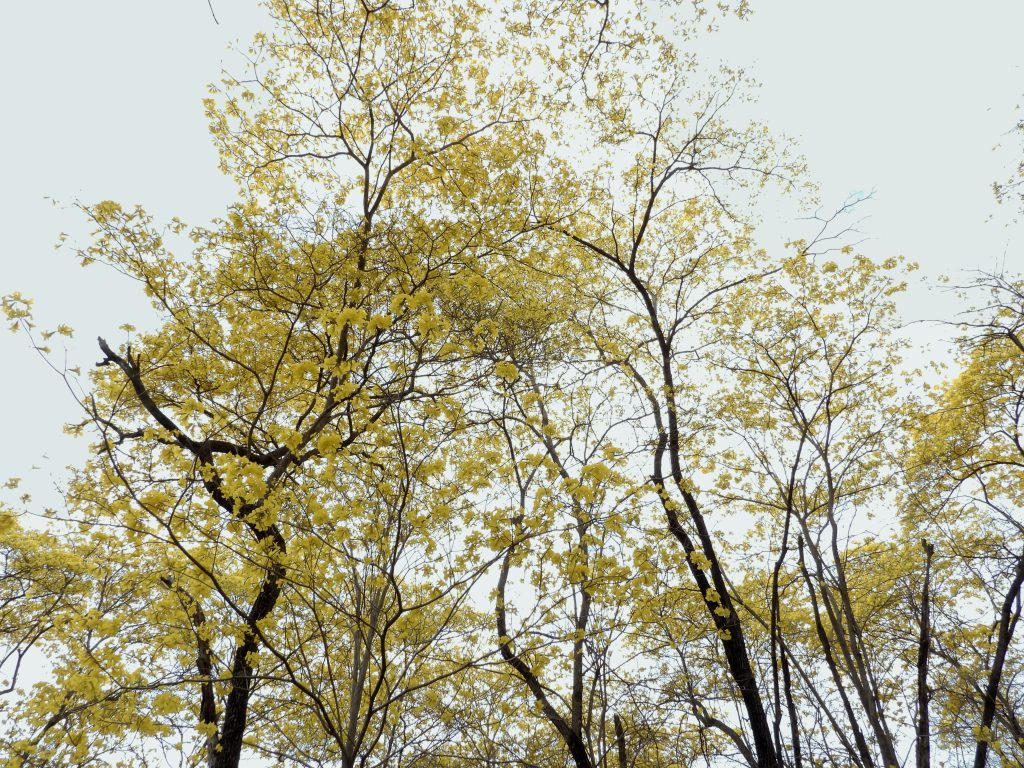
The blooming of the guayacan trees transports us into a yellow forest and, at times, it feels like being inside a Studio Ghibli film. It’s almost unreal. In that moment alone, as I contemplate the beauty of the guayacan’s yellow flowers, I’m reminded that we still can—and must—continue working to protect areas such as La Ceiba Protected Forest, the Cazaderos Natural Reserve, and the Los Guayacanes Municipal Ecological Area.
For those who have not yet experienced this extraordinary natural event, I invite you to explore it through a selection of photographs we took alongside Daniel Sanmartín, a passionate biologist who cares for and protects these areas. In these images, the guayacan bloom is proof of sustained efforts carried out by communities and institutions that care deeply for this treasure.


A Landscape of Global Importance
For all these reasons, UNESCO has recently reaffirmed this area—part of the Dry Forest Biosphere Reserve—as one of the planet’s unique sites, recognized for both its natural and cultural richness.
Witnessing this blooming is not only a privilege, but also an invitation to view the dry forest with love and respect, and to understand that we are temporary visitors in a territory that sustains far more life than we might imagine.
