

Protecting a Living Corridor Between the Andes Mountains and the Amazon Rainforest
The first ecological corridor connecting Ecuador and Peru—at the heart of Earth’s greatest biodiversity
The Andes-Amazon Conservation Corridor connects ecosystems across southern Ecuador and northern Peru, linking more than 50 conservation areas on both sides of the border. It creates a bridge between the upper Amazon and the high Andes, supporting the movement of species across an extraordinary range of altitudes and ecosystems.

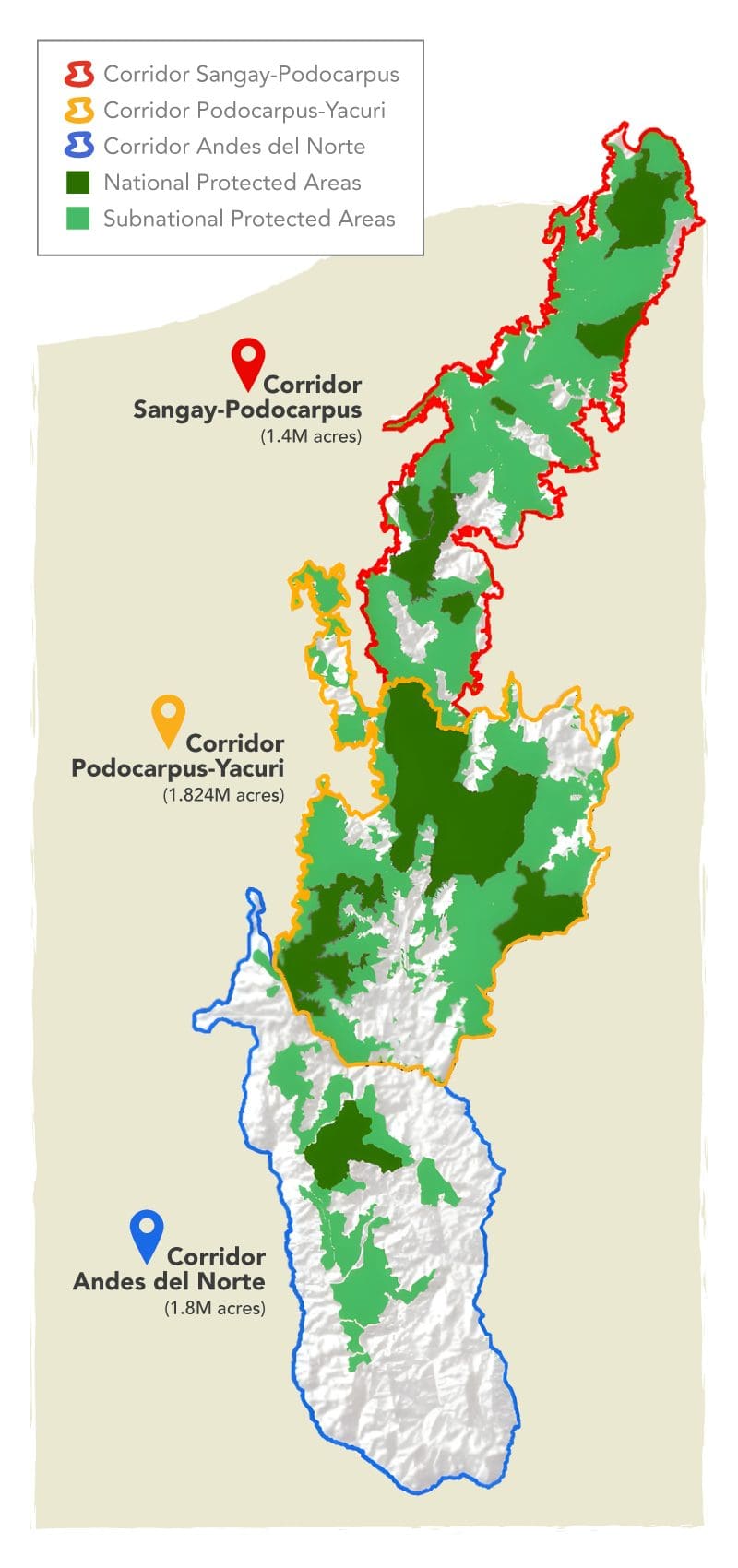

Acres protected
2,871,960 acres currently

21 Key
Biodiversity Areas
(3,941,854 acres)
(3,941,854 acres)

More than 53
protected areas

2 countries
3 National Corridors

Key Species
Jaguar (Panthera onca),
Spectacled bear (Tremarctos ornatus),
Andean condor (Vultur gryphus),
and the Andean tapir (Tapirus pinchaque).

Eco-regions
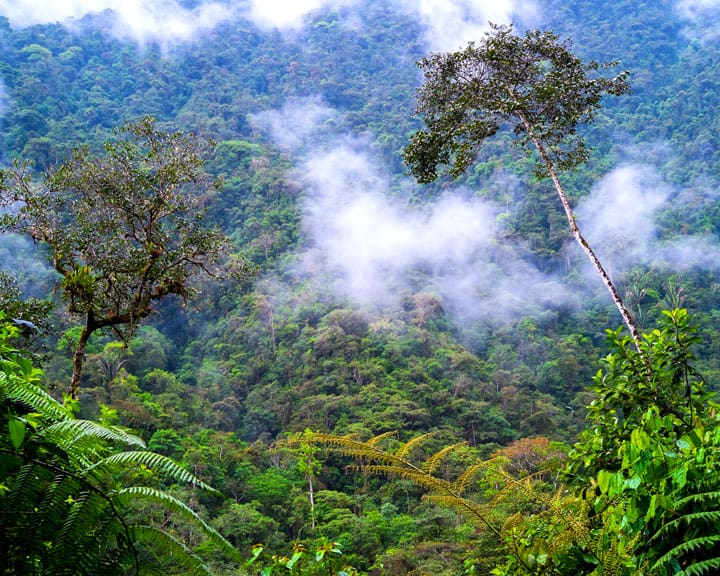
Cloud Forest, Amazon Rainforest, Páramo, Lakes and Wetlands.
A unique opportunity
Donate to Protect the Andes
The Andes-Amazon region is a global biodiversity hotspot. The Corridor ensures species can adapt to climate change, water sources remain secure for people, and forest continue storing carbon and regulating local climate.

An extraordinary collaboration
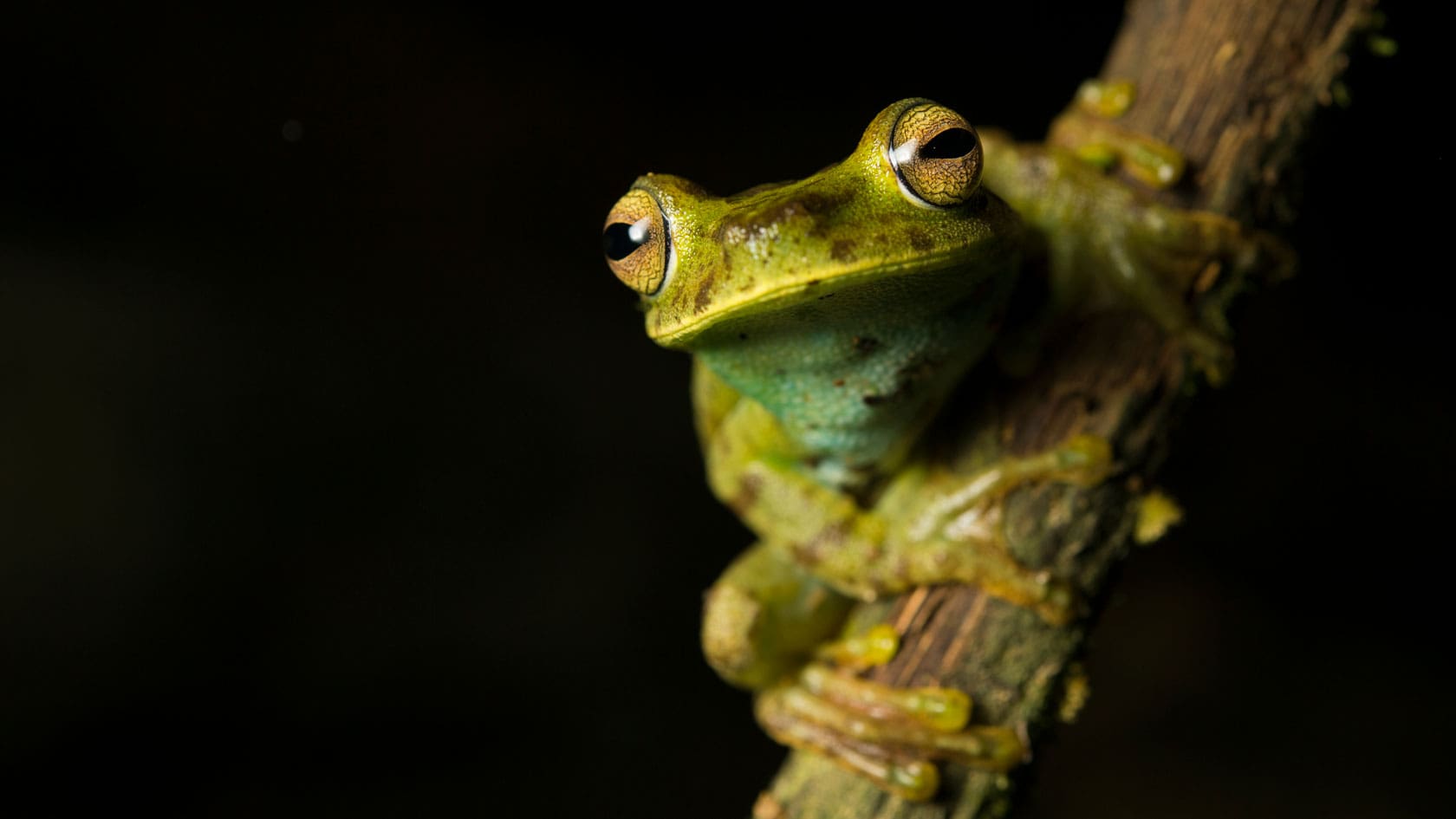
The Tropical Andes hotspot in South America is home to over 34,000 species of plants and animals, with estimates suggesting that half of these species are endemic. Despite its critical importance for global biodiversity, this region faces severe threats, including climate change, extractive activities, and ecosystem fragmentation.
The governments of Ecuador and Peru have pledged to promote and strengthen bi-national ecosystem connectivity to ensure the conservation of habitat and ecosystem services. Nature and Culture International, along with the environmental authorities in both countries and Plan Binacional have joined forces to create The Andes-Amazon Conservation Corridor.
FAQs
The Andes-Amazon Conservation Corridor in Ecuador and Peru. It connects protected areas across the Andes to safeguard biodiversity, secure water supplies, and strengthen climate resilience.
Nature and Culture’s work is guided by three pillars:
- Create Protected Areas
- Strengthen Local Leadership
- Secure Long-Term Protection
The Andes-Amazon Conservation Corridor is one way we put this strategy into action, applying all three pillars across one of the most biodiverse mountain regions on Earth.
The Corridor is a mosaic of national parks, provincial and municipal reserves, and water protection areas. Examples include:
- Corazón de la Amazonía Water Protection Area (Ecuador)
- Rio Negro Sopladora Protected Area (Ecuador)
- (Peru)
Many protected areas in the Corridor are designed to safeguard headwaters, páramos, and cloud forests. In Ecuador, Water Protection Areas (Áreas de Protección Hídrica) legally protect drinking water sources. In Peru, Regional Conservation Areas secure watershed health for local communities.
The Corridor relies on subnational leadership, provincial and municipal governments, and community stewards. These local leaders integrate conservation into development plans and ensure protection lasts beyond project cycles.
Durability comes from:
- Legal frameworks (national, provincial, and municipal protected areas).
- Integration into local land-use and development plans.
- Water funds and other conservation finance mechanisms.
- Public budgets for protected area management.
- Monitoring systems for biodiversity, water, and climate resilience.
The Andes-Amazon region is a global biodiversity hotspot. The Corridor ensures species can adapt to climate change, water sources remain secure for people, and forests continue storing carbon and regulating local climates.
Why is it important to protect ecological connectivity?
Ecological connectivity is the invisible bridge of life, linking forests, rivers, and mountains so nature stays resilient. When these connections stay intact, ecosystems thrive and life flows freely. Animals can migrate, plants regenerate, and species share genetic diversity across landscapes.
Protecting connectivity means protecting the flow of life itself.

Results So Far
We’ve already protected over half of the corridor, but safeguarding individual areas is not enough. These ecosystems must also be connected to ensure the flow of species and maintain biodiversity.
Over the next five years, our teams plan to protect an additional 461,345.04 acres, complete the legal process for establishing the entire Andes-Amazon Conservation Corridor, and work with local actors to ensure the long-term stewardship of this 5-million-acre biodiverse paradise.
We invite you to join us
in this monumental effort to protect one of the most extraordinary regions on Earth for future generations. .

