

2023 Annual Impact Report
04/04/2024
The effectiveness of our collaborative efforts is remarkable, and none of this would have been possible without you, our Nature and Culture Community! Since our founding, in total we have protected 26 million acres, preventing 3.9 billion tons of CO2 emissions!
JUMP TO FULL REPORT

As you read through our Impact Report, we invite you to join us in celebrating our achievements.
Here’s a look at some of the incredible work you helped support over the last year.


On February 1, 2023, two Indigenous nationalities came together with the Provincial Government of Morona Santiago, Ecuador to create the 3,057,670-acre reserve, named Tarímiat Pujutaí Nunka in Shuar, which roughly translates to “Territory of Good Living.”
With the generous support of our donors and partners, Nature and Culture has been working since 2021, to facilitate a participatory process that led to the protection of this massive connected Amazonian forest. This process involved hosting 21 community meetings, during which 893 community members shared their traditional ecological knowledge, worldviews, and visions for a sustainable future within their ancestral territory to preserve natural and cultural resources for future generations.
The declaration of this area aims to improve the quality of life for local communities through sustainable development opportunities, while safeguarding its 744 million tons of above-ground carbon stores.
Tarímiat Pujutaí Nunka joins as the centerpiece of the Amazonian Platform, a collaborative alliance uniting 7 Indigenous nationalities and 3 Provincial Governments in protecting 11 million acres of continuous Amazonian rainforest. About the size of West Virginia, U.S. in total, this impressive biological corridor collectively sequesters an estimated 2.3 billion tons of above-ground carbon.


The opportunity for Nature and Culture to attend the international climate conference, COP27, in 2022, and amplify Indigenous voices in climate action was a significant milestone for the organization. In 2023, we continued to build on the momentum and champion the presence of Indigenous leaders in pivotal international forums.
In March 2023, Josefina Tunki, former President of the Shuar Arutam Nationality, journeyed to the United Nations Water Conference in New York alongside Nature and Culture, Executive Director, Matt Clark. Josefina delivered a compelling presentation on the critical issue of water resources in the Amazon. Josefina’s perspective was enriched by her deep connection to the land, stemming from her leadership in safeguarding the 3-million-acre protected area, Tarímiat Pujutaí Nunka. She is fighting to keep her ancestral territory free of mining activities that have devastated her community.
Later in the year, our esteemed partners, Governor of Morona Santiago, Tiyua Uyunkar and Pastaza Governor André Granda, took the stage at COP28, proudly representing the Amazonian Platform—a testament to the collaborative efforts between Nature and Culture, subnational governments, and local Indigenous communities. They shared the remarkable successes achieved in protecting the Ecuadorian Amazon. Together, we’re safeguarding an astonishing 11 million acres of pristine forest, forming the largest biological corridor in Ecuador.
By facilitating the participation of Indigenous leaders in global dialogues, we are supporting them in reshaping the narrative on conservation and climate action. Their invaluable insights, rooted in millennia of lived experience, are indispensable in shaping policies and solutions. As we forge ahead, Nature and Culture remains steadfast in our resolve to amplify Indigenous voices, ensuring that their rightful place at the forefront of the environmental movement is acknowledged and respected on a global scale.


In 2019, we celebrated the establishment of the Ñembi Guasu protected area, safeguarding 3 million acres in the Bolivian Gran Chaco. That same year, the world watched in horror as wildfires ravaged the country’s southern region of Santa Cruz.
Since then, Nature and Culture and one of our local implementation partners, have been working to ensure the long-term health of the Ñembi Guasu area. We’re doing this in several ways, including the creation of a management framework and sustainable finance mechanism, the development of a firefighting patrol, and post-wildfire reforestation projects. Recognizing the growing risk of fire in Bolivia’s precious dry forests, we have provided firefighting tools, conducted fire safety awareness campaigns, and devised emergency firefighting strategies to mitigate future disasters.
Helping communities adapt to climate change is crucial because, despite efforts to mitigate its causes, the impacts of climate change are already being felt globally. These impacts often disproportionately affect vulnerable communities. By supporting adaptation measures, such as building resilience, enhancing infrastructure, and implementing early warning systems, communities can better withstand the effects of climate change and minimize associated risks to livelihoods, health, and well-being.


In the last eight years, Nature and Culture has documented more than 450 species of birds in areas we protect in the northern Tropical Andes of Peru, 24 percent of the country’s recognized avian species. Our work here spans a 3,763,481-acre ecoregion of high-altitude grasslands and cloud forests.
Two new subnational areas are in the works which will join to surrounding protected areas between the departments of Huánuco and San Martín, Peru. This ecoregion provides critical habitat connectivity and food resources to birds and other wildlife in the region.
Monitoring wildlife within the areas we protect is just one way we gauge the efficacy of our work. It also allows us to prioritize new areas for conservation as species’ ranges shift in response to climate change.
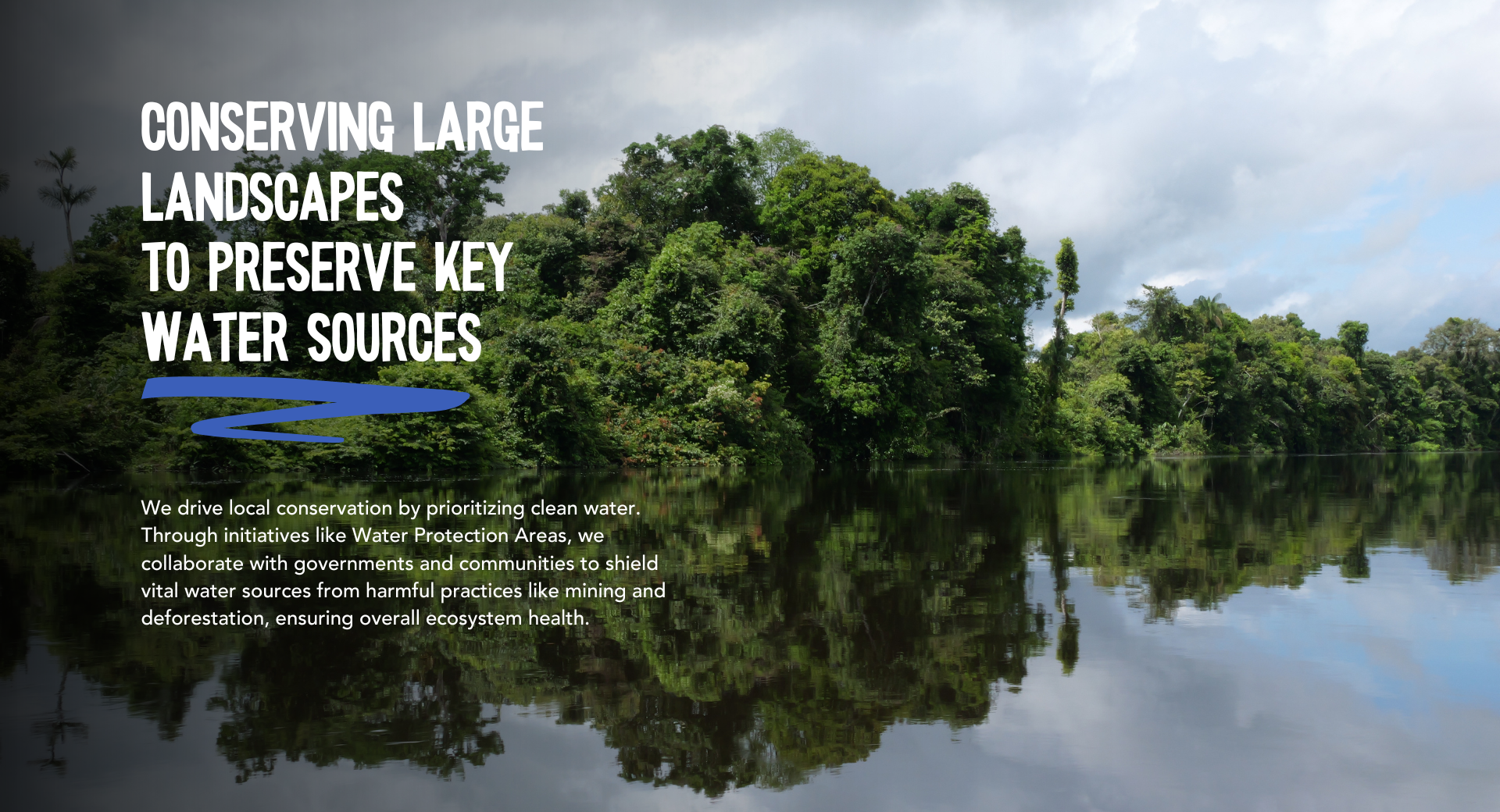
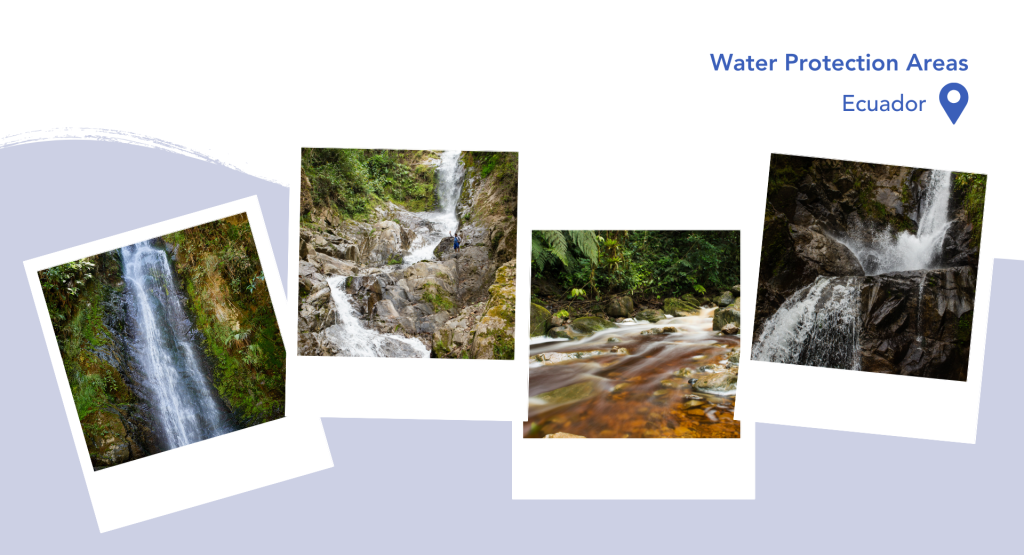
In Ecuador, Water Protection Areas (WPAs) are a unique conservation measure aimed at safeguarding water resources for local populations and protecting key watersheds and their surrounding ecosystems. These areas legally shield forests and natural ecosystems from harmful activities like mining, ensuring a clean water supply and food security for local communities. From 2019 to 2022, our team in Ecuador spearheaded a comprehensive national-level hydrological study. This effort culminated in the creation of a Priority Map of Hydric Zones covering approximately 17.3 million acres. The study was instrumental in aiding the Ecuadorian government in prioritizing its watershed conservation projects, called Water Protection Areas.
Since the inception of this conservation mechanism, 32 Water Protection Areas have been established, 20 with Nature and Culture’s support. In 2023 alone, 12 areas were established, protecting 150,000 acres, and bringing positive change to the lives of 85,000 residents.
