

A Visit to the Peruvian Side of the Andes–Amazon Conservation Corridor
12/23/2025
Nature and Culture LatAm Comms Coordinator Nora Sánchez travels from Ecuador to northern Peru to explore the Peruvian side of the Andes–Amazon Conservation Corridor
Earlier this month, the governments of Ecuador and Peru officially recognized the Andes–Amazon Conservation Corridor, a major binational conservation initiative designed to protect more than five million acres of connected Andean–Amazonian ecosystems from southern Ecuador to northern Peru.
To better understand this huge undertaking, I traveled to Peru with the goal of getting to know the Peruvian side and, finally, seeing with my own eyes the Andean–Amazonian landscapes we have been talking about for so long.

Crossing the border
My route began in Quito, Ecuador, flying south to the city of Loja. I then continued overland, moving little by little until I reached the border.
As I traveled, I thought about borders as an entirely human concept. They do not exist for animals or for nature. A jaguar, for example, does not see the border between Ecuador and Peru. It sees connected or fragmented forests and looks for large, healthy spaces where it can move and live.
With that in mind, I began a seven-day journey through the regions of Piura and Cajamarca in northern Peru. Each day, the landscape transformed: from páramo to cloud forest, from the dry cold of the Andes to the humid heat of the low Amazon.
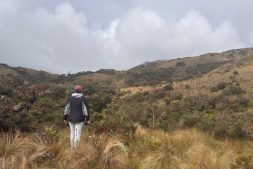


This diversity in the landscape is no coincidence. The Andes–Amazon Conservation Corridor connects ecosystems ranging from approximately 2,000 feet above sea level to more than 13,000 feet, creating a continuous altitudinal gradient. This variation in elevation is precisely what allows species to move and adapt to temperature changes, and enables key processes—such as water and climate regulation—to be maintained across the entire landscape of the Corridor.
Communities at the Heart of Conservation
The Peruvian side of the Corridor is known as the Andes del Norte Corridor, with an area of 1.8 million acres, of which 370,658 are protected under some form of conservation.
During my visit, I had the opportunity to travel through five of these areas, speak with their inhabitants, and marvel at their landscapes. And although each place faced different challenges, I found one common element in all of them: people’s commitment to their territory.
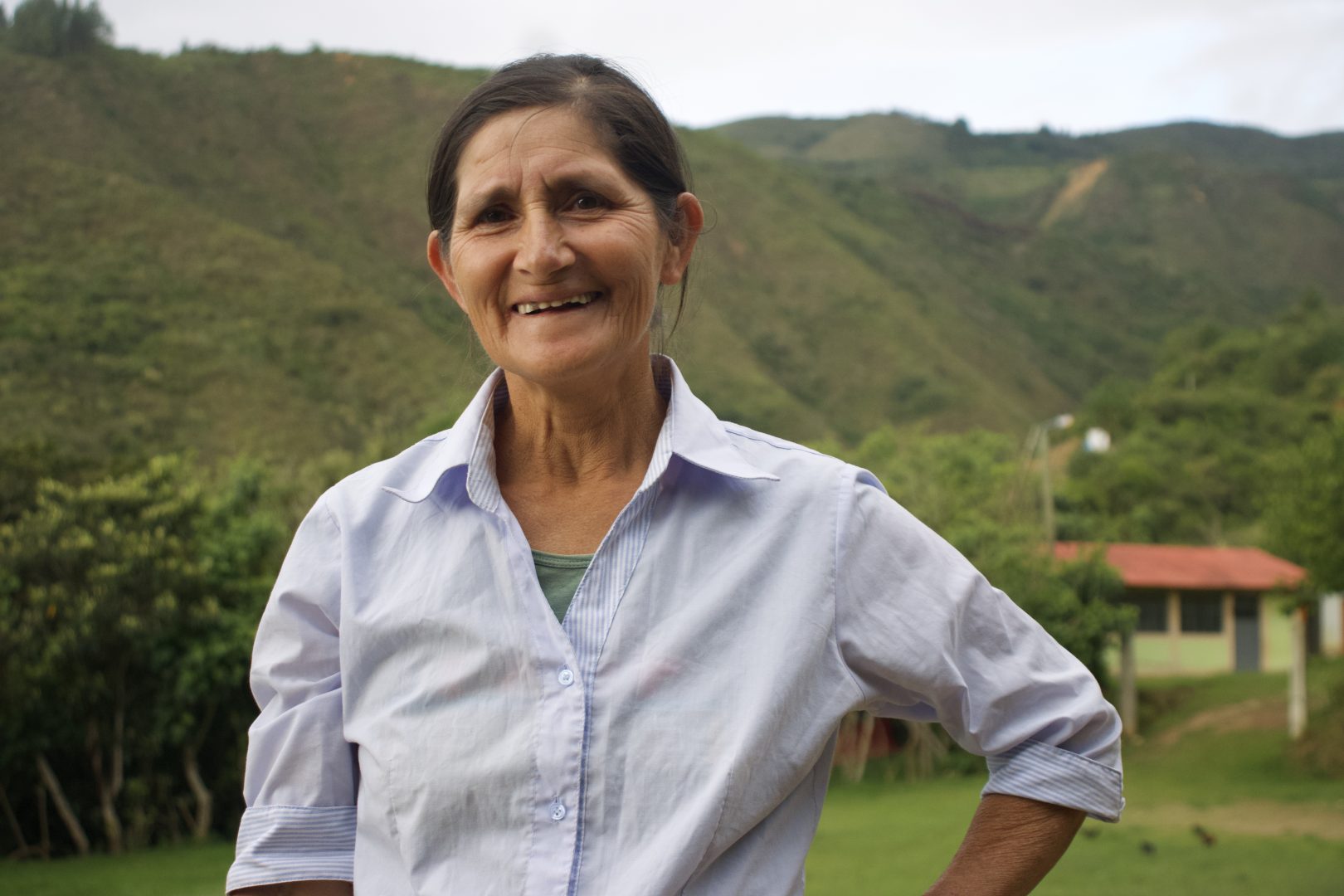
I spoke with Esmilda, in the community of Pumurco, who told me about the richness of her land for producing organic coffee, something that motivated her to leave behind polluting practices and learn to farm sustainably.
“What makes Pumurco special is the quality of our coffee and our forest. We also have waterfalls with crystal-clear water that are unique. That’s our concern: taking care of the environment so that our water is not contaminated.”

I also met Angie Melendres, who first volunteered as a forest ranger in her community and is now part of Nature and Culture’s technical team.
“For me, conserving this ecosystem comes from my family. My parents have always fought to protect it. We are facing a challenge with a mining company that wants to take over our forests, but from a young age, we learned that caring for our ecosystem is fundamental, because even our productive activities depend on it.”

In the forests of Tabaconas, Lideimer Flores gave me one of the simplest and most powerful explanations of the trip. When I asked him why it was important to protect the forest, he replied:
“The forest is like air conditioning; when there is forest, there is coolness.”
His words summed up a profound truth. Forests not only sustain wildlife and the habitats of the Andean tapir, the spectacled bear, or the Andean eagle, but they also regulate the climate, protect the soil, and secure the water that communities depend on.
The stories of each of these individuals reaffirmed something essential: the value of the territory has always been clear to those who live there. Today, through the purpose of the Corridor, that commitment is strengthened by a broader vision, conserving what connects us, for present and future generations.
A great puzzle built by people
A conservation corridor, also known as an ecological corridor, is a conservation method that maintains and restores connections between ecosystems, even when roads, productive activities, or other land uses have fragmented them. At Nature and Culture, together with many other actors, we have spent several years promoting this vision to build a corridor based on a network of protected areas, while advancing toward collaborative management models between Ecuador and Peru.
I like to think of the Corridor as a great puzzle, where every piece is indispensable, where the work that Esmilda, Angie, and Lideimer do is just as important as that of local governments or of our own organization.
And although we are still “building” that puzzle, through the establishment of new conservation areas that contribute to landscape connectivity and strengthening management in existing protected areas, during this trip, I witnessed real progress in connecting this vast territory, which spans more than 5 million acres across Ecuador and Peru.
One of those moments came when residents of the Puerta El Edén community took me to a point where the boundaries of two areas converge: the Bosques Montanos Regional Conservation Area and the proposed Huamantanga Regional Conservation Area.

Although the fragmentation of the ecosystem caused by human activity was evident, so too were the connections: the forest continuing from one side to the other, birds flying overhead without recognizing borders, and people—like us—moving from one area to the next.
A new perspective on the Andes-Amazon Conservation Corridor
I returned to Ecuador convinced that conservation only works when the people who live in the forest lead the way.
I saw it in every community, in every conversation, and in every corner of the Corridor. This territory is a natural bridge between two countries, but it is also a human bridge among those who live in it, care for it, and project it into the future.
And although the challenges remain enormous, there is also an immense opportunity: to continue building this network that sustains water, biodiversity, cultures, and well-being for thousands of people on both sides of the border.
This journey was a reminder that our work matters. That every acre conserved, every area strengthened, and every local alliance adds up. And that, in the end, protecting this corridor is protecting life itself.
Nora Sánchez is the Latin America Communications Coordinator at Nature and Culture International, focusing on community-led conservation in the Andes and Amazon.
