

Dry Forest Conservation and Water Protection: New Junín Protected Area
12/18/2024
With the establishment of the Junín Protected Area, the region takes a major step toward protecting critical water sources and preserving fragile ecosystems, reinforcing its commitment to conservation and sustainability.
The Junín Protected Area, established on December 16, 2024, marks a pivotal step in conserving the Pacific’s river confluence zone (Estrella hídrica del Pacífico) within Ecuador’s Manabí province. Spanning 28,402 acres of dry and evergreen forests along the Pacific coastal range, this area safeguards ten vital water sources that supply clean water to over 26,000 local residents.
The “Estrella Hídrica del Pacífico” (Pacific’s River Confluence Zone) refers to a hydrological convergence area where multiple rivers originate and flow toward the Pacific Ocean. These regions are critical for water security, as they provide fresh water for communities, agriculture, and ecosystems. They also support rich biodiversity, including species that depend on healthy watersheds and intact forests.
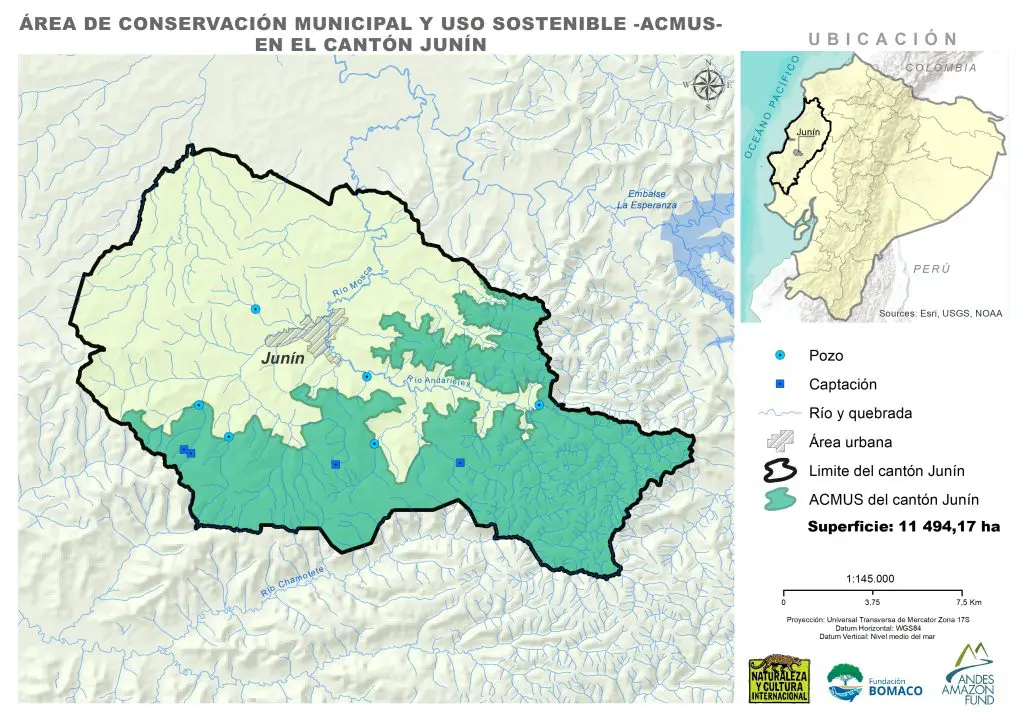
Local Biodiversity
Junín is home to remarkable biodiversity. Notably, it provides critical habitat for threatened species such as the nationally critically endangered brown-headed spider monkey (Ateles fusciceps) and the endangered, endemic Esmeraldas woodstar (Chaetocercus berlepschi), a rare, tropical hummingbird found only in this region. These species highlight the ecological richness of the area, which faces urgent threats from deforestation.
Partnerships for Conservation
The establishment of this protected area was a collaborative effort involving the Provincial Government of Manabí, local communities, and associations like the Santa Marta Women’s Group, with support from Nature and Culture and la Fundación Bosques, Mares y Comunidades (BOMACO). This initiative underscores the importance of community engagement and inter-organizational partnerships in achieving sustainable conservation outcomes. Key areas with high conservation potential were identified and validated through technical studies conducted with input from local communities.

According to José Romero, Project Coordinator for Nature and Culture, this milestone is just the beginning. It is the first of four planned subnational protected areas in Manabí, with future sites in Portoviejo, Bolívar, and Chone. “The designation of Junín is a major accomplishment that protects natural heritage and safeguards vital water sources for the communities that depend on them,” Romero stated.
Challenges and Next Steps
Despite its ecological significance, the Junín region faces challenges from deforestation driven by agricultural and livestock expansion. To combat these threats, a sustainable management plan is being developed in partnership with local communities and government authorities. This plan aims to enhance land stewardship, promote sustainable practices, and ensure the long-term conservation of the area’s natural resources through active community engagement.
José Palma, a resident of Andarieles in Junín, emphasized the importance of this initiative:
“With the creation of the Junín Protected Area, we can preserve these vital water resources that so many people depend on. We are pleased to have Nature and Culture here and to personally contribute to improving conservation, sustainability, and ecosystem protection.”

Lourdes Cusme, from the Cañas community and a member of the Santa Marta Women’s Group in Zone 11, shared a passionate plea for action:
“Times are changing, and people have been cutting down trees, which is why we are raising awareness. We have important water sources, but they haven’t been adequately managed. We must protect them because, in the future, we will face serious problems. Now is the time to act, planting native trees and committing as a community to their care. The water sources are there, but we don’t take care of them as we should. Let’s raise awareness and protect our water sources because if we don’t, in the future, they may only exist in photos.”
“Times are changing, and deforestation is a growing problem. We have critical water sources, but they haven’t been cared for as they should be. We must act now, planting native trees and working together as a community to protect them. If we don’t, we’ll face serious problems in the future. Let’s raise awareness and protect our water—for if we don’t, it may only exist in photos someday.”
A Collective Effort
The Junín Protected Area serves as a model for future conservation efforts in Manabí, highlighting the critical role of protecting water sources and fragile ecosystems for the well-being of both wildlife and human communities. The establishment of the Junín Protected Area was made possible by the Municipal Government of Junín, Nature and Culture, local stakeholders, environmental institutions, community organizations, and with financial support from Andes Amazon Fund.
