
Kandozi People Win Recognition for Peruvian Amazon
08/06/2026
2.5 million acres protected, securing 319 million tons of CO2e emissions.
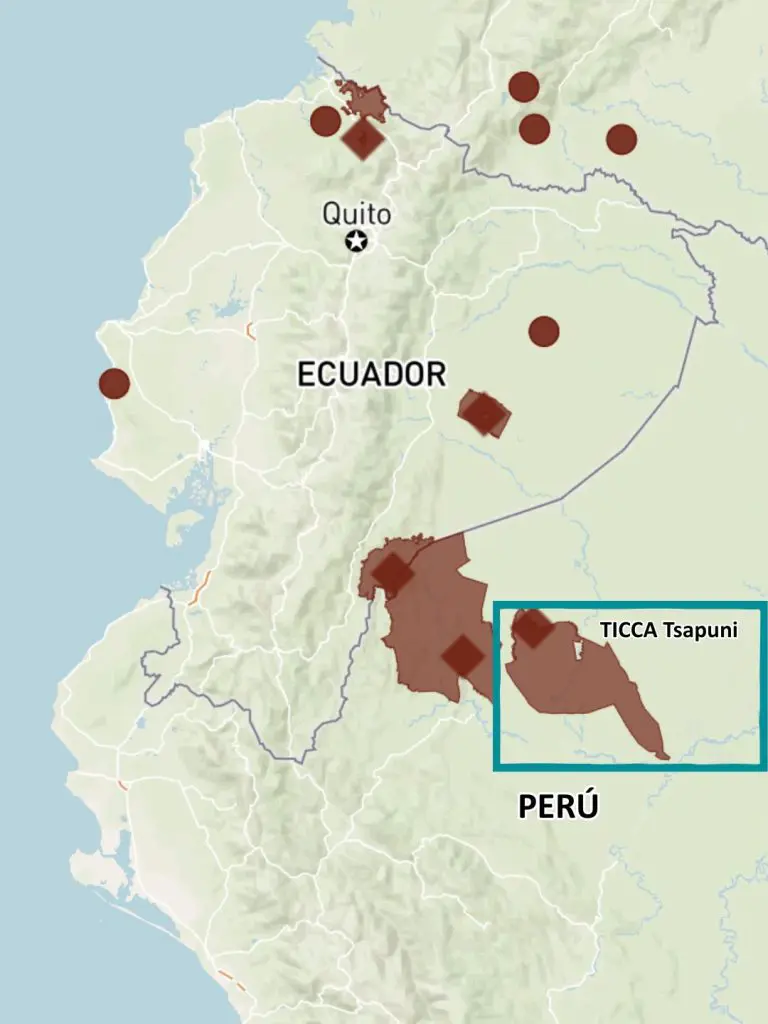
Tsapuni becomes the third Indigenous Territory of Life registered in Peru, advancing a landscape-scale conservation vision to strengthen ecological connectivity between the Peruvian and Ecuadorian Amazon.
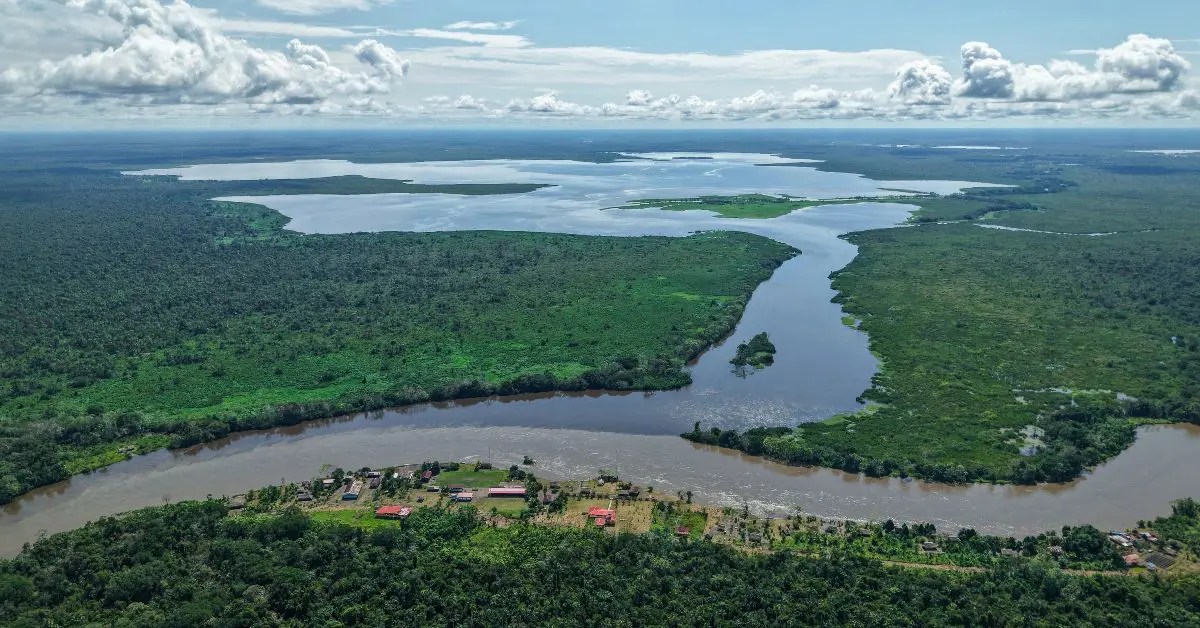
LORETO, PERU — After generations of protecting their territory, the Kandozi people have won international recognition for Tsapuni, 2,551,163 acres of forest, rivers, lakes, and wetland in the northern Peruvian Amazon. Tsapuni is only the third Indigenous territory in Peru to enter the international register of Territories of Life.
The name means “the place where life emerged” in the Kandozi language. New analysis confirms it. Tsapuni’s intact forests and wetlands, part of one of the largest tropical peatland systems on the planet, keep 319,339,197 tons of carbon dioxide equivalent out of the atmosphere. Ninety-nine percent of the territory remains high-integrity forest, sustained by generations of Kandozi stewardship.
Nature and Culture International provided the technical support that carried the recognition through. The organization has worked for years to keep Amazonian landscapes connected across the Peru and Ecuador border, and Tsapuni is now a keystone in that effort. The milestone brings Nature and Culture’s lifetime totals to more than 29.3 million acres protected across Latin America and more than 4.2 billion tons of CO2 equivalent secured.


A landscape almost entirely intact
The data on Tsapuni is remarkable even by Amazonian standards.
- 99.3 percent of the territory qualifies as high integrity forests, 2,533,975 acres barely touched by human activity
- 63 percent falls inside an internationally recognized Key Biodiversity Area, 1,618,614 acres
- 1,060 species of terrestrial vertebrates potentially live there: 605 birds, 198 mammals, 149 reptiles, and 108 amphibians
- 20 of those species are threatened with extinction, and 46 are trigger species that qualify the site for global biodiversity significance
- 98 migratory bird species pass through, 25 of them travelling from the boreal north
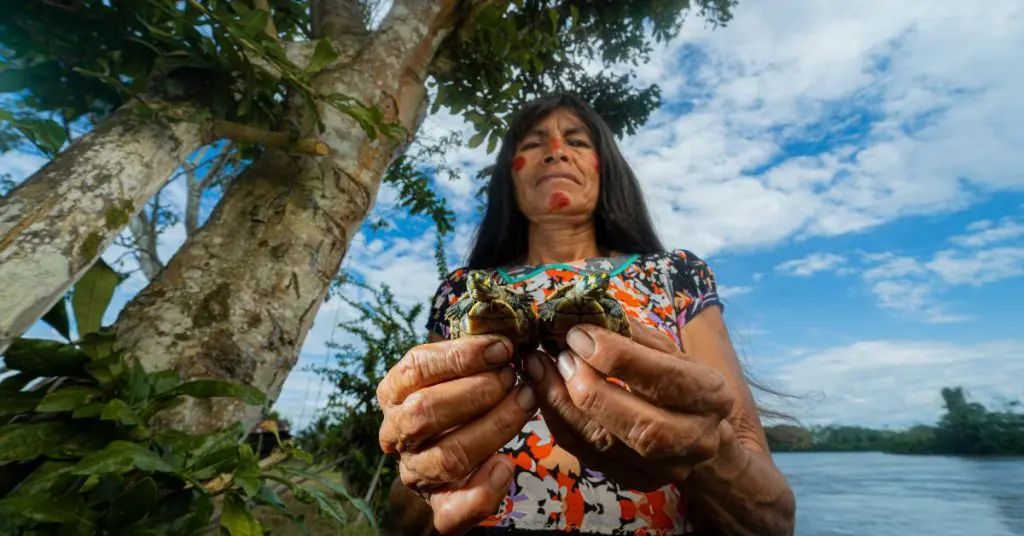
Tsapuni’s 2.5 million acres are home to jaguars, black caimans, yellow-spotted river turtles, Amazonian tapirs, toucans, macaws, and the Spix’s guan.
Today Tsapuni faces mounting pressure from extractive activities, unsustainable fishing, and the effects of climate change. In the face of those challenges, the Kandozi people demonstrate that the most effective conservation happens when the leadership of those who have cared for these territories for generations is strengthened.

The Kandozi people
The Kandozi are an Indigenous nation of the northern Peruvian Amazon. Their identity, their culture, and their daily life are bound to this place. For generations, their ancestral knowledge and their own forms of organization have guided the sustainable management of natural resources, making conservation an essential part of their relationship with the land.
What a Territory of Life is, and what it takes to earn one
A Territory of Life, known internationally as an Indigenous and Community Conserved Area (ICCA) and in Spanish as a Territorio y Área Conservada por Pueblos Indígenas y Comunidades Locales (TICCA), is a place that Indigenous peoples or local communities have conserved through their own governance and their own way of life. The international register gives that stewardship formal recognition on the world stage.
Recognition is not granted from the outside. A people must demonstrate three things:
- A deep cultural and spiritual relationship with the territory
- A governance system of their own
- Concrete conservation results
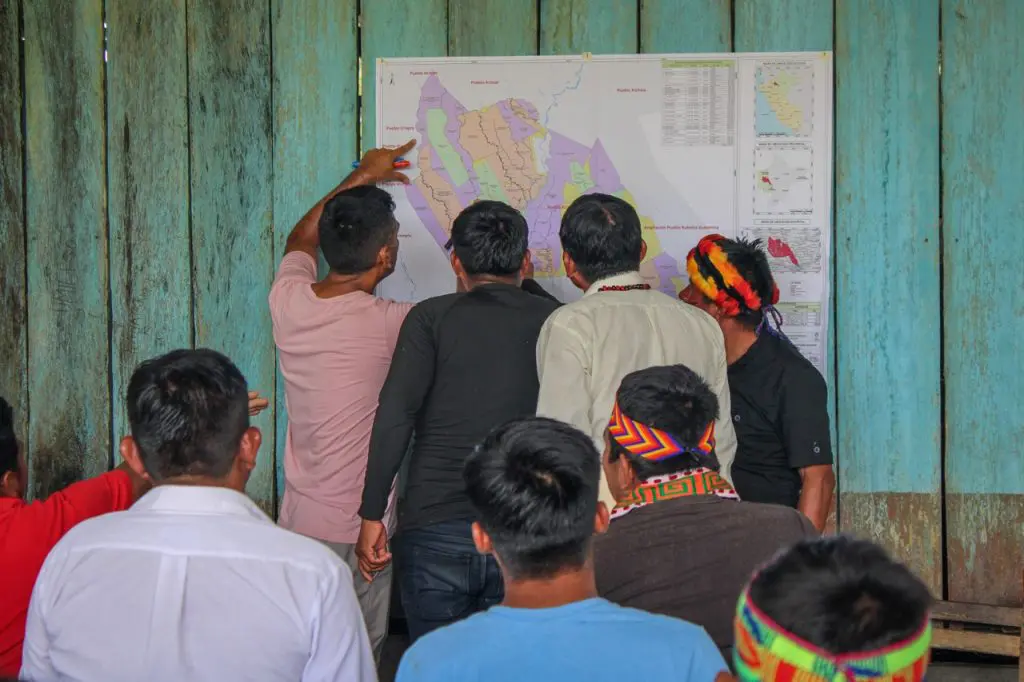
Through a participatory process, Kandozi leaders reaffirmed their decision to recognize themselves as a Territory of Life and demonstrated all three. The register acknowledges what the Kandozi have been doing all along.
Nature and Culture’s role
The Kandozi led this effort. Nature and Culture made sure they had the technical support to see it through.
In February 2026, Nature and Culture joined the Kandozi people, the Regional Coordinating Body of Indigenous Peoples of San Lorenzo (CORPI SL), and the Autonomous Territorial Government of the Kandozi Nation (GTAK) to form an Accompaniment and Oversight Committee. Nature and Culture provided technical support to help organize and verify the information behind the TICCA registration process, including an April working session in San Lorenzo focused on documenting the territory’s governance systems, conservation contributions, and threats. Nature and Culture’s role centered on upholding free, prior, and informed consent, strengthening local capacities, and ensuring the recognition reflected the Kandozi people as key actors in conservation, grounded in their own governance and their bond with the territory.
Nature and Culture has worked for decades alongside Indigenous peoples who lead conservation on their own terms.
Technical partners
The recognition was led by the Autonomous Territorial Government of the Kandozi Nation (GTAK) and the Regional Coordinating Body of Indigenous Peoples of San Lorenzo (CORPI SL).
They were supported by a coalition of technical partners working within the framework of the Biodiverse Landscapes Fund (BLF) Andes-Amazon project. Nature and Culture led the effort to compile and verify the evidence for the registration, with AIDESEP, the national Indigenous federation, bringing its representation of Peru’s Amazonian peoples, and WWF Peru contributing additional technical expertise. This work was carried out with support from other cooperation initiatives, including the Bezos Earth Fund.
One protected place, a whole connected Amazon
The Amazon spans multiple countries. Its forests, rivers, mountains, communities, and species form an ecological system that extends beyond national borders. Deforestation, climate change, and unsustainable use of natural resources are fragmenting that system, and conserving territories in isolation is not enough. Effective conservation requires connecting protected areas.
Tsapuni’s recognition strengthens a network of strategic landscapes for Amazonian conservation and opens new opportunities to connect conservation efforts between Peru and Ecuador.
Nature and Culture is working alongside its local partners towards a shared vision for conservation across Peru and Ecuador. We are helping protect key territories, keep the Amazon connected across the two countries, and support conservation led by Indigenous peoples and local communities.
A future built on local leadership
Nature and Culture congratulates the Kandozi people, the Autonomous Territorial Government of the Kandozi Nation, and CORPI San Lorenzo on this historic achievement.
This process, and the next steps to strengthen the Kandozi TICCA, are possible thanks to the joint work of partner organizations and the contribution of cooperating funders such as UK International Development, through the Biodiverse Landscapes Fund project, and the Bezos Earth Fund.
With Tsapuni, the organization has now helped protect more than 29.5 million acres across Ecuador, Peru, Colombia, Bolivia, and Mexico, securing more than 4.2 billion tons of CO2 equivalent. Thirty years of work, built one territory at a time, alongside the people who live there.
More than 2.5 million acres of living Amazon are now recognized on the world stage. There is far more still to protect.
About Nature and Culture International
Nature and Culture International protects large, intact forests across Latin America in partnership with Indigenous peoples and local communities. For thirty years the organization has worked across Ecuador, Peru, Colombia, Bolivia, and Mexico, protecting more than 29.3 million acres at under $10 per acre, with 85 cents of every dollar going to programmatic work and roughly 92 percent of program staff hired locally.
MEDIA CONTACT:
Kristen Heard
Director of communications
Kheard@natureandculture.org
P: +1 858 259 0374
