

New Frog’s Call Echoes the Need for Protection in the Amazon
04/24/2025
In the heart of the Ecuadorian Amazon, in the province of Zamora Chinchipe, scientists have described a small but extraordinary new frog species.
Ecuadorian herpetologist Santiago Ron and a team of researchers from the Pontificia Universidad Católica del Ecuador, in collaboration with the Natural History Museum of London, announced the discovery of three new torrent frog species from the Hyloscirtus genus. Among them is the standout Maycú Torrent Frog (Hyloscirtus maycu sp. nov.), a species adapted to fast-flowing mountain streams and named in honor of Nature and Culture’s Maycú Reserve.
The full article is open access in ZooKeys and can be viewed here.

Identifying this tiny frog, a species so small that even the larger females measure under two inches, took nearly a decade of research. “We found the first individuals in 2014, but it wasn’t until after multiple expeditions and genetic studies that we confirmed it was a species entirely new to science,” says Ron. The years-long process underscores the dedication, patience, and resources needed to conduct scientific research in the Amazon.
The Maycú Frog and Its Unique Call
Small but mighty, the Maycú Torrent Frog has evolved to remain hidden in its environment. Its irregularly patterned coloration allows it to blend into the forest leaf litter—an essential strategy for evading predators. But what truly sets it apart is its high-pitched, repetitive call that echoes through the Amazon night forest.
These frogs inhabit a very specific microhabitat and can be found along forest streams and creeks, perched on vegetation at night. “They have a rather loud call that can be heard relatively far away. It’s the males that sing to court females,” explains Ron.
Listen to the call of the Maycú frog here
It was this very sound that alerted researchers to the species’ uniqueness. “It was the frog’s call that tipped us off. We realized this was something different from all previously described species. Later, genetic studies confirmed that what we found in Maycú had never been seen anywhere else in the world,” adds Ron.
The Maycú Torrent Frog is a powerful reminder of how much remains unknown about Amazonian biodiversity, especially in the Cordillera del Cóndor, a sub-Andean mountain range along the Ecuador–Peru border that ranks among the most biodiverse and ecologically vital regions on Earth. It underscores the urgent need to keep exploring, documenting, and protecting these fragile ecosystems.
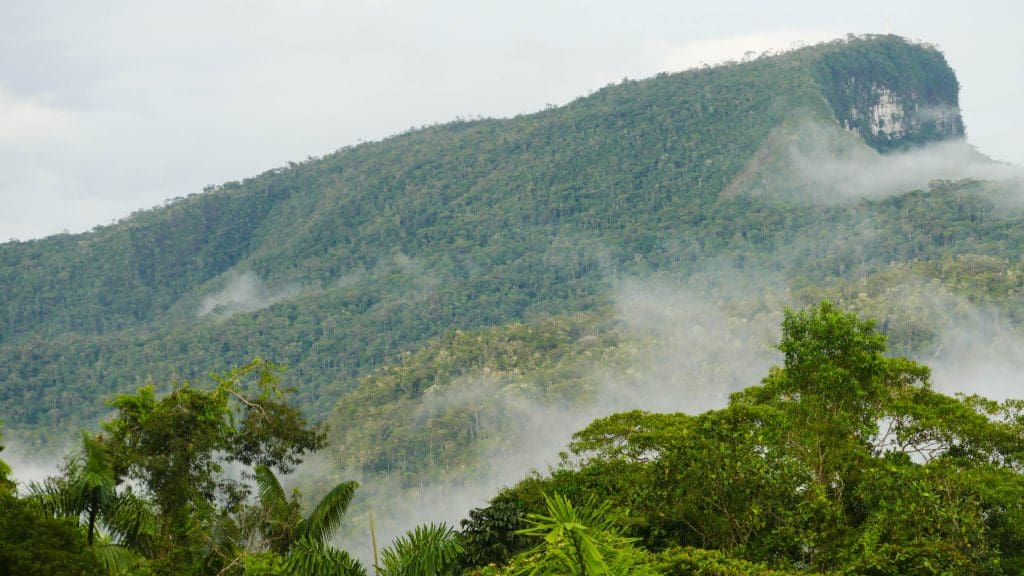
Southern Ecuador’s Amazon, A World to Be Discovered
Southern Ecuador, where the Andes meet the Amazon, is home to a unique ecosystem with exceptionally high levels of endemism. This phenomenon is especially pronounced among amphibians: crossing a single valley or river can reveal an entirely different community than on a neighboring mountain. This extraordinary diversity means that every corner of the forest could still be hiding species unknown to science.


For decades, most scientific expeditions focused on northern and central Andes—largely due to their proximity to Quito, Ecuador’s capital, leaving vast areas in the south relatively unexplored.
The southern sub-Andean ranges still hold vast, untapped potential, and the discovery of the Maycú Torrent Frog is living proof. This species remained hidden from science for centuries, a testament to how much remains to be discovered.
The Maycú Reserve is a Sanctuary for Biodiversity
The Maycú Nature Reserve is located in the southern Ecuadorian Amazon, in the province of Zamora Chinchipe. It borders Peru to the east and spans close to 5,000 acres, within the last conservation corridor where the Andes meet the Amazon and the Cordillera del Cóndor.

Nature and Culture began protecting the area in 2012, with support from the NGO World Land Trust. It was later officially recognized as part of the Zamora Chinchipe Protected Area and registered in Ecuador’s national environmental authority’s forest registry.
The Maycú Reserve connects to four nearby protected areas, including the Podocarpus National Park, the Shuar Hunting, Fishing and Gathering Area, and Los Tepuyes Conservation Area, forming a megadiverse block. This area boasts a high degree of endemism and connects Andean, Amazonian, and Cordillera del Cóndor ecosystems, ensuring ecological connectivity and biodiversity conservation.
Illegal Mining: A Threat to the Maycú Frog
The discovery of the Maycú Torrent Frog is a scientific milestone, but its future remains uncertain. Its habitat—streams and creeks in and around the Maycú Reserve—is under increasing threat from illegal mining.
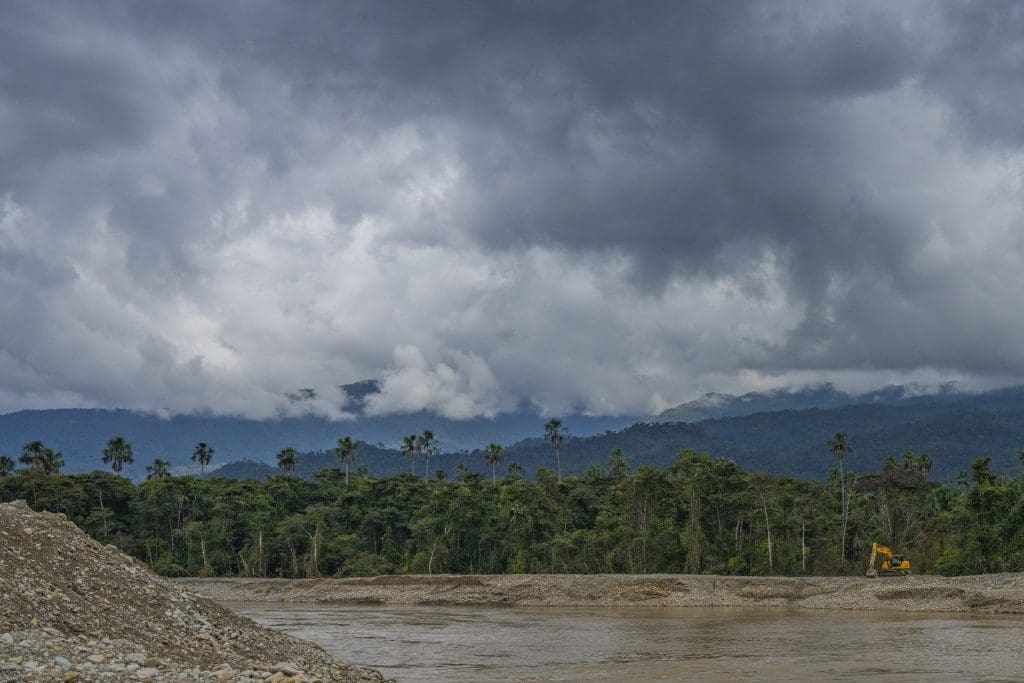
“The number of backhoes along the riverbank was insane. They were destroying the forest, and it’s deeply worrying,” warns herpetologist Santiago Ron. The deforestation and pollution caused by mining devastate fragile ecosystems and directly impact species with very limited ranges, like this frog.
The Maycú Torrent Frog has only been found in two localities, separated by about 18 miles. Any disruption to its habitat could be catastrophic. “If Maycú disappears, the species could go extinct,” Ron emphasizes.
This risk is not unique to the Maycú frog. Amphibians are the most threatened group of vertebrates globally, and habitat destruction is one of the main drivers of their decline. Protecting places like Maycú Reserve is essential to prevent the disappearance of unique species, some not even fully understood by science yet.
A Tribute to Nature and Culture’s Efforts
Naming this frog after the Maycú Reserve highlights and celebrates the importance of protected areas. “It’s a way to promote the conservation work being done and to support the protection of this incredibly important reserve. In my opinion, few conservation strategies are as effective as forest protection. For countries like Ecuador, there is no better approach,” says Ron.
The Future of the Maycú Frog Is in Our Hands

The discovery of the Maycú Torrent Frog is a powerful reminder of how much we still don’t know about the Amazon—and how much we are losing from land-use change and other human-driven forces.
The real question isn’t just what we can do, but what we’re willing to do. Because the Maycú frog’s song may continue to echo through the night—but only if we choose to protect its habitat and the countless other species that share it.
We thank Santiago Ron for openly sharing the story behind the discovery of the Maycú Torrent Frog and recognize the tireless efforts of forest rangers, researchers, biologists, and technical staff working to protect the irreplaceable forests of Nangaritza.
More Information:
Nora Sánchez Luzardo
Regional Comminications Coordinator
