Forest restoration in the Jambué Reserve brings new life
07/30/2024
Strategic Area:
Forests -
Content Type: Blog
Country:
Ecuador -
Jambué, a word from the Indigenous Shuar language, means hummingbird river. It is also the name of a nature reserve that has shown the potential of restoring an ecosystem degraded by livestock, agriculture, and logging activities.
“At first, people said we were crazy, that those plants would be useless. But time showed us the opposite; they were fundamental in having a forest.” – Ángel Andrade, Forest Ranger of the Jambué Natural Reserve.
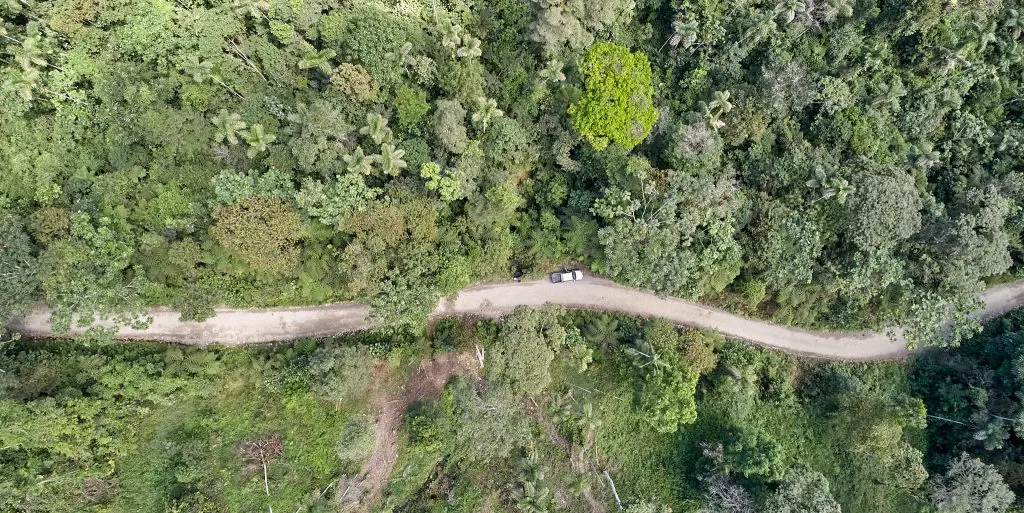
Aerial view of the Jambué Reserve
Nature and Culture established the Jambué Reserve in 2010. Located in the Zamora Chinchipe province of southern Ecuador, it spans 3,566 acres and protects the Nea River micro-basin, vital for the communities of the Jambué Valley.
Felipe Serrano, Nature and Culture Ecuador Country Director highlighted that because of its strategic location, Jambué acts as a shield for Podocarpus National Park, helping to reduce the pressure of human activities in the region. He emphasized the importance of protecting the forests surrounding Podocarpus National Park, particularly surrounding the Numbala and Jambué River basins, which are key areas facing significant deforestation.
Over the last 90 years, livestock, logging, and productive activities have decreased soil productivity and ecosystem services in this region. These practices caused deforestation and forced farmers to move to forested areas, perpetuating a cycle of degradation.
To confront this problem, in October 2011, we launched a pilot project to restore Amazonian forests on abandoned pastures in the Jambué Reserve, with financial support from World Land Trust.
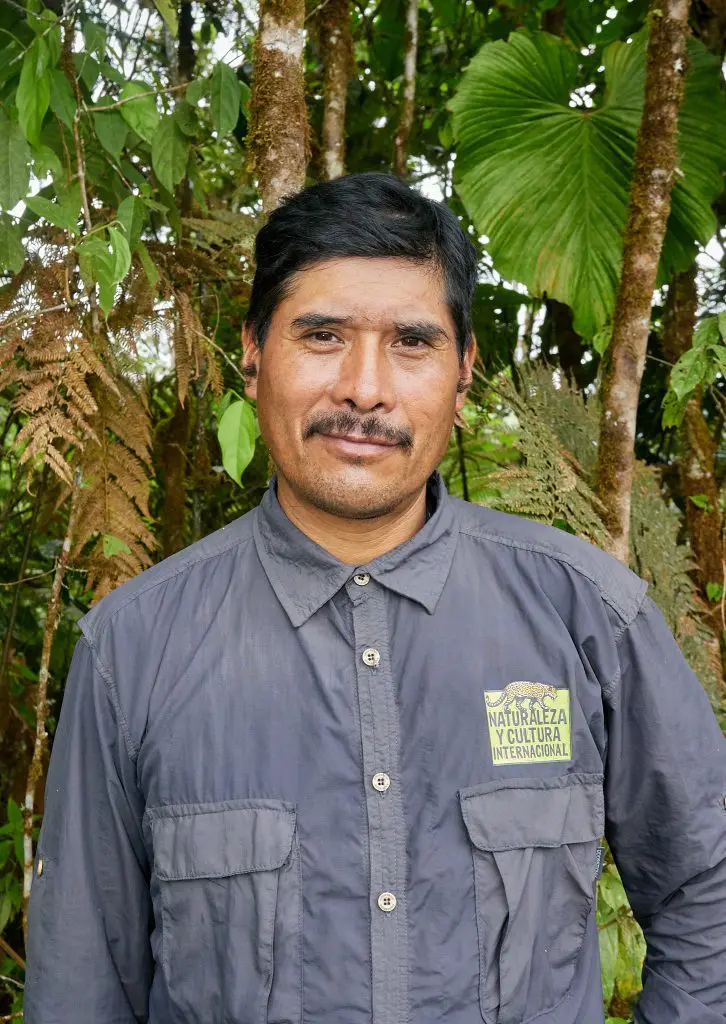
My Life in the Forest: The Story of Ángel Andrade and the Restoration of the Jambué Natural Reserve
Ángel Andrade clearly remembers how his work in the Jambué Reserve began. His story begins with the planting of trees in an area that was once only grass. “They were local plants and easy to plant; I remember the tunash (Pictocoma discolor), achotillo (Vismia sp.), cedar (Cedrela sp.), and sierrilla (Miconia sp.),” he says. In this restoration process, Ángel not only learned about planting native species but also discovered that some required special care and had to be started in a nursery.
Ángel Andrade Jambué Reserva Forest Ranger
In this crucial nursery work, Ángel was not alone. Four women, Lida, Esperanza, Olga, and Rosa, were part of the team. “Together, we were responsible for overseeing various procedures in the nursery,” says Ángel, recalling the collective effort with admiration. Collaboration was fundamental since the restoration process was a mixed model of planting native trees with assisted natural regeneration. This approach removed obstacles like weeds or invasive species, freeing up existing saplings in the area, and contributing to a more robust ecosystem.
By 2013, 39,500 plants had been planted and freed, totaling eighty Amazonian species. These species included timber and non-timber trees and those considered for conditional use, covering an area of 66 acres. “I remember we did this work in several phases. We respected the plants that were already here and planted others considered intermediate succession species, like achotillo, tunash, and balsa (Ochroma pyramidales), and finally, climax species like cedar, guayacán (Handroanthus sp.), and seique (Cedrelinga cateniformes),” explains Ángel. This strategy demonstrates the importance of a progressive and balanced ecosystem recovery.
Aerial view of the Jambué Reserve
Restoration in Jambué also included maintenance tasks, like weeding and replanting for three years, along with a long-term follow-up commitment of ten years. These actions were crucial to ensuring the project’s success and sustainability. Ángel shares his initial impressions of the work: “At first, it was hard to believe we were going to plant trees since we are used to clearing (cutting down a forest area for crops or pastures). But what surprised me most was the guarumo (Cecropia obtusifolia). Although it seemed like an ordinary plant, its seeds are a favorite among the birds, providing them a valuable food source.”
Ángel’s dedication to the forest and passion for photography
“Before I had a camera, I captured images with my eyes. I’ve been taking photos for three years, and although I don’t know much, it seems my pictures are turning out well. I would like to learn more about photography since I am only self-taught.” Recently, Ángel observed the yellow-bellied spider monkey. This monkey, which Ángel describes, is the Ateles belzebuth, an endangered species according to the IUCN Red List (2008).
Restoration has brought new life to the forest
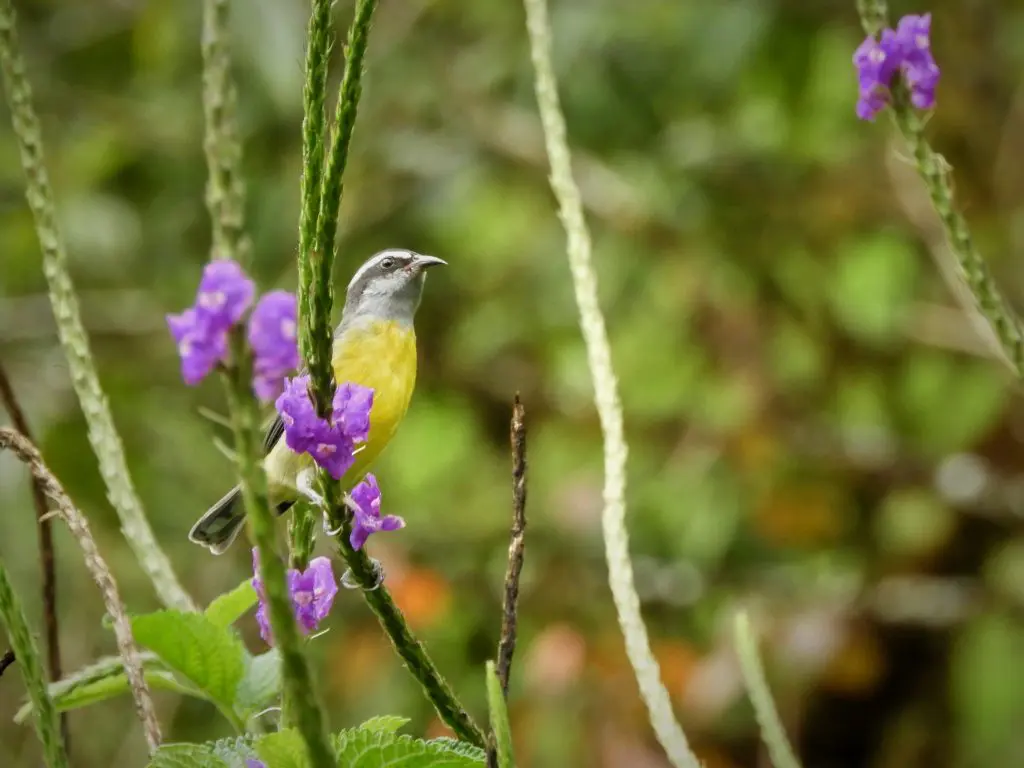
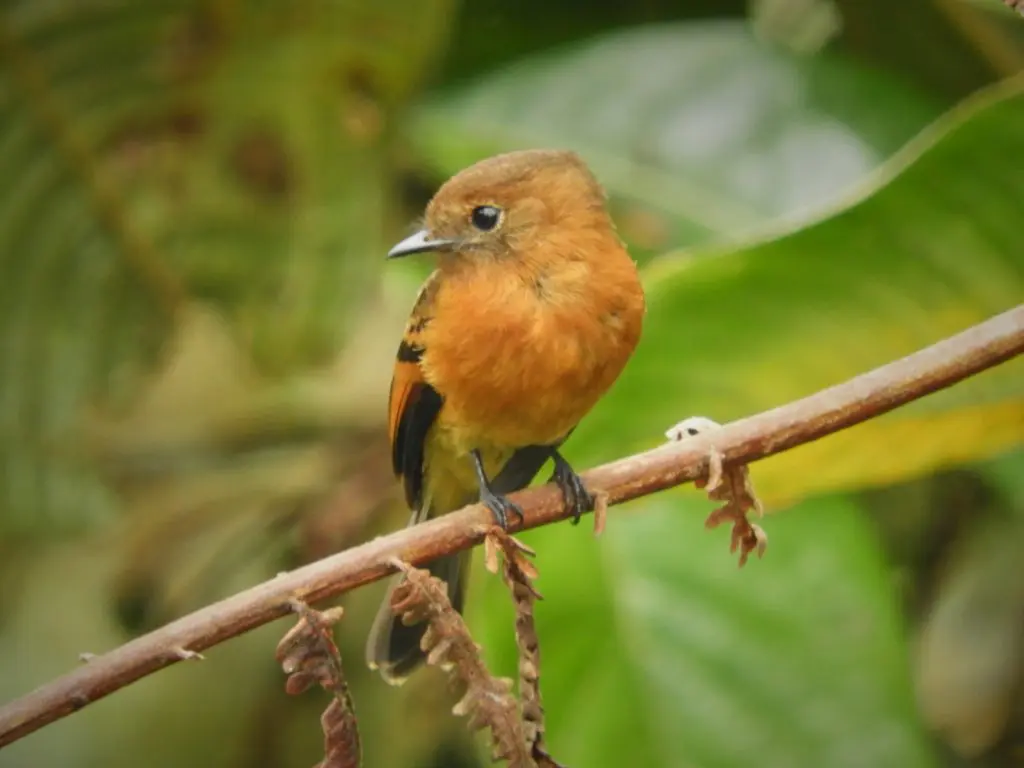
Ángel shares how he documents all of the life returning to the forest: “In the camera traps, I’ve seen several pumas. With my own eyes, I’ve seen two. I’ve asked them to take care of me and accompany me on my forest walks.” He also enjoys photographing birds. “I love them because they are very beautiful. There’s one in particular that has wings that look like hands.”
“I saw a bear a year ago; they always leave trees scratched and traces of the bromeliads they eat. When I met the bear, we greeted each other. I’m not afraid of meeting these gardeners; I’m looking for them.” For Ángel, being in the forest is more than a job; it is his life. “I wouldn’t mind dying in the middle of the forest. Being a Forest Ranger is not difficult for me. I walk a lot and don’t get tired; I only stop when I take photos and watch the birds.”
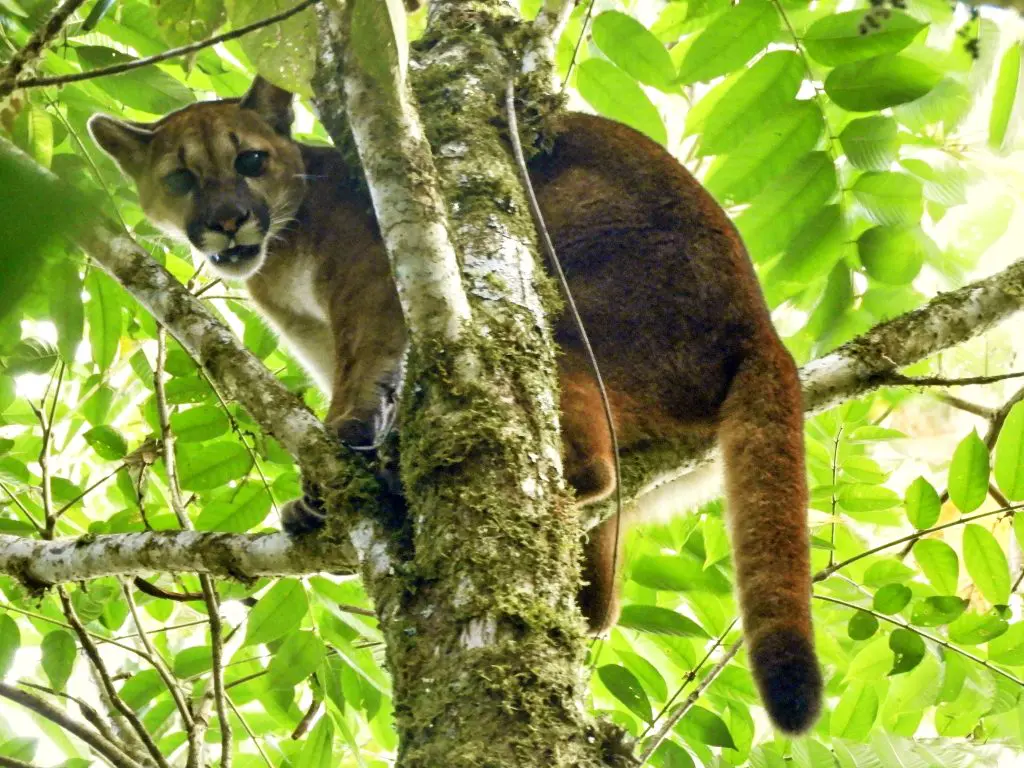
Before the restoration, there were about 700 acres of pastures. Now, that space has become forest again. “After the restoration, we’ve seen several animals return, like bears, pumas, birds of all colors, and recently several peccaries and tayras (Eira bárbara).” Ángel recalls that “the animals started returning around 2015, but the puma arrived recently. I saw it on a tree we planted, a cedar. Look at the photo.”
Puma Puma concolor photo taken by Ángel Andrade
Ángel has several cherished photos, part of his dedication and love for the forest he cares for daily. He also mentions that restoration has brought significant changes to the community. “Today, many people from the Jambué Valley who worked in the planting say they no longer cut down trees,” explains Ángel. “They realize the great effort it takes to grow a plant and how quickly everything can be lost by cutting down a tree.”
Ángel Andrade shares his story through photographs, drawing inspiration from the vibrant life of the forest. As a Forest Ranger dedicated to the restoration and conservation of his environment, he has become a quiet guardian of wildlife and a passionate nature lover, finding his purpose in the Jambué Reserve.