
Tochecito: A New Sanctuary for Colombia’s National Tree
10/15/2026
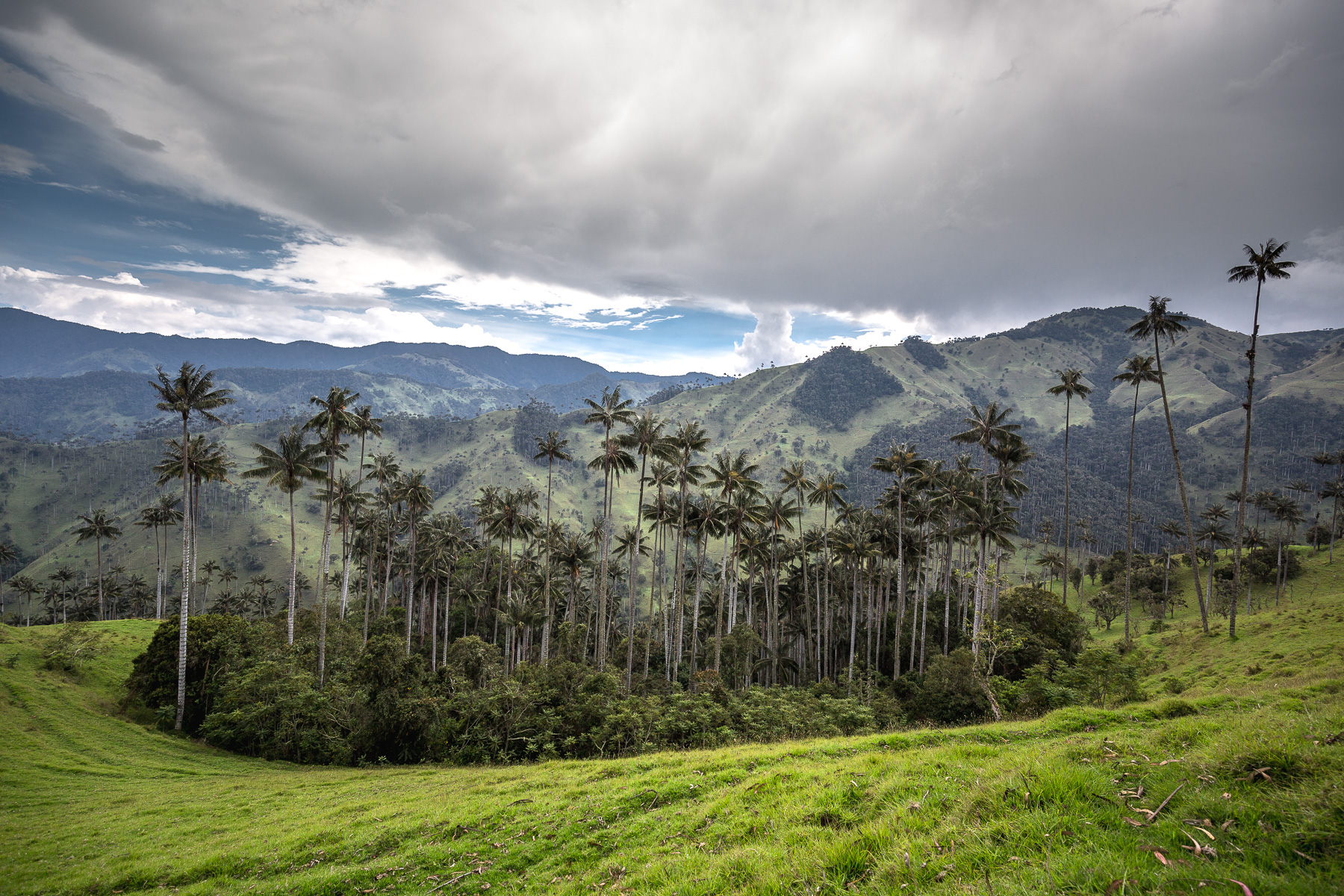
On August 6, 2026, Parques Nacionales Naturales declared the Tochecito Palm Sanctuary, a nearly 5,000-acre protected area in the Colombia’s Andes, between the towns of Cajamarca and Ibagué in the Tolima region.
Behind this milestone is almost ten years of fieldwork, work we were part of through our partnership with Instituto Humboldt.
In the Tochecito river basin, between Cajamarca and Ibagué, wax palms grow so close together that they form an unbroken canopy over the forest below. Alexander von Humboldt, who crossed this landscape along the historic Camino del Quindío, described it as “a forest above a forest.”

Colombia’s National Tree, Protected at Its Last Stronghold
The Quindío wax palm (Ceroxylon quindiuense) is the tallest in the world, and this species can live more than a century. Declared Colombia’s national tree in 1985, it’s now listed as vulnerable worldwide and endangered within Colombia. More than 70% of its known population lives in the Tochecito basin, making it the species’ most important stronghold anywhere.
The sanctuary protects far more than palms. It’s home to 249 recorded bird species, including the yellow-eared parrot and the golden-plumed parakeet, both of which nest in the palm’s trunks. Tochecito also links two national parks, Los Nevados and Las Hermosas, functioning as a biological corridor between them.
A Race Against Time
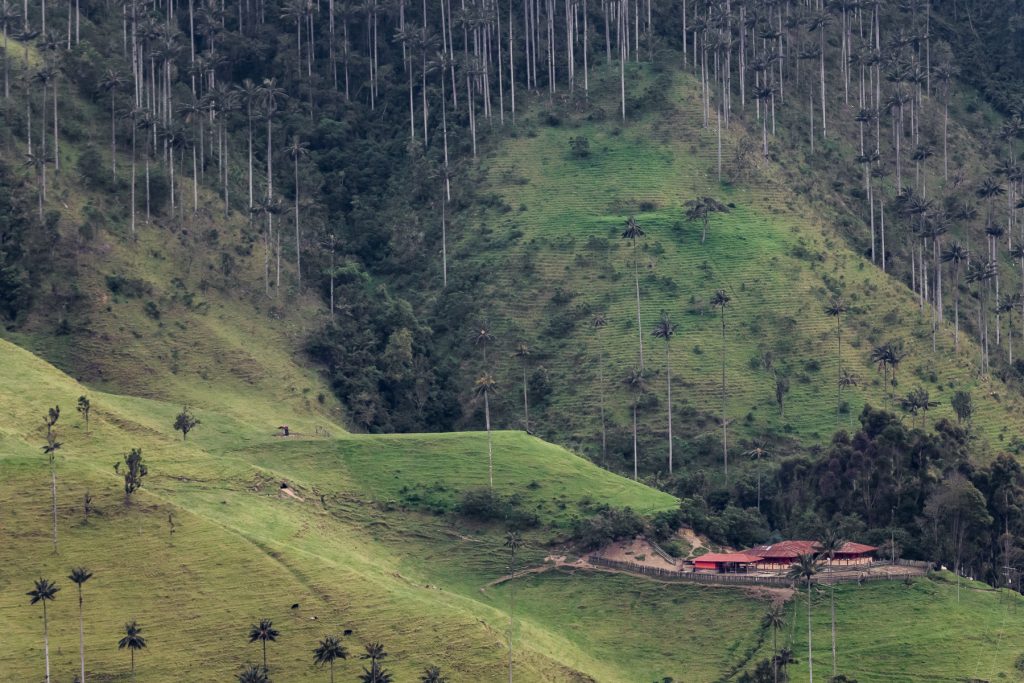
Many of Tochecito’s wax palms today stand alone in open pastureland, survivors from a time when the forest still surrounded them. Without that forest cover, their seeds can’t take root. Cattle ranching, burning, and agrochemicals keep young palms from ever replacing the adults that remain. “Fifty to one hundred years is the most we have” to turn that around, biologist Luis Santiago Castillo of Instituto Humboldt warned in 2022.
The Science Behind the Declaration
Protecting this area wasn’t straightforward. Cattle ranching had turned much of the forest into pasture, so by the usual standards for evaluating protected areas, Tochecito didn’t seem to qualify. The landscape had been heavily transformed by grazing, and standard methods for evaluating protected areas weren’t producing the results this place deserved. So researchers shifted the lens, looking at biodiversity through the species itself rather than the landscape alone.
Starting in 2017, through our partnership with Instituto Humboldt, Nature and Culture supported this process. That work led to the ecological assessment delivered to National Parks in May 2017 as technical input for the declaration, evaluating the palm against criteria of representativeness, irreplaceability, threat level, and ecological integrity. One finding stood out: before Tochecito, protected areas in the region covered less than 0.5% of the species’ regional population, and less than 0.9% nationally. Technical clarifications followed that June, and in 2018, researchers mapped the basin’s land cover using satellite imagery.
The declaration itself was made by Colombia’s National Natural Parks, the result of years of work by many people and institutions. For us, it’s proof of what science can achieve when it’s built alongside local partners.
Four Decades in the Making
Nearly 41 years after Colombia’s Law 61 of 1985 first authorized the government to create sanctuaries for this palm, Tochecito makes that promise real. Now comes the work of managing the area well.
