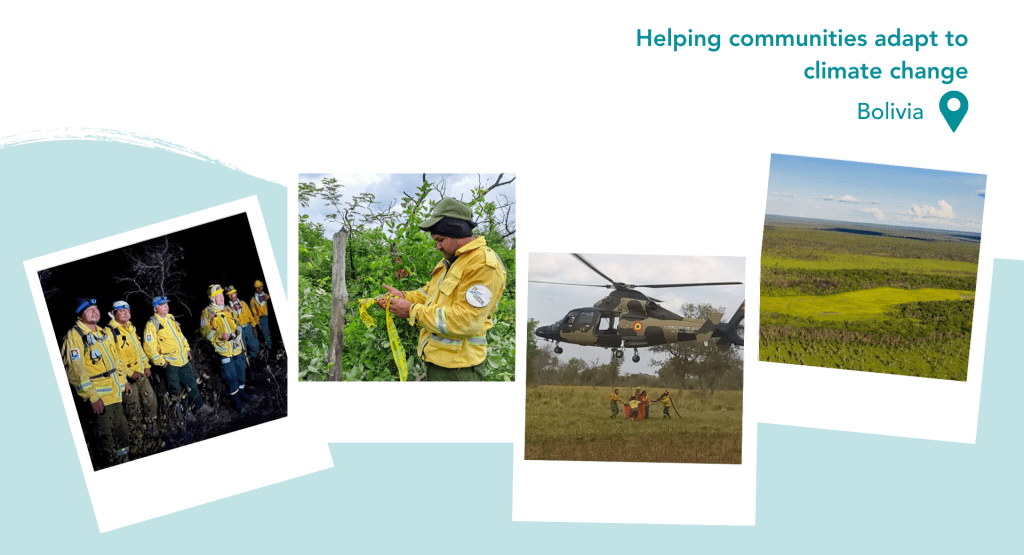
In 2024, fire became the main driver of deforestation, but Indigenous leadership and collaboration kept Bolivia’s Ñembi Guasu Protected Area safe
According to the Global Forest Review, 2024 marked a dangerous new milestone for the world’s forests: wildfires became the leading cause of tropical primary forest loss, responsible for nearly half of global tropical deforestation. This shift reflects a growing crisis fueled by climate change that threatens biodiversity, accelerates carbon emissions, and underscores the urgent need for proactive forest management, especially by communities on the frontlines.
Nowhere was this trend more evident than in Bolivia, which saw a staggering 200% increase in primary forest loss—climbing to the second-highest level worldwide in 2024, behind only Brazil.
Amid this destruction, the Ñembi Guasu Protected Area defied the national trend. It prevented both forest loss and fire damage for the second year in a row—the only documented case of its kind in Bolivia.

Protected Area Resists the Flames
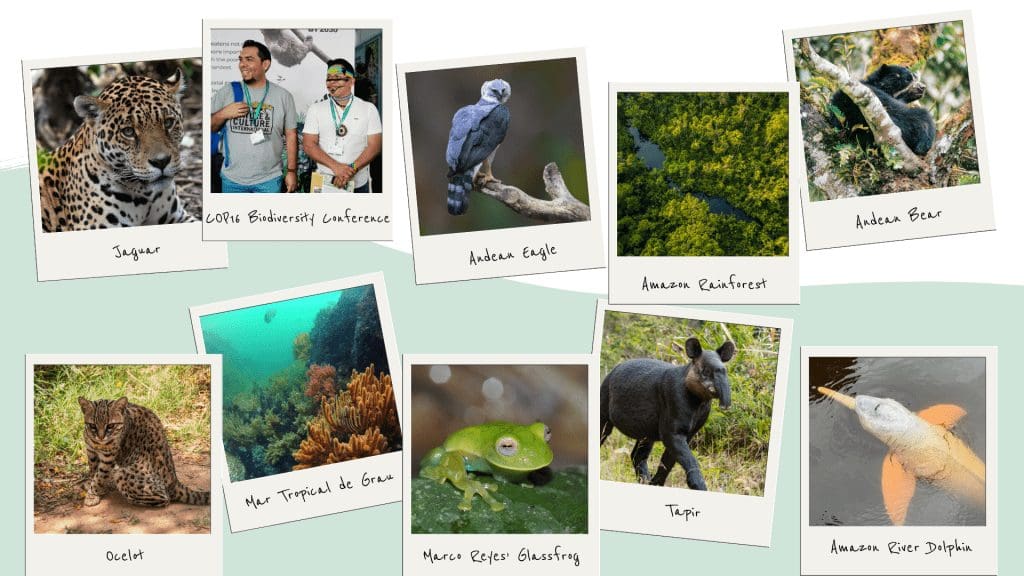
Ñembi Guasu is located in southern Bolivia’s Gran Chaco ecoregion, one of the most ecologically and culturally important regions in Bolivia. Officially recognized in 2019, Ñembi Guasu spans nearly 3 million acres, making it the second-largest protected area in the region and a vital refuge for biodiversity, home to threatened species such as jaguars, giant armadillos, tapirs, and over 1,000 endemic plant species.

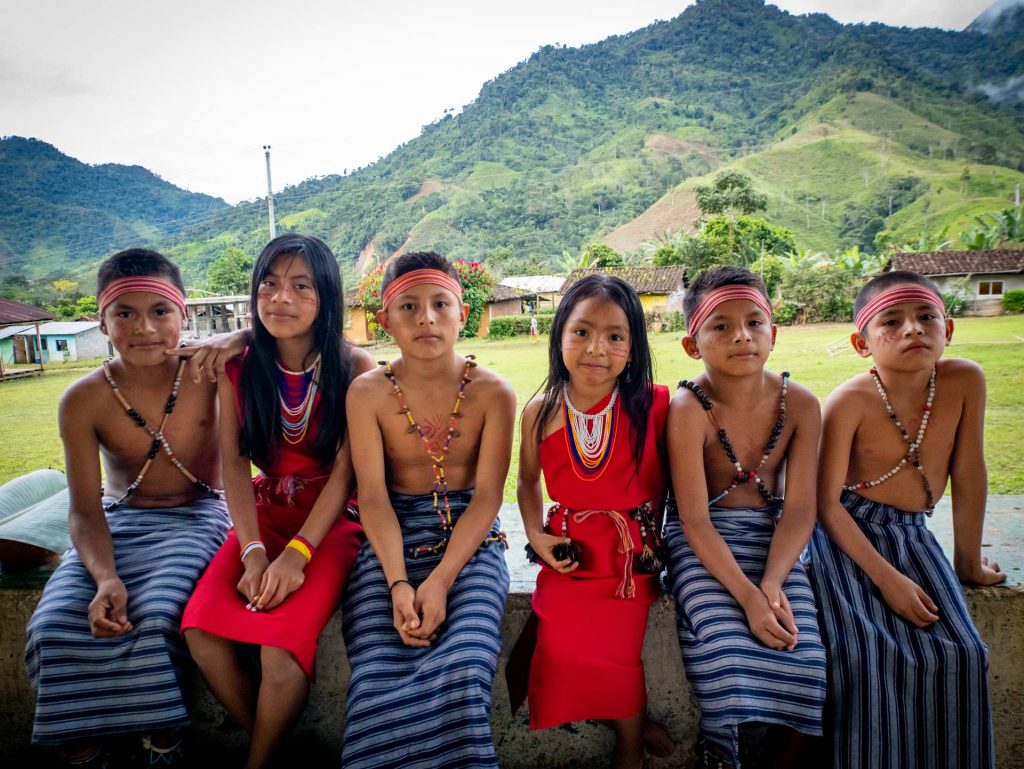
The protected area lies within the territory of Charagua Iyambae (Bolivia’s first Indigenous autonomy) and holds deep cultural and ecological significance for the last uncontacted Indigenous Peoples outside of the Amazon — Ayoreo families who live in voluntary isolation and have cared for this land for generations.
In a year when fire ravaged Bolivia’s forests, Ñembi Guasu stood out as the only documented case in the country where forest loss and fire damage were successfully prevented. According to the Global Forest Review, it’s a rare example of effective, locally driven prevention in the face of overwhelming pressure.
The Guardian also highlighted this rare victory in its coverage of the global forest crisis:
“Bolivia experienced its worst fire season on record… but the Charagua Iyambae Indigenous territory successfully resisted fires through land‑use policies and early‑warning systems.”
Read the article ›
Building Local Capacity: A Model for Forest Protection
Ñembi Guasu’s success is no accident. It’s the result of years of investment in local capacity, Indigenous governance, and coordinated prevention strategies—especially in the face of ongoing threats from illegal burning, agribusiness expansion, and road construction. This work has been made possible through close collaboration between the Charagua Iyambae Indigenous government, the Bolivian NGO Fundación Nativa, and Nature and Culture International.
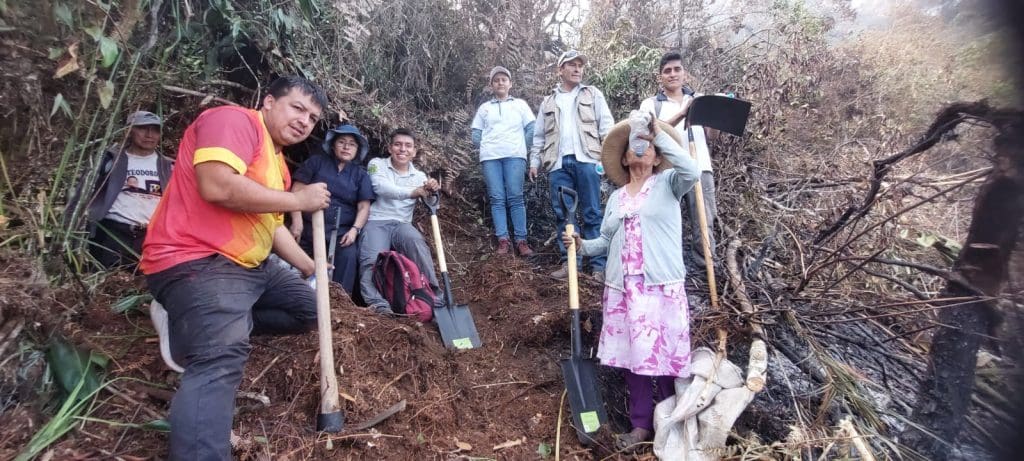
At the center of this model are Guaraní park rangers and community conservation staff, who monitor the forest year-round. Trained in fire prevention and early detection, they patrol the landscape, identify signs of risk, and report threats to both Indigenous authorities and local municipal governments. This coordination enables fast, collective action before fires can spread or illegal incursions escalate.
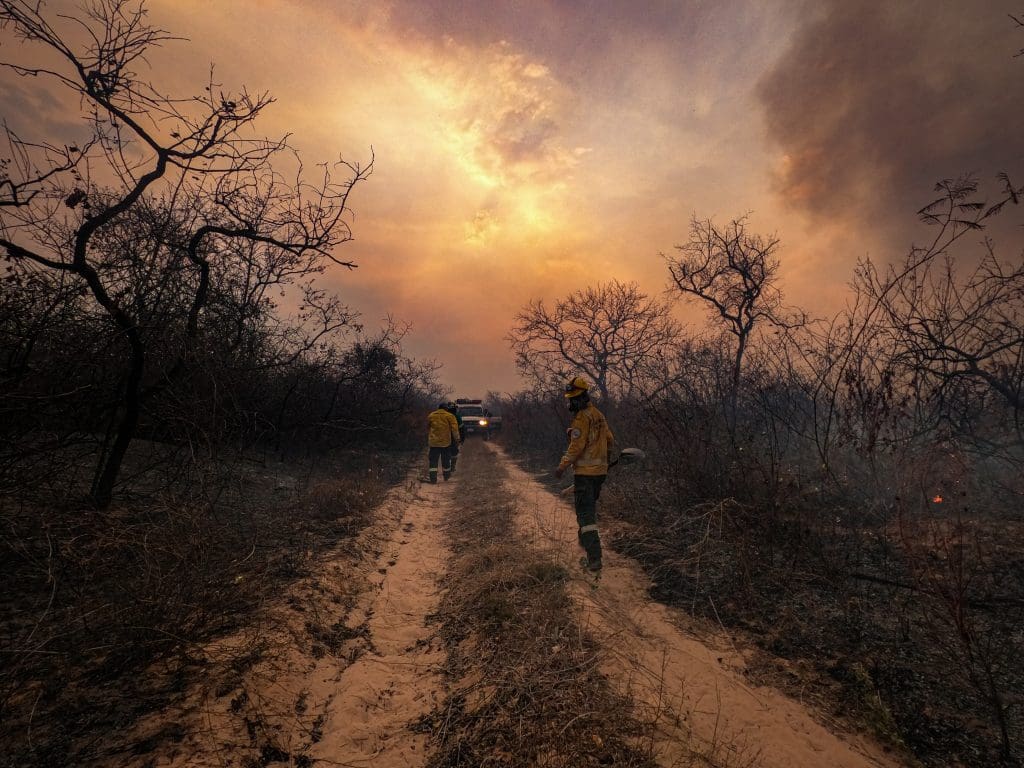


Their work is supported by GPS and satellite monitoring systems, as well as tools and training developed to help the Charagua Iyambae Indigenous autonomy document deforestation, defend territorial rights, and enforce land-use plans. Local enforcement is guided by culturally grounded conservation plans, rooted in ecological knowledge and legal frameworks.
As Iván Arnold, Director of Fundación Nativa, explains:
“This achievement is neither accidental nor the result of less external pressure. The difference lies in the approach. For years, the Indigenous government of Charagua Iyambae has led its own model of land management—one that’s community-based, culturally grounded, and guided by deep knowledge of the territory.”
Ñembi Guasu shows that with the right tools, partnerships, and leadership, even the most fire-prone forests can be protected.
The Urgency to Replicate Success
Ñembi Guasu’s success offers a powerful answer to the global challenge of the rise of wildfires as the primary cause of tropical forest loss. Indigenous leadership and locally rooted collaboration are essential to protecting forest landscapes.
Nature and Culture centers its work on community-led conservation. We work alongside local and Indigenous partners to strengthen protected areas across Latin America, including those most vulnerable to fire. In these high-risk landscapes, local leadership—combined with coordinated policy and technical training—does more than prevent devastating fires. It offers a proven, scalable path forward in the face of mounting climate threats.
As climate threats grow, community-led conservation offers not just hope—but a clear path forward.