Protecting Wildlife Keeps Ecosystems Healthy

custom interior divider

[vc_row][vc_column][vc_column_text]

Defining wildlife and ecosystems and how they’re linked

[/vc_column_text][/vc_column][/vc_row][vc_row][vc_column][vc_column_text]The term, “Wildlife refers to all life in the wild. It encompasses all living things, including mammals, fish, reptiles, and birds, collectively known as fauna, and sometimes includes plants or flora. These are the components of habitat and play an important role within them. [/vc_column_text][/vc_column][/vc_row][vc_row][vc_column][vc_column_text]In contrast, ecosystems are more like a network that includes all wildlife and living parts of the system (biotic factors), but also non-living parts of the environment (abiotic factors), including weather and landscape. Everything in this network is interlinked and is interacting with one another. Ecosystems can be either very small, such as a singular tide pool, or very large, such as a forest. The world is made up of many interlinking ecosystems and, in a few cases, the world itself is referred to as a singular ecosystem.[/vc_column_text][/vc_column][/vc_row][vc_row][vc_column][vc_column_text]

Why is wildlife so important to its ecosystem?

[/vc_column_text][vc_single_image image=”21291″ img_size=”large” add_caption=”yes”][/vc_column][/vc_row][vc_row][vc_column][vc_column_text]So far, we’ve established that wildlife lives within an ecosystem, but why is it so important to the ecosystem, and why is there a push to protect individual species when whole ecosystems are threatened?[/vc_column_text][vc_column_text]Imagine a simple food chain. In Picture 1, we have a fox as the predator, the rabbits as the prey, and the grass as the rabbits’ food source, also known as the primary producer. Each of these levels (more scientifically known as trophic levels) have a role to play in the chain. The grazing of the rabbits on the grass prevents too much vegetation growth, but the rabbit population is kept in check by the foxes who predate upon them.[/vc_column_text][vc_column_text]Now, if we take one of these levels out, you end up with an interruption, which ripples through the rest of the food chain. For example, in Picture 2a, the grass has been removed. This could happen as a result of drought, or potentially habitat loss through human development. The result of this is that the rabbits do not have enough food and so many may die. This of course will pass on further up the chain and cause issues for the foxes since their food source is low, and it may result in the foxes dying.[/vc_column_text][vc_column_text]Another example, in Picture 2b, is from the top-down, whereby the foxes may be removed or reduced from the chain. This is often seen in the wild when predators are hunted to near extinction or a fatal disease passes through the species. For this example, the rabbits have less predatory pressure and so their numbers increase dramatically. This may be good for the rabbits in the short-term, but if left to their own devices they could overgraze the area. Over time the grass would suffer since it would not be able to regenerate quick enough. Once the rabbits have overgrazed their food source, they then would not have enough food, would compete with one another, and many would be at risk of starvation.[/vc_column_text][vc_single_image image=”21293″ img_size=”large” add_caption=”yes” alignment=”center”][/vc_column][/vc_row][vc_row][vc_column][vc_column_text]

The ecosystem network: Yellowstone National Park and the reintroduction of gray wolves

[/vc_column_text][vc_column_text]The food chain example is incredibly simple and does not consider the vast array of other wildlife and non-living parts of the ecosystem that could be affected by the loss of a single species like the fox. To truly understand how an ecosystem works, and why wildlife is so important to it, we need to expand further.[/vc_column_text][vc_column_text]The most notorious case of how an entire ecosystem was altered by a singular species is the reintroduction of gray wolves into Yellowstone National Park. In the 1930s, the wolves in this world-renowned location were eliminated from the park through over-hunting, mostly due to the fear of them attacking people or killing livestock. Once wolves were gone, the elk, which had been important prey for the wolves, were able to thrive. With the elk under much less predatory pressure, their numbers increased dramatically and the changes in the ecosystem began.[/vc_column_text][vc_column_text]In Picture 3, you can see a simple idea of what the Yellowstone National Park ecosystem looked like, with the elk at the center of the network. The elks’ increase in number caused a series of indirect consequences for the ecosystem (otherwise known as a trophic cascade) because they were over-grazing and over-browsing the land, including many of the berries that also fed the songbirds and grizzly bears. The elk’s browsing on young plant shoots prevented the growth of shrubs resulting in prey species, such as rabbits, having fewer areas to hide from their own predators. If you think back to the example of the food chain with the fox and rabbit, you should now understand how that would affect all the levels.[/vc_column_text][vc_column_text]The elk were not afraid of staying for long periods at the riverbanks, where previously they could have been attacked by the wolves. They overgrazed young vegetation along the rivers, which weakened the banks and caused riverbank erosion, resulting in the rivers widening. The water also became warmer since the lack of trees and vegetation at the bank meant that there were fewer shaded areas cooling the water down. These changes to the river caused a biodiversity shift in the fish populations. Beavers were also suffering because willow trees on the riverbanks could not grow past shoots. Willows provide beavers with food as well as being the resource that beavers use to create their dams. Without larger willow trees, the beavers were unable to survive winters and so in Yellowstone the population reduced to just one beaver colony.[/vc_column_text][vc_column_text]In 1995, wolves were reintroduced to Yellowstone National Park. As expected, the wolves started to predate on the elk, which kept the elk on the move and so reduced the pressure the elk were putting on riverbanks and other young plants. Suddenly, things began to change and there were berries for the birds and bears, and shrubs for the rabbits and other prey species. Riverbanks were stronger as they held more vegetation, this prevented bank erosion and created more shaded areas, which provided cooler water for fish. However, by far the most remarkable change was due to the growth of willows allowing beavers to use them to create dams to survive the winter. The beavers began to return to Yellowstone and the dams they built raised the water table, so water was available more consistently throughout the year to surrounding vegetation. Since 1995, beaver colonies have been increasing and their dams have changed the course of rivers in Yellowstone National Park.[/vc_column_text][vc_column_text]The whole ecosystem has benefitted from the reintroduction of wolves to Yellowstone because the wolves are what is known as a keystone species, which is an important species, without which, can cause the collapse of their ecosystem. Without the wolves, the elk were not controlled, and the network was falling apart. Now with the wolves returned to the park, the course of the rivers has been altered.[/vc_column_text][vc_single_image image=”21295″ img_size=”large” add_caption=”yes” alignment=”center”][/vc_column][/vc_row][vc_row][vc_column][vc_column_text]

Protecting wildlife at Nature and Culture International

[/vc_column_text][vc_column_text]At Nature and Culture International, we believe in protecting wildlife and ecosystems. We are currently working on multiple conservation projects to protect endangered species, such as the spectacled bear in Peru and the Jaguar in Bolivia. Like the gray wolf in Yellowstone, these species are important to their ecosystems so, who’s to say what the consequences of their loss to the habitat would be? You can check out more of our ongoing work.[/vc_column_text][vc_column_text]All wildlife is vital to keep the scales of life balanced. The IUCN estimates approximately 40,000 species globally are threatened with extinction: including mammals, amphibians, sharks and rays, birds, and plants. Our global biodiversity is declining so we all need to come together to prevent our ecosystems from collapsing by protecting every last species.[/vc_column_text][/vc_column][/vc_row]

[vc_row][vc_column][vc_column_text]

Indigenous communities are the best defenders of carbon rich ancestral territories in the face of extractive activities such as mining and deforestation.

[/vc_column_text][/vc_column][/vc_row][vc_row][vc_column][vc_column_text]Indigenous people remain in small numbers all over the world. According to the FAOalthough indigenous groups only make up 5% of the world’s population, their territories contain more than 80% of the world’s biodiversity. Understanding that indigenous territories encompass such a large amount of the earth’s remaining biodiversity, is the first step to realizing how these frontline communities can be part of the management plan for the earth. [/vc_column_text][/vc_column][/vc_row][vc_row][vc_column][vc_column_text]

What is climate change? 

[/vc_column_text][/vc_column][vc_column][vc_column_text]Climate change has been a topic of interest for several decades, but at the end of October 2021, the COP26 (Conference of the Parties) in Glasgow propelled this issue back to center stage. Climate change is the result of Greenhouse Gases emitted into the atmosphere, most notably Carbon Dioxide (CO2) and Methane (CH4). These gases are produced when burning fossil fuels, through large-scale livestock farming, and other big industrial processes. When these gases remain in the atmosphere, they prevent heat from escaping the earth and so cause a “Greenhouse effect,” causing the planet to warm. This increase may only be a few degrees, but these changes have disastrous consequences for the earth as weather patterns become unstable and wildlife struggles to keep up with rapid changes to their environment.   

It would be easy to believe that significant climate change mitigation can only come from behavioral and policy change from large industries and national governments. However, including indigenous people in the decision-making is crucial. [/vc_column_text][/vc_column][/vc_row][vc_row][vc_column][vc_single_image image=”21015″ img_size=”full” alignment=”center”][vc_column_text]

Indigenous Peoples and climate change 

[/vc_column_text][vc_column_text]So, how does such a small population have such a dramatic impact on climate change? It’s actually really simple. Much of indigenous territory, especially the Amazon rainforest, is considered a major carbon sink. This means that these areas absorb carbon and reduce the amount of CO2 in the atmosphere, hence reducing the warming of the planet.  

Indigenous cultures and traditions are built around sharing nature’s resources rather than exploiting them. These communities depend on their natural environment, and protect their territories to secure their own survival. Indigenous Peoples work to maintain a symbiotic relationship by only taking what they need. This allows the ecosystem to replenish itself, and resources remain secure. Therefore, these vital territories are much more likely to be protected from extractive activities, such as deforestation and mining.  

We have a lot to learn from Indigenous Peoples and we will need to, if we are to have a chance at combatting climate change. In the Amazon rainforest, an area the size of a football-pitch is destroyed every minute, meaning less CO2 will be stored and removed from the atmosphere. By protecting forests and other ecosystems, indigenous communities are also protecting the world. This is the reason why having the unique and valuable insight of indigenous community leaders in the decision-making process is so important to secure the earth’s future. [/vc_column_text][/vc_column][/vc_row][vc_row][vc_column][vc_column_text]

Outcomes of COP26

[/vc_column_text][vc_column_text]COP26 was the 26th United Nations Climate Change Conference, which aimed to address and to produce answers to slow, and even reverse climate change. Key outcomes from the COP26 for mitigating climate change included: 

  • 153 countries pledging to cut emissions by 2030. 
  • 91% of world’s forests to be protected under new initiatives by 137 countries. 
  • Speed up transition to electric vehicles. 
  • Reducing methane emissions. 

These were steps forward, but the conference was attended by many hoping for immediate action for a better future, and they left dissatisfied. A major criticism of the COP26 was the lack of presence from indigenous community leaders at the conference, who arguably know a lot more about the natural areas many countries are pledging to protect. [/vc_column_text][/vc_column][/vc_row][vc_row][vc_column][vc_single_image image=”21017″ img_size=”full” alignment=”center”][vc_column_text]

Why are Indigenous Leaders a focus of COP26? 

[/vc_column_text][vc_column_text]Indigenous communities continue to fight for full ownership of ancestral territories, and policies that protect their rights. These rights have proven to decrease destructive practices such as deforestation. Indigenous Peoples can protect their land more effectively than anyone else, however, most funding goes to parks or conventional protected areas. Conflicting laws and policies still allow indigenous territories to be exploited.

Indigenous Peoples will need a lot more support if they are going to be able to conserve the earth’s most valuable territories. By sending indigenous leaders to COP26, there was hope that finally indigenous voices would be heard, and they could help protect their critical land and, in turn, the planet. 

The President of the COP26, Alok Sharma, encouraged indigenous leaders to attend the conference and be included in discussions, raising hopes that this conference would be more productive than previous ones. Indigenous leaders who were able to attend COP26 were, for the first time, in the zones where discussions took place instead of the general public areas. This meant they could talk to world leaders and be part of the conversation about climate change rather than watch from the sidelines. Leaders from the Arctic, the Americas and Caribbean were more represented than other groups, however, this was still not enough. Many indigenous leaders were not able to participate due to COVID-19 restrictions, visa complications and lack of funding to travel to the conference, meaning it was not a fully representative event. 

For the future of our planet, much more needs to be done to ensure that indigenous communities have their place at the table. There is so much ancestral knowledge and insight yet to be learned. If we can open opportunities for this small percentage of the population to show us how they have thrived for thousands of years, our planet may just have a chance.  [/vc_column_text][/vc_column][/vc_row][vc_row][vc_column][/vc_column][/vc_row]

[vc_row][vc_column][vc_column_text]

Thanks to dedicated supporters like you, there is a new protected area in southern Bolivia.

[/vc_column_text][/vc_column][/vc_row][vc_row][vc_column][vc_column_text]

The Bolivian Andes contains incredible wildlife and essential water sources, but deforestation is rapidly destroying its ecosystems. Recent data reveal Bolivia is currently experiencing one of the highest rates of deforestation in the world.

(more…)

[vc_row][vc_column][vc_column_text]

New protected areas, species discoveries, and more in Nature and Culture’s latest donor impact report.

[/vc_column_text][/vc_column][/vc_row][vc_row][vc_column][vc_column_text]

Nature and Culture International’s strength is in people who share the same dreams: of diverse vibrant cultures; of forests and savannas alive with birds, plants, and frogs; of clean water and air and a livable climate. Our strength is in 66 local staff and the 275 rural and indigenous communities we collaborate with in Latin America.

(more…)

[vc_row][vc_column][vc_column_text]

Today – on International Women’s Day – we celebrate extraordinary women who are working to protect our planet.

[/vc_column_text][/vc_column][/vc_row][vc_row][vc_column][vc_column_text]

Every day, women across the globe take on tasks both small and large to help the environment. At Nature and Culture International, we partner with communities and local women in Latin America to support their involvement in conservation, sustainable development, and decision-making.

(more…)

[vc_row][vc_column][vc_column_text]

Today we are glad to share how you made the world a better place in 2020.

[/vc_column_text][/vc_column][/vc_row][vc_row][vc_column][vc_column_text]

[/vc_column_text][/vc_column][/vc_row][vc_row][vc_column][vc_column_text]

As we look back on 2020, what stands out is the extraordinary outpouring of care and community in response to unprecedented challenges. This year highlighted the resilience of the Nature and Culture Community and our shared values of innovation, adaptability, and perseverance. In 2020, that made all the difference!

(more…)

[vc_row][vc_column][vc_column_text]

The Amazon rainforest is suffering the worst fires in a decade.

[/vc_column_text][/vc_column][/vc_row][vc_row][vc_column][vc_column_text]

In July and August of last year, forest fires caught international headlines as flames blazed across the Amazon rainforest. While our attention has understandably shifted to other events, the problem hasn’t diminished. In fact, the fires this year could be even more devastating than in 2019.

(more…)

[vc_row][vc_column][vc_column_text]

Thanks to you, a new protected area was declared in Bolivia!

[/vc_column_text][/vc_column][/vc_row][vc_row][vc_column][vc_column_text]

The Bolivian Andes contain incredible wildlife and essential water sources, but deforestation is rapidly destroying its ecosystems. Recent data reveals Bolivia is among the most deforested countries in the world.

(more…)

[vc_row][vc_column][vc_column_text]


Celebrating Nature’s Greatest Guardians in Our Latest Donor Impact Report

Around the world, indigenous people have lived in harmony with nature for generations, living off the land and its resources while maintaining the integrity of the ecosystem itself.

(more…)

[vc_row][vc_column][vc_column_text]

A piece of good news about how your generosity has helped communities struggling because of COVID-19.

[/vc_column_text][/vc_column][/vc_row][vc_row][vc_column][vc_column_text]

Because of compassionate people like you, vulnerable communities in Bolivia have received the help they so desperately needed.

[/vc_column_text][/vc_column][/vc_row][vc_row][vc_column][vc_column_text]

Rural and indigenous communities are likely more susceptible to this coronavirus and often are the farthest from government and healthcare services. In the Bolivian Chaco, communities have been fighting to prevent the rapid spread of COVID-19 while also struggling with lack of equipment and medicine.

(more…)

[vc_row][vc_column][vc_column_text]

There are approximately 2.5 million species of insects in the Amazon, and we need every one of them.

[/vc_column_text][/vc_column][/vc_row][vc_row][vc_column][vc_column_text]

To inspire awe of the planet’s extraordinary biodiversity, Nature and Culture is glad to share our monthly series: Strange Miracles of the Rainforest and Beyond.

(more…)

[vc_row][vc_column][vc_column_text]


Learn how your support is fighting climate change in Nature and Culture’s latest newsletter.

Nature and Culture is with you during this uncertain time. The COVID-19 pandemic is on all our minds and with good reason. Ironically, as we have all distanced physically, we have come together.

(more…)

[vc_row][vc_column][vc_column_text]


Good news to share: Your impact in 2019 

During this time of uncertainty, it’s only natural to worry about our well-being and safety, and that of our loved ones.

The coronavirus pandemic is real, and it is hard. Our hearts go out to those who are sick, anxious, or isolated. But it will not last forever and we will weather the storm together. Meanwhile, there is hope, and there is good news to share.

Today Nature and Culture is glad to share how you made the world a better place in 2019.

(more…)

As we look back on what has been a remarkable year for the protection of biological and cultural diversity in Latin America, we are filled with hope for the future. And that’s because of dedicated friends like you.

This year, you established the second largest conservation area in Bolivia with the indigenous Guaraní. You supported Ecuador’s first Water School, safeguarding water sources for 27 municipalities. You protected one of the last remaining Pitayal forests in the world. You achieved 20 million acres of protected acres in Latin America – the heart of the planet’s biodiversity.

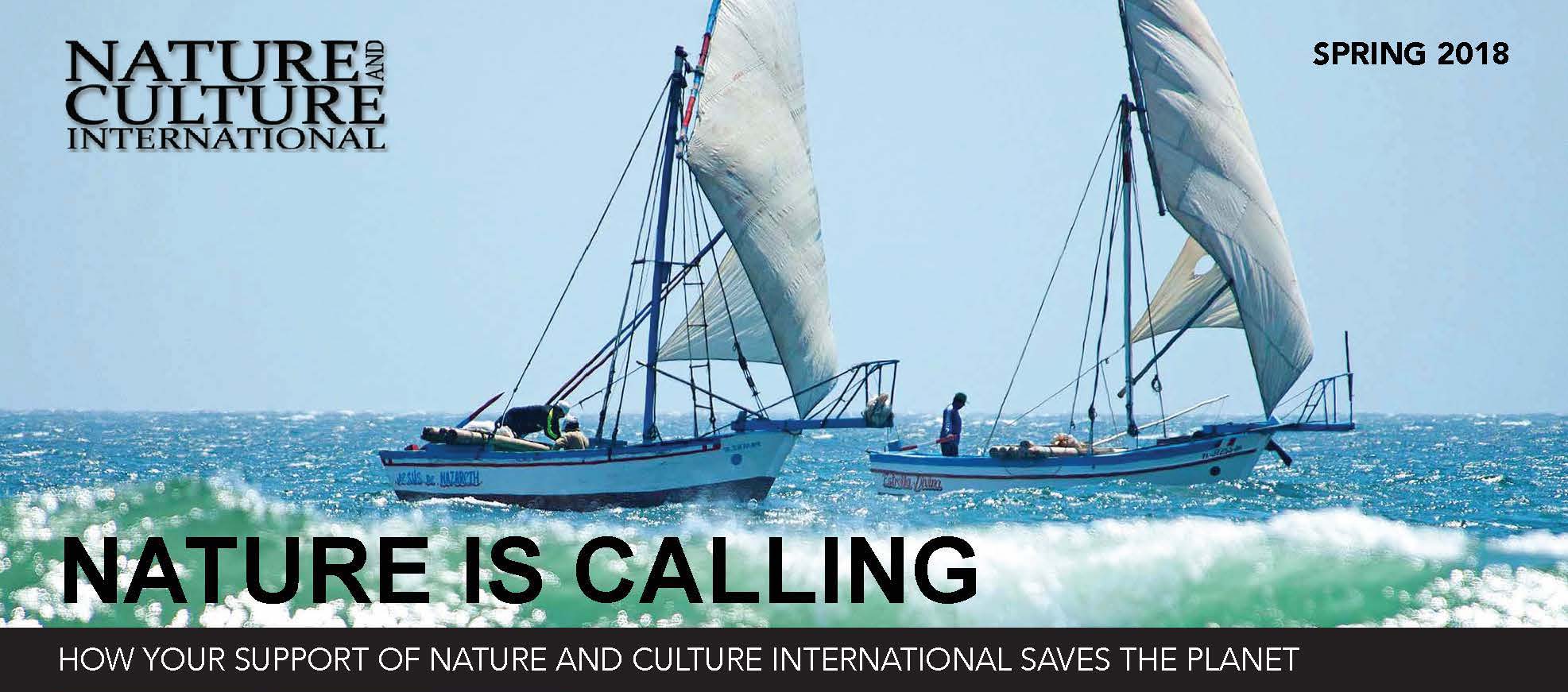
Our latest newsletter shares how your support of Nature and Culture International is saving the planet.

A special thank you to our partners Andes Amazon Fund, Stiefel Behner Charitable Fund, Robert Wilson Charitable Trust, Tinker Foundation, the Gordon and Betty Moore Foundation, World Land Trust, Critical Ecosystems Partnership Fund, the Moxie Foundation, and Nature and Culture’s Board whose generous financial support helped us achieve the goals highlighted in this newsletter.

We hope that with this little bit of news, you will be inspired by the programs that you have supported that help nature and culture thrive.

Nature is calling to thank you for your continued support. Our second ever newsletter shares how you have made the protection of millions of acres of biodiverse ecosystems possible.

We hope that with this little bit of news, you will be inspired by the programs that you have supported that help nature and culture thrive.