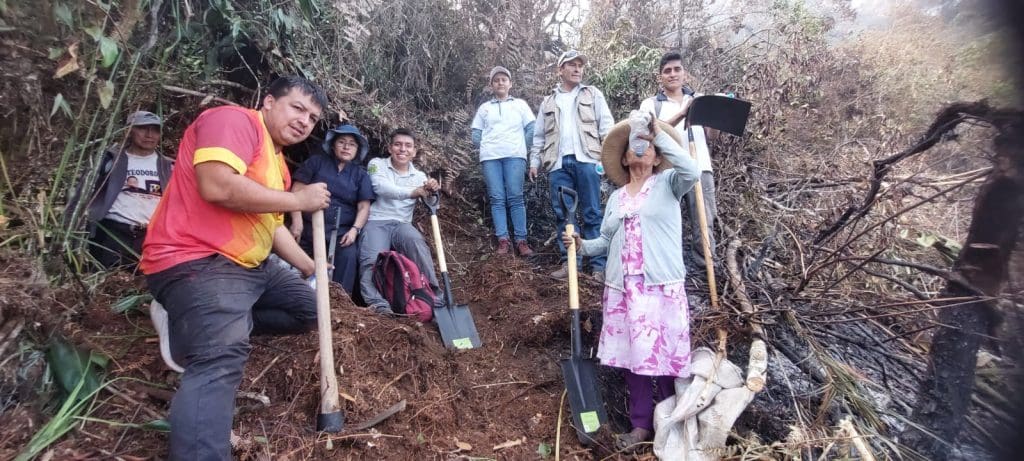
Amid Record Fires, One Bolivian Forest Stands Strong  

custom interior divider

In 2024, fire became the main driver of deforestation, but Indigenous leadership and collaboration kept Bolivia’s Ñembi Guasu Protected Area safe 

According to the Global Forest Review, 2024 marked a dangerous new milestone for the world’s forests: wildfires became the leading cause of tropical primary forest loss, responsible for nearly half of global tropical deforestation. This shift reflects a growing crisis fueled by climate change that threatens biodiversity, accelerates carbon emissions, and underscores the urgent need for proactive forest management, especially by communities on the frontlines.  

Nowhere was this trend more evident than in Bolivia, which saw a staggering 200% increase in primary forest loss—climbing to the second-highest level worldwide in 2024, behind only Brazil. 

Amid this destruction, the Ñembi Guasu Protected Area defied the national trend. It prevented both forest loss and fire damage for the second year in a row—the only documented case of its kind in Bolivia. 

Protected Area Resists the Flames 

Ñembi Guasu is located in southern Bolivia’s Gran Chaco ecoregion, one of the most ecologically and culturally important regions in Bolivia. Officially recognized in 2019, Ñembi Guasu spans nearly 3 million acres, making it the second-largest protected area in the region and a vital refuge for biodiversity, home to threatened species such as jaguars, giant armadillos, tapirs, and over 1,000 endemic plant species.  

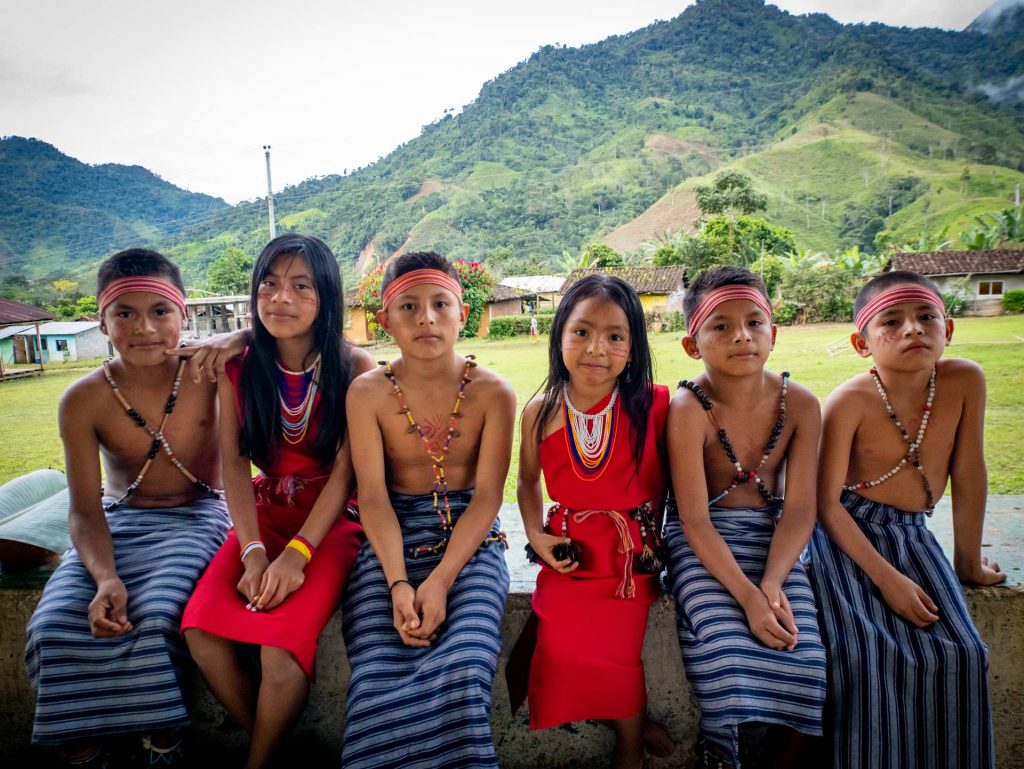
The protected area lies within the territory of Charagua Iyambae (Bolivia’s first Indigenous autonomy) and holds deep cultural and ecological significance for the last uncontacted Indigenous Peoples outside of the Amazon — Ayoreo families who live in voluntary isolation and have cared for this land for generations. 

In a year when fire ravaged Bolivia’s forests, Ñembi Guasu stood out as the only documented case in the country where forest loss and fire damage were successfully prevented. According to the Global Forest Review, it’s a rare example of effective, locally driven prevention in the face of overwhelming pressure. 

The Guardian also highlighted this rare victory in its coverage of the global forest crisis: 

“Bolivia experienced its worst fire season on record… but the Charagua Iyambae Indigenous territory successfully resisted fires through land‑use policies and early‑warning systems.” 
Read the article › 

Building Local Capacity: A Model for Forest Protection 

Ñembi Guasu’s success is no accident. It’s the result of years of investment in local capacity, Indigenous governance, and coordinated prevention strategies—especially in the face of ongoing threats from illegal burning, agribusiness expansion, and road construction. This work has been made possible through close collaboration between the Charagua Iyambae Indigenous government, the Bolivian NGO Fundación Nativa, and Nature and Culture International

At the center of this model are Guaraní park rangers and community conservation staff, who monitor the forest year-round. Trained in fire prevention and early detection, they patrol the landscape, identify signs of risk, and report threats to both Indigenous authorities and local municipal governments. This coordination enables fast, collective action before fires can spread or illegal incursions escalate. 
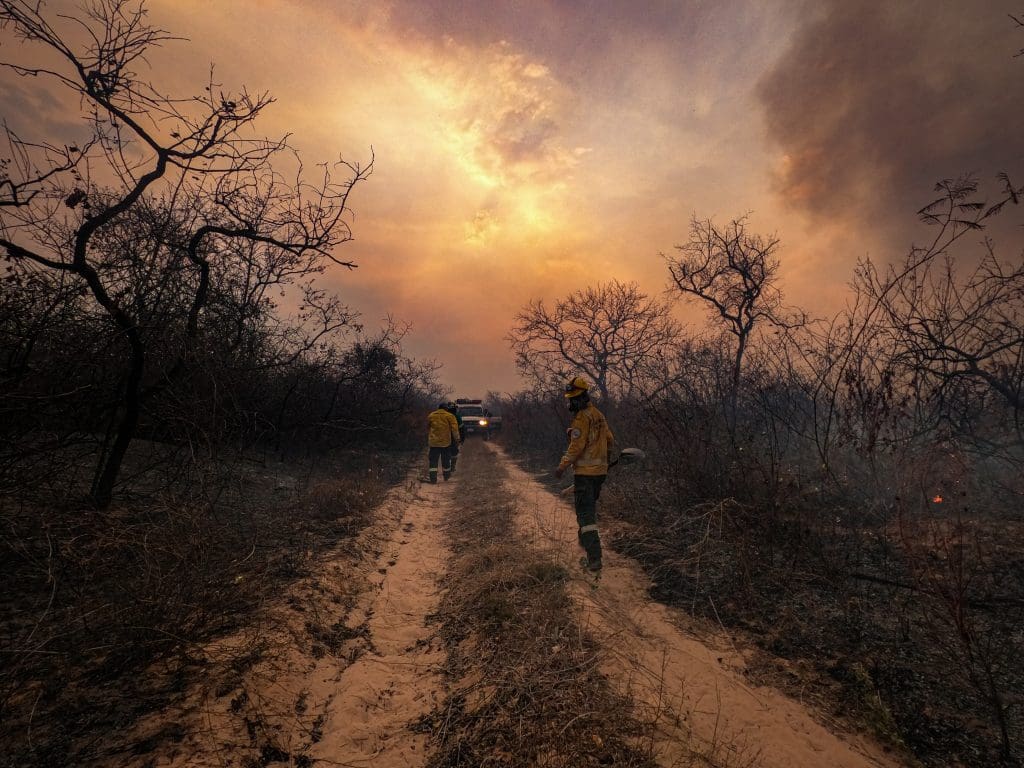
Their work is supported by GPS and satellite monitoring systems, as well as tools and training developed to help the Charagua Iyambae Indigenous autonomy document deforestation, defend territorial rights, and enforce land-use plans. Local enforcement is guided by culturally grounded conservation plans, rooted in ecological knowledge and legal frameworks. 

As Iván Arnold, Director of Fundación Nativa, explains: 
“This achievement is neither accidental nor the result of less external pressure. The difference lies in the approach. For years, the Indigenous government of Charagua Iyambae has led its own model of land management—one that’s community-based, culturally grounded, and guided by deep knowledge of the territory.”  

Ñembi Guasu shows that with the right tools, partnerships, and leadership, even the most fire-prone forests can be protected.  

The Urgency to Replicate Success 

Ñembi Guasu’s success offers a powerful answer to the global challenge of the rise of wildfires as the primary cause of tropical forest loss. Indigenous leadership and locally rooted collaboration are essential to protecting forest landscapes.  

Nature and Culture centers its work on community-led conservation. We work alongside local and Indigenous partners to strengthen protected areas across Latin America, including those most vulnerable to fire. In these high-risk landscapes, local leadership—combined with coordinated policy and technical training—does more than prevent devastating fires. It offers a proven, scalable path forward in the face of mounting climate threats. 

As climate threats grow, community-led conservation offers not just hope—but a clear path forward. 
Welcome to Nature and Culture’s 2025 Newsletter

A conservation update on our wins across Latin America, and a look at the impact you’ve made on some of our biggest projects so far in 2025.

We have a lot to celebrate! You’ve helped create five new protected areas, including Corazón de la Amazonía and Cutervo in the Andean Bi-National Corridor linking key ecosystems in Ecuador and Peru. In Bolivia’s Chaco, communities are advancing wildfire prevention in one of the region’s most threatened landscapes.

Thank you for making this impact real.

Protecting Nature and Going Big for the Planet

In 2024, we deepened our impact across some of the most biodiverse and threatened regions of Latin America. From expanding protected areas in the Andes to advancing Indigenous-led conservation in the Amazon, our work was guided by one powerful belief: conservation must work for nature and for people.

Our annual impact report reflects the collective efforts of local communities, partners, and supporters like you. Together, we’re not just protecting landscapes—we’re shaping a future where ecosystems thrive and communities lead the way.

With January drawing to a close, we’re looking ahead to a crucial year for conservation. Here’s how we plan to strengthen our mission in 2025 and beyond. 

There’s no denying that 2024 was a challenging year. Communities around the world felt the effects of climate change firsthand: devastating floods, prolonged droughts, uncontrolled wildfires, and record-breaking temperatures. If there were ever a sign to act, 2024 gave it to us loud and clear. 

But challenges are not roadblocks; they are calls to action. And action is what we do best.

2025 is a critical year for nature. It is a year for bold action, for strengthening alliances, and for doubling down on our commitment to the planet’s most biodiverse places.

Over the last 25 years, Nature and Culture has worked to protect large, intact, and interconnected forests that sustain life, safeguard biodiversity, and help combat climate change. We believe that conservation is most effective when led by those closest to the land—local communities, Indigenous peoples, and regional governments. And in 2025, we are prepared to strengthen our efforts and expand our impact like never before! 

Our goals for 2025 onward

  • Expanding protected areas: We will continue working with local and Indigenous partners to establish new protected areas, particularly in vital regions like the Amazon rainforest and the Andean-Amazonian Transboundary Conservation Corridor.
  • Strengthening long-term conservation efforts: Creating a protected area is just the beginning. We are committed to safeguarding these landscapes for generations. This means implementing funding mechanisms and long-term strategies that guarantee effective conservation and management.
  • Fostering collaboration: The challenges facing our planet cannot be solved alone. Conservation requires coordinated efforts from governments, local communities, Indigenous groups, and partner organizations. Together, we can scale up our impact and protect more land than ever before.

Together, let’s give it our all for nature!

Early Fire Season is Devastating South America, Nature and Culture provides technical expertise and equipment for wildfire prevention and response

South America is facing a devastating fire season that started unusually early this year. Typically starting in October, one of the most extreme droughts in decades and extreme heat have led to an early onset of fire season and record-breaking loss. Shifted rainfall patterns from El Niño, increased temperatures due to climate change, and reduced humidity from deforestation all contributed to the problem.  

Brazil and Bolivia are facing the worst of the fire season. By mid-September 2024, the Brazilian Amazon has recorded over 94,000 fires, while Bolivia has recorded nearly 10 million acres (4 million hectares) affected by wildfires this year.

Our team is acutely aware of the wildfire crisis impacting South America. In areas like the Bolivian Chaco and the Páramo in Peru and Ecuador, we work with local communities to develop wildfire prevention and response skills. By building a strong network for coordination and support, we can better contain and mitigate larger, more intense blazes. This proactive approach has been crucial in managing this year’s fires. 

Impact on Wildlife and Human Health

Fires are destroying forests, threatening endangered species, and disrupting entire ecosystems for species like the Andean bear, the Wooly monkey, and the Ecuadorian vizcacha. The widespread loss of forest cover accelerates soil erosion and degrades water sources. Not only are we seeing critical biodiversity loss, but the degraded air quality from the smoke poses an extreme threat to human health. Local communities that depend on agriculture face economic challenges and food insecurity, and entire lives are disrupted as schools are closed and families are forced to evacuate away from fire-affected areas.

Katy Carrillo, Andes del Norte Mosaic Coordinator for Nature and Culture in Peru, emphasized the severity of the situation, noting that the fires require immediate action by both the State and the population. “The restoration of affected ecosystems is a long and complex process, which could extend for decades or even centuries in serious cases,” she said highlighting the long-term impact of the fires as well as the urgency of an effective, collaborative response. 

Threats to Nature and Culture’s Protected Areas

In Peru, fires have impacted protected areas supported by Nature and Culture in the Amazonas, Cajamarca, and Piura regions. Our team’s efforts to form and train forest fire prevention brigades have proven crucial in responding to these challenges. Equipped with the necessary tools and materials, these brigades have been on the front lines, taking immediate action to control the burning and minimize forest loss. Katty Carrillo emphasized the importance of these local firefighters’ rapid response, stating, “It is these brigades who have acted immediately and have managed to control the burning protecting large areas of forest.” Local communities have the most important role in fire prevention and control. 

ACR Páramos y Bosques Montanos de Jaén y Tabaconas in Peru

Ongoing fires in Quilanga and Loja, Ecuador, have already devastated over 24,000 acres, threatening vital ecosystems like dry forests and páramo, both of which store significant amounts of carbon. The region’s high winds and rugged mountainous terrain make firefighting efforts difficult, allowing fires to spread rapidly. Communications Coordinator Aida Maldonado noted that “the fires in Ecuador are causing profound damage to ecosystems, leading to severe biodiversity loss and directly threatening wildlife. There is concern that populations like the Ecuadorian vizcacha are among the most affected.”

Fires moved into our Ñembi Guasu protected area on August 1st, affecting approximately 1,850 acres of tall transition forest from the Chaco to the Chiquitano ecosystems. The park rangers in Ñembi Guasu, trained and prepared for such events, utilized their skills in creating defense lines, backfires, and direct combat to manage the fires and prevent further damage. Additionally, the rangers grow species of plants from fire-affected areas in a greenhouse at their headquarters to regenerate the burned areas. These efforts, supported by Nature and Culture, have made a marked difference.

Long-term Management and Community Engagement

Training and preparedness have drastically reduced the damage in comparison to previous years in our protected areas. For instance, fires in 2019 caused devastation over 400,000 acres in Ñembi Guasu, while this year, thanks to the training and quick response, only 1,850 acres were affected, showcasing the effectiveness of bolstering local capacities and investing in long-term management strategies. 

Our approach to protecting areas extends far beyond the initial declaration. Effective long-term management requires a continuous commitment to maintaining and defending these ecosystems. This includes employing park guards who are trained to monitor and protect the land, providing ongoing technical support, and fostering collaboration with local government. This proactive engagement is crucial for safeguarding forests and ecosystems for the long term, and it reinforces the importance of local involvement in environmental conservation. Through this holistic approach, we are not only protecting vital ecosystems but also building a foundation for sustainable conservation efforts. 

The Importance of Continued Support and a Call to Action

The scale of the current challenge reminds us that our work is far from over. The increasing frequency and severity of wildfires underscores the urgent need for continued support and expansion of our efforts in forest management, community training, and ecological restoration. Every donation helps us equip local fire brigades, train park rangers, and implement strategies that can mitigate the devastating impact of these fires. By supporting long-term management of protected areas, we can ensure these vital ecosystems are not only preserved but actively defended against future threats. Your gift enables us to provide the necessary resources and expertise to those on the front lines of conservation. 

We invite you to join us in this vital work, whether through donations, advocacy, or spreading awareness. Together, we can make a difference in the fight against these unprecedented fires and protect the rich biodiversity of our planet for generations to come.

A conservation update on our efforts across Latin America, and a deeper look at some of our biggest projects yet.

Welcome to the summer edition of Nature and Culture’s Newsletter. We have a lot to celebrate! From Peru’s Mar Tropical de Grau to the rain-soaked Chocó rainforest of Colombia, journey with us as we explore thriving landscapes and the communities that protect them.

The effectiveness of our collaborative efforts is remarkable, and none of this would have been possible without you, our Nature and Culture Community! Since our founding, in total we have protected 26 million acres, preventing 3.9 billion tons of CO2 emissions!

JUMP TO FULL REPORT

As you read through our Impact Report, we invite you to join us in celebrating our achievements.

Here’s a look at some of the incredible work you helped support over the last year.

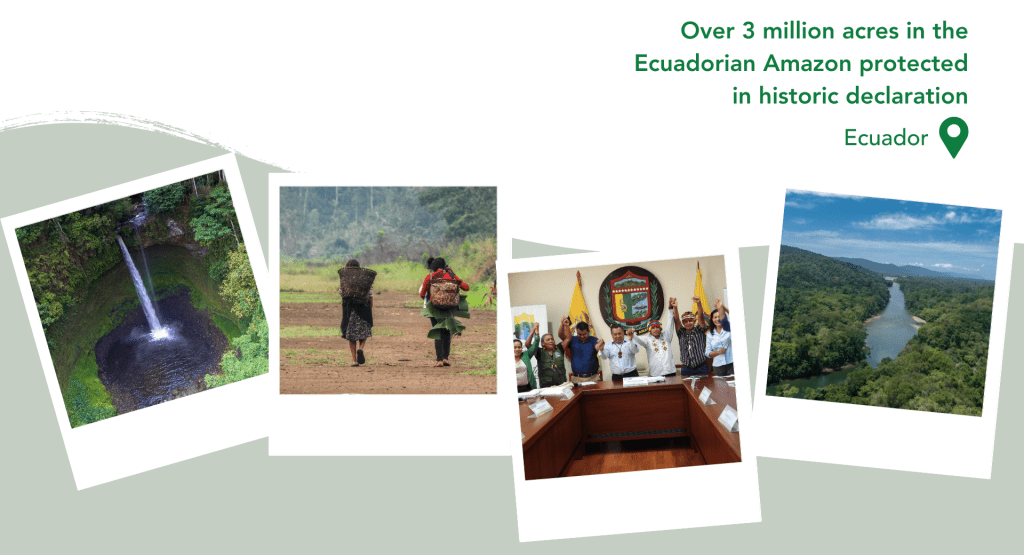
On February 1, 2023, two Indigenous nationalities came together with the Provincial Government of Morona Santiago, Ecuador to create the 3,057,670-acre reserve, named  Tarímiat Pujutaí Nunka in Shuar, which roughly translates to “Territory of Good Living.” 

With the generous support of our donors and partners, Nature and Culture has been working since 2021, to facilitate a participatory process that led to the protection of this massive connected Amazonian forest. This process involved hosting 21 community meetings, during which 893 community members shared their traditional ecological knowledge, worldviews, and visions for a sustainable future within their ancestral territory to preserve natural and cultural resources for future generations.   

The declaration of this area aims to improve the quality of life for local communities through sustainable development opportunities, while safeguarding its 744 million tons of above-ground carbon stores.  

Tarímiat Pujutaí Nunka joins as the centerpiece of the Amazonian Platform, a collaborative alliance uniting 7 Indigenous nationalities and 3 Provincial Governments in protecting 11 million acres of continuous Amazonian rainforest. About the size of West Virginia, U.S. in total, this impressive biological corridor collectively sequesters an estimated 2.3 billion tons of above-ground carbon.  

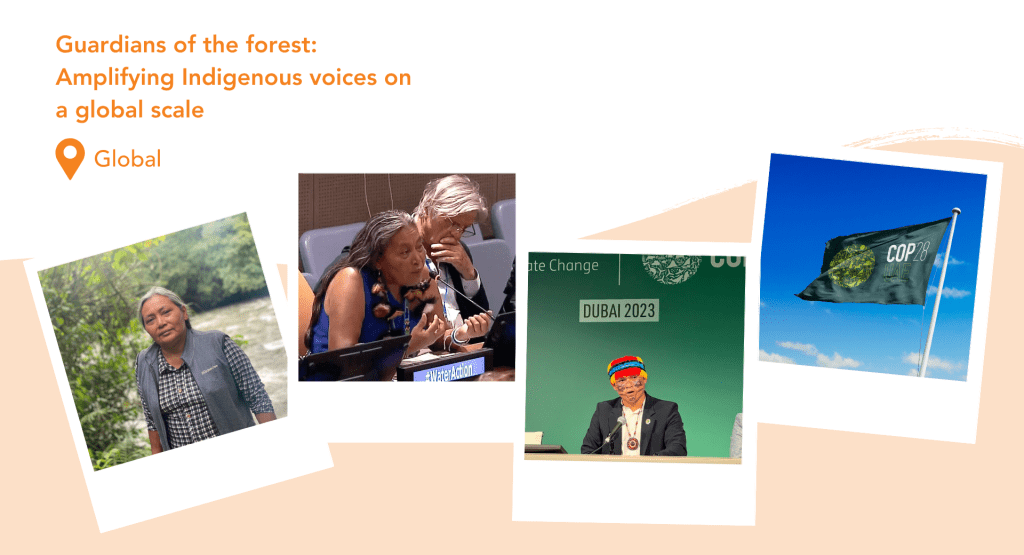
The opportunity for Nature and Culture to attend the international climate conference, COP27, in 2022, and amplify Indigenous voices in climate action was a significant milestone for the organization. In 2023, we continued to build on the momentum and champion the presence of Indigenous leaders in pivotal international forums. 

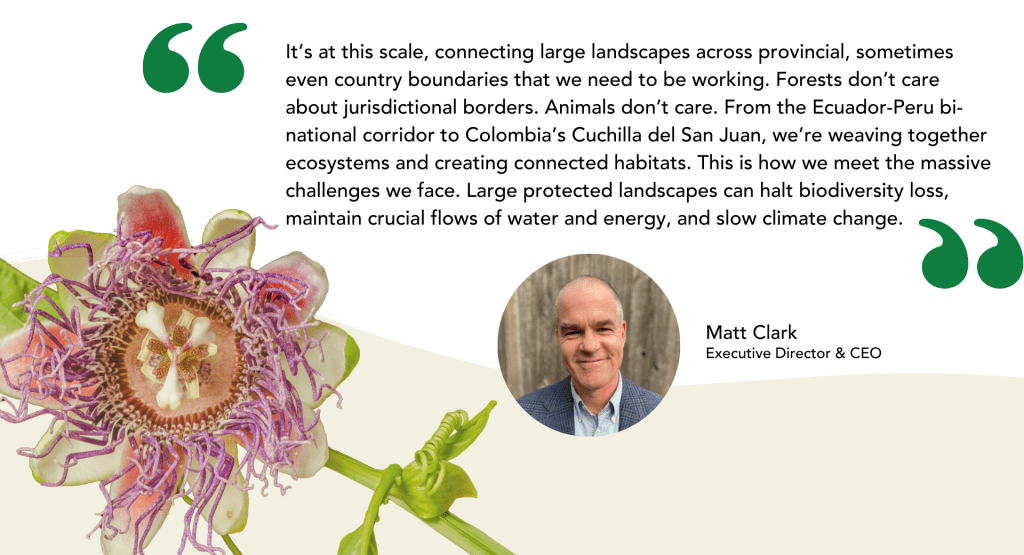
In March 2023, Josefina Tunki, former President of the Shuar Arutam Nationality, journeyed to the United Nations Water Conference in New York alongside Nature and Culture, Executive Director, Matt Clark. Josefina delivered a compelling presentation on the critical issue of water resources in the Amazon. Josefina’s perspective was enriched by her deep connection to the land, stemming from her leadership in safeguarding the 3-million-acre protected area, Tarímiat Pujutaí Nunka. She is fighting to keep her ancestral territory free of mining activities that have devastated her community. 

Later in the year, our esteemed partners, Governor of Morona Santiago, Tiyua Uyunkar and Pastaza Governor André Granda, took the stage at COP28, proudly representing the Amazonian Platform—a testament to the collaborative efforts between Nature and Culture, subnational governments, and local Indigenous communities. They shared the remarkable successes achieved in protecting the Ecuadorian Amazon. Together, we’re safeguarding an astonishing 11 million acres of pristine forest, forming the largest biological corridor in Ecuador. 

By facilitating the participation of Indigenous leaders in global dialogues, we are supporting them in reshaping the narrative on conservation and climate action. Their invaluable insights, rooted in millennia of lived experience, are indispensable in shaping policies and solutions. As we forge ahead, Nature and Culture remains steadfast in our resolve to amplify Indigenous voices, ensuring that their rightful place at the forefront of the environmental movement is acknowledged and respected on a global scale.

In 2019, we celebrated the establishment of the Ñembi Guasu protected area, safeguarding 3 million acres in the Bolivian Gran Chaco. That same year, the world watched in horror as wildfires ravaged the country’s southern region of Santa Cruz.

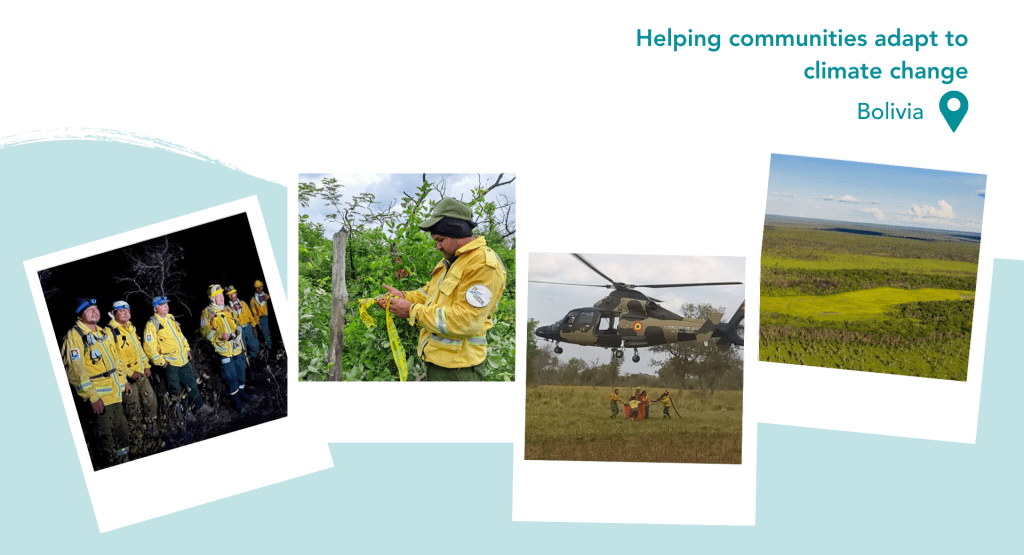
Since then, Nature and Culture and one of our local implementation partners, have been working to ensure the long-term health of the Ñembi Guasu area. We’re doing this in several ways, including the creation of a management framework and sustainable finance mechanism, the development of a firefighting patrol, and post-wildfire reforestation projects. Recognizing the growing risk of fire in Bolivia’s precious dry forests, we have provided firefighting tools, conducted fire safety awareness campaigns, and devised emergency firefighting strategies to mitigate future disasters.  

Helping communities adapt to climate change is crucial because, despite efforts to mitigate its causes, the impacts of climate change are already being felt globally. These impacts often disproportionately affect vulnerable communities. By supporting adaptation measures, such as building resilience, enhancing infrastructure, and implementing early warning systems, communities can better withstand the effects of climate change and minimize associated risks to livelihoods, health, and well-being.

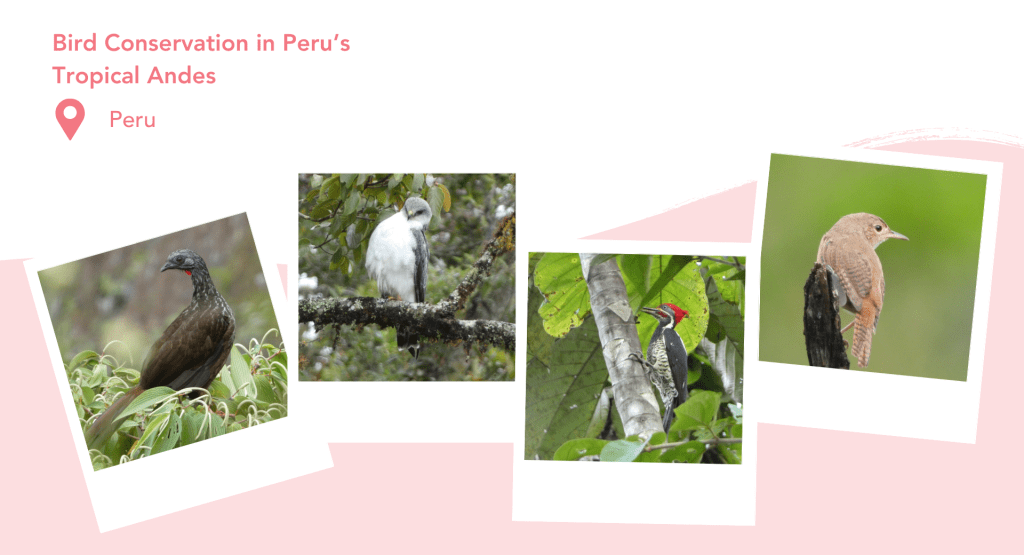
In the last eight years, Nature and Culture has documented more than 450 species of birds in areas we protect in the northern Tropical Andes of Peru, 24 percent of the country’s recognized avian species. Our work here spans a 3,763,481-acre ecoregion of high-altitude grasslands and cloud forests.  

Two new subnational areas are in the works which will join to surrounding protected areas between the departments of Huánuco and San Martín, Peru. This ecoregion provides critical habitat connectivity and food resources to birds and other wildlife in the region. 

Monitoring wildlife within the areas we protect is just one way we gauge the efficacy of our work. It also allows us to prioritize new areas for conservation as species’ ranges shift in response to climate change.  

In Ecuador, Water Protection Areas (WPAs) are a unique conservation measure aimed at safeguarding water resources for local populations and protecting key watersheds and their surrounding ecosystems. These areas legally shield forests and natural ecosystems from harmful activities like mining, ensuring a clean water supply and food security for local communities. From 2019 to 2022, our team in Ecuador spearheaded a comprehensive national-level hydrological study. This effort culminated in the creation of a Priority Map of Hydric Zones covering approximately 17.3 million acres. The study was instrumental in aiding the Ecuadorian government in prioritizing its watershed conservation projects, called Water Protection Areas.

Since the inception of this conservation mechanism, 32 Water Protection Areas have been established, 20 with Nature and Culture’s support. In 2023 alone, 12 areas were established, protecting 150,000 acres, and bringing positive change to the lives of 85,000 residents.


2023 Annual Impact Report

Welcome to Nature and Culture’s latest conservation update, a direct glimpse into our ongoing efforts across Latin America.

We’re excited to share updates on our latest initiatives and projects, including a 360 view of one of our very first protected areas, the Cazaderos Reserve, a brand new protected area in Bolivia, and amazing avian biodiversity in Peru.

Our commitment to safeguarding the rich biodiversity and cultural heritage of this remarkable region remains unwavering, and it is thanks to supporters like you that our projects continue to thrive. Thank you for joining us on this journey!

Real Stories. Real Impact.

The Laderas Norte Community, the NATIVA Foundation, and Nature and Culture International established the first rural municipal protected area in Bolivia’s Southeastern Tarija Province that will protect important nesting ground for the emblematic condor.

On August 24, 2023, the City Council unanimously approved the law establishing the Quebracho and Condor Nature Reserve, covering 8,144.57 acres. The reserve is particularly special because of its role in the preservation of the Andean condor (Vultur Gryphus) and the rare white Quebracho tree (Aspidosperma quebracho blanco).

A tragic background 

In February 2021, a devastating incident struck the Laderas Norte community in Bolivia. Thirty-four majestic condors perished after consuming poisoned meat. This incident had a profound impact on both the local area and the entire nation.

34 Andean condors were tragically killed in 2021 leading to a communal effort to protect this magnificent bird

The condor is a symbol of South America and holds a special place as Bolivia’s national bird. Beyond its symbolic importance, this majestic bird serves as a crucial component of ecosystems. As a scavenger, it plays a vital role in preventing the spread of harmful bacteria that can pose health risks to humans. Additionally, it aids in regulating the populations of various species, contributing to the overall balance and harmony of local ecosystems.

However, its population has experienced a rapid decline, going from being listed as “Near Threatened” to “Vulnerable” on the IUCN Red List in December 2020. 

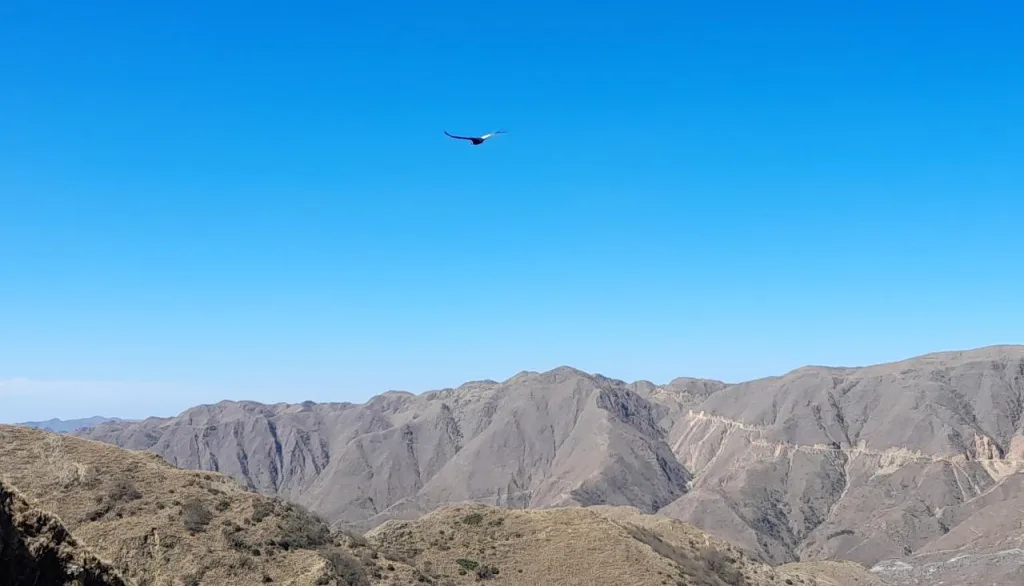
Condor flying over newly established protected area.

The community of Laderas Norte, known for its commitment to conservation, donated 141 acres to the municipality a decade ago to protect the condor and the only white quebracho forest in the Central Valley of Tarija. It was in this very place that the lifeless condors were found, worrying the local population, and prompting them to take action.

The only white quebracho forest in the Central Valley of Tarija.

A turning point toward conservation 

The community, in its eagerness to avoid future tragedies and protect its environment, requested support from the authorities and social organizations to improve their quality of life through conservation and sustainable development projects. In addition, they expressed their concern about the illegal exploitation of timber in the area, a threat to valuable species such as cedar (Cedrela lilloi), red quina (Myroxylon peruiferum), walnut (Junglas australis), tipa (Tipuana tipu), among others. 

Thus began the collaboration between the community of Laderas Norte, the NATIVA Foundation, our implementing partner in Bolivia, and Nature and Culture. Despite the challenges, such as border conflicts and misinformation, the creation of the Quebracho and Condor Nature Reserve was achieved. 

Reserve highlights

The reserve is notable for several key reasons: it plays a critical role in preserving the Andean condor, protecting the white quebracho tree, conserving vital ecosystems spanning from the Central Valley of Tarija to the Bolivian Tucuman Jungle, safeguarding water sources, and ensuring the safety of endangered species like the quirusilla plant (Gunnera apiculata). Furthermore, it serves as a picturesque destination, making it an excellent choice for adventure tourism.

This achievement is a testament to the commitment and determination of the Laderas Norte community. By declaring their territory a “municipal protected area in perpetuity,” they have taken a bold step toward conservation. 

This milestone has been made possible thanks to more than two years of collaboration between the community of Laderas del Norte, the NATIVA Foundation, the Municipal Government of Tarija, the Ministry of Environment, the Directorate of Tourism and the Municipal Council, with the Environment and Tourism commissions, backed by the financial support of Nature and Culture International and Andes Amazon Fund. 

Congratulations to the community of Laderas del Norte and all the organizations that made it possible! 

Not all rainforests are alike

Rainforests are ecosystems that experience a large amount of annual rainfall. They support an incredible number of plants, animals, and other life forms. Although they occur in different parts of the planet, tropical rainforests are found on and around the equator where sunlight is consistent throughout the year.

Nature and Culture International has projects and protected areas in rainforest ecosystems in many types of rainforest in South America. Our work occurs in the lowland Amazon rainforest, cloud forests in the Andes, and the Chocó forest of coastal Colombia and northern Ecuador. 

Andean Cloud Forest: Highland rainforest 

The extraordinary cloud forests of the Andes are a type of mid-altitude tropical rainforest. When humid air, transpired from the billions of trees in the lowland Amazon, moves west and up the mountain slopes of the Andes, some of it condenses and falls as rain. Some remain in the form of low clouds and mist, which condenses directly onto the foliage of cloud forest trees.

Cloud forests extend from about 3,000 feet in elevation up to about 8,000 feet, so temperatures tend to be cooler than in lowland rainforests. The terrain is often on steep slopes, with more open canopy, leading to more vegetation on the forest floor.

These higher-elevation forests are characterized by waterfalls and quick-moving, shallow rivers.

Cloud forest trees are often covered in plants called epiphytes, which capture much of the moisture found in cloud forests. Clouds and mist condense on the epiphytes’ leaves and pool at the bases of epiphytes (providing habitat for insects and some types of frogs). Trees here are generally shorter than in lowland rainforest, hence the cloud forest tree canopy is lower.

Nature and Culture is currently working with local communities and authorities in our North Andes Mosaic to protect highland forest in Peru which is essential for providing water resources to over two million people who live in the region.

Amazon: Tropical rainforest east of the Andes

The Amazon rainforest is the largest tropical forest on Earth, with the highest density of plant and animal species anywhere.

This region provides essential ecological services, stabilizing the world’s rainfall patterns and storing massive amounts of carbon that mitigate climate change.

This lowland rainforest is east of the Andes mountain range and spans eight South American countries. The Amazon is impressively large, more than double the size of the next two largest rainforests combined. It is also well known for its mighty Amazon River which is made up of 1,100 tributaries, including the Marañón River which is considered the source of the Amazon in Peru. 

The province of Loreto, Peru, is facing the second-highest rate of deforestation in Peru. Nature and Culture is currently partnering with Indigenous communities and local authorities through sustainable livelihood projects in our Nanay-Tigre Mosaic.

Chóco: Coastal rainforest west of the Andes

On a strip of forest in western Colombia and Northwestern Ecuador, between the Pacific Ocean and the Andean mountain range is the Chocó forest.

It is a dense and diverse tropical rainforest that blends with adjoining mangrove forests, rocky cliffs, and coastal plains.

It is one of the world’s wettest rainforests and one of the most biologically rich areas in the world. Many species here cannot be found anywhere else on Earth, such as the golden poison frog (one of the three most poisonous vertebrates in the world).

Between two to three percent of this ecosystem is left, making it one of the most threatened and lesser-known forests in the world. With Nature and Culture International’s support, the Bajo Baudó protected area was established in 2018. This is the largest regional protected area ever created in Colombia. We are currently working in our Southern Chocó Mosaic to declare two new protected areas and establish sustainable management plans.

Why we protect rainforests

Although rainforests only cover 6 percent of our planet, an estimated 80 percent of terrestrial animals, plants, and fungi species worldwide live within them. Many species have not yet even been described by science. Rainforests contain a huge amount of biodiversity, which has major implications for our health, including improving mental well-being, preventing zoonotic diseases (diseases transmitted from animals to humans – e.g. West Nile virus, Lyme Disease, and some types of coronaviruses, among many others) from entering human populations, and providing fresh water, clean air, and vital medicines. Indigenous peoples have lived in and sustainably managed tropical rainforests for centuries, if not millennia. Many Indigenous communities are reliant upon the natural resources that the rainforest provides, particularly clean water.

Shuar children

By destroying rainforests, humans are exacerbating the climate crisis by releasing additional CO2 into the atmosphere. All rainforests have a huge volume of carbon stored in the vast amount of vegetation they house. There is so much carbon stored in these ecosystems that, if released, it would not be able to be restored by the 2050 global goal of reaching net-zero emissions; this is known as “Irrecoverable Carbon”.

For World Rainforest Day

and every day, it is important to support rainforest conservation and raise awareness of the threats they face.

We know we can do better for Earth. You can help by spreading awareness and supporting Nature and Culture’s nature-based solutions by pledging your $10 monthly gift today.

Your gift… 

  • Defends wild places from deforestation, mining, and other unsustainable activities  
  • Connects irreplaceable habitat for threatened plants and animals  
  • Supports Indigenous and local communities in mapping, monitoring, and managing forests for the long-term 
  • Preserves the services these ecosystems provide to us all, including clean water and a stable climate 

Over the course of a year, you’ll care for 12 acres – the size of 6 professional soccer fields!

For World Rainforest Day, will you join our community of monthly donors who have pledged to protect South America’s rainforests year-round?

Real Stories. Real Impact.

New protected areas, beekeeping for conservation, and gender equity in reforestation are a few of the stories you’ll explore in our 2023 Spring Newsletter!

Make a donation today to continue supporting projects like these!

The 6th Assessment Synthesis Report from the Intergovernmental Panel on Climate Change (IPCC) warns that despite progress in climate mitigation efforts, the current pace of action is insufficient to keep global temperatures below the threshold of 1.5°C. That is the threshold beyond which scientists say climate impacts increase significantly and damage becomes rapidly irreversible. Below is a summary of the report’s findings.

Action needs to happen now, this is the decisive decade

To ensure temperatures do not exceed the threshold of 1.5°C, global greenhouse gas (GHG) emissions will need to peak within this decade, decline by 43% by 2030, and 60% by 2035. Adverse climate impacts are already far more extreme than initial reports anticipated. The current global surface temperature has already warmed 1.1°C above preindustrial levels. With this alone, there has been an increase in biodiversity loss, drought, extreme heat, and flooding, among other impacts. Despite a decrease in the cost of green energy, improved technologies, and national commitments to reduce GHG emissions. These measures have continued to increase and will fall short. Unsustainable energy use, land use, lifestyles and patterns of consumption and production all contribute to the GHG emissions. A rapid scaling of policy and increased funding to climate is needed to achieve climate stabilization.

Even small increases in overall temperature matter

The report defines the risks, adverse impacts, and related losses and damages from climate change at varying degrees of temperature rises. At each tier, the loss of biodiversity increases, access to clean water and food decreases, and sea levels rise. There is no question that any positive changes to keep global warming in check will help to avoid further loss of life and encourage ecosystem health. At a certain point, it is no longer reversible. As certain losses and damage occur, reversal and adaptation options are far less feasible, if even effective at all. It is important to take every action possible at this very moment. Hope lies in the prevention of further tipping the warming scales.

A member of the Shuar Indigenous nationality in the province of Morona Santiago, Ecuador.

Biggest impacts threaten those who have historically contributed the least to climate change

According to the IPCC, nearly half of the global population lives in areas where their lives or livelihoods are under threat of climate change. It is said that between 3.3 billion and 3.6 billion people live in countries that are highly vulnerable to climate impacts, including those within Central and South America where Nature and Culture operates. In addition, many of these areas face extreme poverty, governance challenges, and limited access to financial resources or technical support. In this 6th Assessment Report, the IPCC also notes that climate adaptation challenges are often “exacerbated by inequity and marginalization linked to gender, ethnicity, low income or combinations thereof, especially for many Indigenous Peoples and local communities.”

Data on the global inequalities of CO2 emissions reveals that higher-earning countries as well as higher-earning individuals produce more of the world’s GHGs and yet it is those who are producing the least who are most heavily impacted. The highest income-earning households contribute around 45% of the world’s consumption-based CO2 emissions, while the bottom 50% account for only around 15%.

The threats of climate change weigh more heavily on regions that are not historically responsible for the production of GHGs; however, the world is looking to many of these areas for quick adaptation efforts or asking for limitation on development that could provide an immediate higher standard of living. That is why it is important to allow these most vulnerable groups or regions inclusive governance, and transparent and participatory decision-making for mitigation and adaptation efforts.

Tropical forests provide ecosystem services such as food security and clean water and air.

What is Nature and Culture’s role?

Protecting Earth’s remaining oceans, plants, animals, and soils is the most cost-effective climate adaptation option. The most potential exists in preventing deforestation in tropical regions. For Nature and Culture that means maintaining tropical forests in the Amazon and Andes. Long-term management of our protected areas supports biodiversity resilience in the region and supports ecosystem services at a global scale, including the sequestration of billions of tons of carbon. Beyond the protection and management of these threatened forests, reforestation and agroforestry (or sustainably cultivating native crops) also contribute to climate mitigation. All these efforts can positively affect local communities if they are done in coordination with the people who live in these areas. Reforestation can improve air quality, access to clean water and food, and agroforestry techniques include economic benefits that have potential to reduce poverty and improve local livelihoods.

The Amazon Rainforest stores billions of tons of carbon and provides ecosystem services to the entire planet. Protection and long-term management of these tropical forests benefits all life on the planet.

Many climate adaptation solutions already exist and positively impact global well-being

According to the report, there are feasible, effective, low-cost, low-trade-off options already available, and many include wider societal benefits. A major conclusion of the synthesis is the need to prioritize equity, climate justice, social justice, and inclusion in the near-term actions to mitigate climate change.

Focusing on societal enhancements like education, hunger, poverty, gender, and energy access can support regions and people with the highest climate change vulnerabilities. It not only supports overall societal well-being, but it can also scaffold climate adaptation development programs. Recognition of the inherent rights of Indigenous Peoples is also crucial to successful adaptation across forests and other ecosystems, according to the report. This has always been a cornerstone of Nature and Culture’s work, prioritizing the needs of the local communities we work with.

Looking to communities, governments and businesses for leadership

Cooperative climate mitigation is essential. This means including climate adaptation practices that are informed by Indigenous Peoples and local communities. Truly effective climate action will involve coordination among many stakeholders. A prime example of this in action is in our work on the Amazonian Platform, This is a agreement between 7 Indigenous nationalities and local governments to manage 11 million acres of the Amazon rainforest. Nature and Culture supports projects that require buy-in from varying levels of government and marketplaces and include frameworks that hear a multitude of voices, including Indigenous Peoples and local communities.

At the Shuar El Kiim Center, the first Indigenous-managed, nationally recognized conservation area is celebrated by members of the Shuar community with Nature and Culture technician, Trotsky Riera.

The climate adaptation measures we implement are done in close collaboration with Indigenous Peoples and local communities and in partnership with local government. These types of projects put people at the heart of the outcome and provide access to finance and technology that would otherwise be unavailable. They often also provide other economic benefits, such as food and water security and improve the overall health of the human populations while safeguarding biodiversity and promoting carbon sequestration.

Please join us in safeguarding our climate future by making a donation today!

As a supporter of Nature and Culture, take a moment to review our impact in 2022! 

Our 2022 Annual Impact Report is a testament to our commitment to community-based conservation. As trailblazers in this field, the well-being of local communities is as important as protecting and conserving natural resources. For us, those go hand in hand.  

Our work is organized into 5 key strategy areas: wild places, climate, water, people, and species. As you read through this report, you’ll see how our team approaches our projects through these lenses, ensuring the long term overall health of the areas we protect. 

Please remember that none of this would be possible without the generous support we’ve received from so many of you!

[vc_row][vc_column][vc_column_text]

Climate change adaptation, species discovery, and newly declared protected areas in Nature and Culture’s latest round-up of news from 2022.

[/vc_column_text][vc_column_text]

Our strength as an organization lies within the passion of people around the globe who share our same dream. As part of the Nature and Culture community, you help us achieve so much — diverse vibrant cultures; wild places alive with plants and animals, and clean water and other ecosystem services for communities throughout Latin America. Thank you!

(more…)

[vc_row][vc_column][vc_column_text]

The best defenders of nature, Indigenous nationalities live sustainably within the most biodiverse places on the planet.

That is why Nature and Culture prioritizes people in our conservation efforts. We provide extensive technical and legal support for communities to define and achieve their own conservation goals. From land protection and sustainable use of the land to the documentation of Indigenous culture, our conservation process examines all components of a potential project.

(more…)

[vc_row][vc_column][vc_column_text]

New protected areas, bioeconomy projects, environmental education, and some of our largest conservation efforts to date in Nature and Culture’s first round of highlights from 2022.

[/vc_column_text][/vc_column][/vc_row][vc_row][vc_column][vc_column_text]

Nature and Culture International’s strength is in people who share the same dreams: of diverse vibrant cultures; of forests and savannas alive with plants and animals; of clean water and air and a livable climate. 

(more…)

[vc_row][vc_column][vc_column_text]

The importance of biodiversity and the threats it faces

[/vc_column_text][vc_column_text]

Biodiversity describes the “biological diversity” of life, whether that be throughout the entire planet or for an individual ecosystem.

It encompasses everything from variations in genetics to all the species in that area, including plants, animals, fungi, and even bacteria. The biodiversity that we know today is the result of billions of years of evolution and it dictates how life interacts with its environment.[/vc_column_text][/vc_column][/vc_row][vc_row][vc_column][vc_column_text]

Why is biodiversity so important?

[/vc_column_text][vc_column_text]We are much more reliant on the ecosystem services that biodiversity provides than it may appear. Biodiversity provides us with many services including clean air and freshwater. Biodiversity also acts as a barrier between us and zoonotic diseases and can also provide us with valuable medicines. There is also a great deal of evidence to show that there’s a positive link between increased biodiversity and our mental health. This makes maintaining biodiversity incredibly important for our survival, as well as all life on the planet.[/vc_column_text][/vc_column][/vc_row][vc_row][vc_column][vc_column_text]Global biodiversity is so rich that we haven’t come close to discovering the number of species there currently is across our planet. There is so much we still don’t know about how these unknown species contribute to their ecosystem. We may lose essential parts of our world before it has even been discovered.[/vc_column_text][vc_single_image image=”21556″ img_size=”large” add_caption=”yes” alignment=”center”][vc_column_text]This is particularly true for forests, which contain the largest amount of biodiversity on the planet. According to the UN Environmental Program (UNEP) more than 80% of terrestrial animals, plants and fungi species are found in tropical forests. Nature and Culture emphasizes the importance of saving large areas of rainforest to protect these valuable ecosystems. We partner with Indigenous and local communities who live in the areas we work to protect and are best equipped to manage their territory. This leads to more successful biodiversity conservation.[/vc_column_text][vc_single_image image=”20204″ img_size=”large” add_caption=”yes” alignment=”center”][/vc_column][/vc_row][vc_row][vc_column][vc_column_text]

What is threatening biodiversity?

[/vc_column_text][vc_column_text]Human activity is having an extremely negative impact on biodiversity. WWF’s 2018 Living Planet Report estimated that there has been a 60% reduction in global populations of mammals, fish, birds, reptiles and amphibians in last 50 years. When this report was published, it was a major shock to the world and highlighted our fears of how critical the situation is. This loss of life has put many species on the brink of extinction and whole ecosystems are suffering.

Major threats to biodiversity and individual species include habitat degradation, climate change, invasive species, over-exploitation and increased pollution, most of which are a direct result of human activities. In the Amazon rainforest, deforestation is occurring at an unprecedented rate for agriculture (e.g. soy bean and palm oil plantations and cattle ranching), mining, unsustainable logging and development (e.g. roads and infrastructure). This degradation is also exacerbating climate change since the Amazon retains a large proportion of the world’s carbon, which would otherwise be in the atmosphere.

To make matters worse, fires have been increasing across major forested habitat. Even though fires naturally occur in many areas, degraded forests are particularly susceptible. By reshaping the biodiversity in an area, we are restructuring the whole ecosystem and making them less resilient to natural disasters.[/vc_column_text][vc_single_image image=”21560″ img_size=”large” add_caption=”yes” alignment=”center”][/vc_column][/vc_row][vc_row][vc_column][vc_column_text]Other risks to biodiversity include the wildlife trade, which pulls large numbers of animals from their natural environment for pets, bushmeat or traditional medicines. These include keystone species that are critically important to the structure of the ecosystem. This trade has dragged animals such as pangolins, multiple primate species, elephants and rhinos to the brink of extinction. Causing the elimination of one species is a tragedy on its own, but it also threatens the biodiversity of the area.[/vc_column_text][/vc_column][/vc_row][vc_row][vc_column][vc_column_text]

What can you do to help to conserve it?

[/vc_column_text][vc_column_text]It may seem as if we are on an unavoidable slope toward disaster, but there is still plenty that you can do to help reduce biodiversity loss. Making more sustainable choices is key since most deforestation, over-exploitation, and other destructive activities are driven by demand. Switching to local and in-season foods or checking for sustainable materials on packaging is a first step in helping to reduce the demand for unsustainable goods.[/vc_column_text][vc_single_image image=”21573″ img_size=”large” add_caption=”yes” alignment=”center”][vc_column_text]You can also help by supporting efforts to return land to Indigenous peoples. It is becoming increasingly apparent that Indigenous communities are better stewards of their land and protect vital ecosystems. Donating to organizations like Nature and Culture will increase resources to help with this transition. By supporting our work, and the work of similar organizations, you can be part of the change to protect our remaining crucial biodiversity, and hence, securing our future.[/vc_column_text][/vc_column][/vc_row]

[vc_row][vc_column][vc_column_text]

Our Mosaic Model is part of our conservation strategy to connect protected areas.

[/vc_column_text][/vc_column][/vc_row][vc_row][vc_column][vc_column_text]Although protecting each individual ecosystem is important, whether it be the habitat of an endangered species or an ecosystem that stores large quantities of carbon, our Mosaic Model emphasizes connecting and protecting larger eco-regions which we call “mosaics.” This strategy considers the connectivity and dynamic processes across ecosystems and large landscapes. Helping to improve ecological flows and species movement in more dynamic conserved areas makes long-term protection more likely.[/vc_column_text][vc_column_text]So, what exactly are mosaics? [/vc_column_text][vc_column_text]In what is traditionally considered an “art mosaic,” an individual tile may be beautiful on its own, but when integrated with other tiles, working with varying colors, shapes and patterns a striking image emerges.

In the field of conservation ecology, “landscape mosaics” work similarly in that they combine varying ecosystems, or patches of land, ultimately coming together to form a networking, functioning landscape. While incredibly wonderful on its own, each ecosystem still relies on surrounding ecosystems to maintain full health.[/vc_column_text][vc_column_text]Why are mosaics important? And what do they have to do with connectivity?[/vc_column_text][vc_column_text]By combining ecosystems together in these landscape mosaics, networks of wildlife movement are formed. This helps maintain whole species’ survival. The movement of individuals is important for genetic flow, which allows for more adaptation to a changing climate and building resistance to degrading ecosystems. Some wildlife travel long distances to migrate seasonally, others need to disperse away from their natal groups to find new home ranges to prevent inbreeding and competition. For many animals, their movement across landscapes also pollinates or disperses seeds, which increases biodiversity.

Unfortunately, deforestation, development, and other extractive activities, are causing ecosystems or small areas of land to be isolated from surrounding ecosystems, thus making it harder for wildlife to roam. These ecological islands isolate wildlife, reducing landscape biodiversity and species’ genetic pools. Overall, the disruption of connectivity stifles ecological processes essential to the well-being of our planet – including clean air and water, nutrient cycling, food security, and climate regulation.

It is therefore vital to keep ecosystems interconnected and interacting, rather than just protecting individual ecosystems or small isolated habitats.[/vc_column_text][vc_column_text]Our Mosaic Model[/vc_column_text][vc_column_text]Our approach is unique in that we not only consider the dynamic web of nature across ecosystems but also work alongside communities and Indigenous groups, as well as national and subnational governments, to define and achieve conservation goals.[/vc_column_text][vc_single_image image=”21476″ img_size=”large” add_caption=”yes” alignment=”center”][vc_column_text]

This model allows us to approach each new protected area with a number of factors in mind, including: connectivity, intact forest, jurisdictional boundaries, shared cultural values, and/or economic similarities, just to name a few.

[/vc_column_text][/vc_column][/vc_row][vc_row][vc_column][vc_column_text]Partnering with local communities, Indigenous nationalities and local governments for long-term management of our protected areas.[/vc_column_text][vc_column_text]Gaining protection for these areas is just half the battle; our work is ongoing, and we must continue to ensure these areas maintain their protected status. In our 22 years, our strategy of partnering and building relationships with Indigenous communities and local governments has paid off, as we have not had a single protected area reversed. By working with Indigenous communities directly, we have a better chance of conserving these important landscapes for the long term. By protecting ancestral culture and the land they live on we are also helping mitigate climate change since millions of tons of carbon is stored in these ecosystems. [/vc_column_text][vc_column_text]Monitoring our Mosaics by examining “Vital Signs”[/vc_column_text][vc_single_image image=”21474″ img_size=”large” add_caption=”yes” alignment=”center”][vc_column_text]Nature and Culture has developed long-term strategies for the continued protection of our landscape mosaics. After an area is officially protected, it requires continuous monitoring and evaluation. In order to maintain healthy mosaics, we provide ongoing supervision, planning, and funding. We assess all our mosaics for “Vital Signs,” in the same way a doctor would for her patient. If the Vital Signs are in good health, we can protect the mosaic for the long haul. [/vc_column_text][vc_column_text]To demonstrate that the mosaic is healthy, the Vital Signs it must have are: 

  1. An official recognition of the mosaic by a state entity or international body. 
  2. A clear and recognized legal status of conservation areas by the corresponding state, through its different levels of government. 
  3. A governance mechanism and natural resource plans ensures that there is an entity responsible for the management of the conservation areas, those entities could be public, community, Indigenous and /or private. 
  4. A multi-year action plan aimed at guaranteeing conservation of the mosaic’s reserve areas. 
  5. A financial mechanism, such as conservation funds or water funds, that guarantees economic resources for the conservation and management of its protected areas. 
  6. A monitoring and control mechanism tracks the conservation status of natural ecosystems and assesses the effectiveness of the conservation measures that are implemented. 

By evaluating these Vital Signs, we can make sure that the work we do has maximum impact and that your donations go to the most valuable causes, to protect important landscapes and the communities that rely on them. You can assist with our ongoing work and help our continued protection of these extraordinary landscape mosaics by giving now using the link below.[/vc_column_text][vc_column_text][vc_btn title=”Give Now” style=”custom” custom_background=”#0f7d3f” custom_text=”#ffffff” shape=”square” size=”lg” align=”center” i_align=”right link=”url:https%3A%2F%2Fgive.natureandculture.org%2Fprotectlargelandscapes%2F|target:_blank”][/vc_column_text][/vc_column][/vc_row][vc_row][vc_column][vc_column_text]

Nature and Culture’s 13 Large-Scale, Eco-Regional Mosaics

[/vc_column_text][vc_column_text]Nature and Culture International understands the importance of protecting these large landscape mosaics and we work hard to protect combinations of ecosystems to conserve the world’s most amazing wildlife and safeguard the communities that rely on them.

We currently concentrate our efforts on 13 large-scale eco-regional landscape mosaics, encompassing about 30 million acres across Ecuador, Peru, Mexico, Columbia, and Bolivia. We work to protect these amazing landscape mosaics for the long term, making sure that the policies put in place to protect them are enforced, which is why your support for our ongoing work in these areas is so important. Below are some highlights from the 13 mosaics that we currently protect across Latin America.

[/vc_column_text][/vc_column][/vc_row][vc_row][vc_column][vc_column_text]

Ecuador

[/vc_column_text][vc_column_text]Podocarpus – El Cóndor Mosaic [/vc_column_text][vc_column_text]

  • Spans the paramo grasslands, montane forests, and cloud forest ecosystems.
  • The eastern end of the mosaic is very rich in plant diversity. Forty percent of its plant species are only found in this region.
  • It is home to Indigenous populations, principally the Shuar and Saraguro nationalities, who help protect the landscape.

[/vc_column_text][vc_column_text]Dry Forest Mosaic [/vc_column_text][vc_column_text]

  • This mosaic encompasses part of Ecuador’s remaining tropical dry forest.
  • It is home to 59 endemic bird species (found nowhere else on the planet), and almost 20% of plant species found in this region are also endemic.

[/vc_column_text][vc_column_text]Corredor Sangay – Podocarpus Mosaic  [/vc_column_text][vc_column_text]

  • This mosaic is the country’s first connectivity corridor.
  • Extending 1.4 million acres, this mosaic is home to 101 mammal species, 580 bird species, 182 amphibian species, 45 reptile species, and 31 fish species, with new species still being discovered.
  • Contains important water resources for populations and contributes to climate change mitigation by storing 125 million tons of carbon.

[/vc_column_text][vc_column_text]Morona Santiago Mosaic [/vc_column_text][vc_column_text]

  • Contains the UNESCO World Heritage Site, Sangay National Park, and contains everything from tropical forests to glaciers.
  • Encompasses more than 30 ecosystems, including tropical lowland evergreen forest, which stores large amounts of carbon.
  • Holds cultural significance and resources that indigenous populations rely on.

[/vc_column_text][vc_column_text]Pastaza Mosaic [/vc_column_text][vc_column_text]

  • Spans nearly 5 million acres including parts of the Amazon rainforest.
  • Considered one of the most biodiverse areas on Earth, and is home to multiple Indigenous nationalities, including Achuar, Shuar, and Andwa.
  • Captures 946 million tons of carbon, so assists in mitigating climate change.

[/vc_column_text][vc_column_text]

Peru

[/vc_column_text][vc_column_text]North Andes Mosaic [/vc_column_text][vc_column_text]

  • Encompasses some of the most diverse, fragile, and complex cloud forests on Earth. Connectivity between its ecosystems is important for species, such as the mountain tapir and the spectacled bear.
  • An important water source for 2 million people and over 1.2 million acres of agricultural land.
  • Much is unexplored so additional expeditions for research, which NCI aims to support, are planned.

[/vc_column_text][vc_column_text]Carpish – Rio Abiseo Mosaic [/vc_column_text][vc_column_text]

  • Spanning 3.6 million acres, and encompassing forest and paramo ecosystems, this mosaic is one of the most biodiverse places on Earth. 
  • Contains a vast array of endemic bird species, including black-bellied tanager and endangered golden-backed mountain tanager. 
  • Creates atmospheric moisture and rainfall and stores carbon, which helps with climate change mitigation. 
  • Local communities rely on this area for freshwater and plants for medicinal purposes. 

[/vc_column_text][vc_column_text]Dry Forest of the Marañon Mosaic [/vc_column_text][vc_column_text]

  • About one million acres of dry forest, savannah grassland, and montane forest located along the Marañon River between the Andean peaks.  
  • Contains the most biodiverse area within the Tropical Andes Hotspot, known as the Grand Canyon of South America.  
  • Home to hundreds of threatened and endemic species due to its unique microclimate and landscape. 

[/vc_column_text][vc_column_text]Nanay – Tigre Mosaic  [/vc_column_text][vc_column_text]

  • Comprises of large forest areas with 1.2 billion tons of Carbon stored and contains incredible biological and ethnic diversity. 
  • Located in Loreto, which has the second-highest deforestation rate in Peru. 
  • Habitat to endangered species, such as the Giant River Otter and the Harpy Eagle. 
  • NCI is assisting indigenous people with creating a sustainable fruit harvesting business, which increases the value of standing forest. 

[/vc_column_text][vc_column_text]

Mexico

[/vc_column_text][vc_column_text]Southern Sonora Mosaic 

[/vc_column_text][vc_column_text]

  • Spans 1.7 million acres and contains a unique combination of arid and tropical ecosystems, including one of the last remaining Pitayal forests.
  • Creates a wildlife corridor that is used by a variety of endangered species, such as the jaguar.
  • Provides important water stores for several communities, cities, and agricultural land.

[/vc_column_text][vc_column_text]

Colombia

[/vc_column_text][vc_column_text]Southern Chocó Mosaic  [/vc_column_text][vc_column_text]

  • Includes the world’s wettest rainforest, mangroves, rocky cliffs, and coastal plains.
  • One of the most biologically rich areas in the world. Many species here cannot be found anywhere else on Earth, such as the golden poison frog from the Chocó rainforests.

[/vc_column_text][vc_column_text]

Bolivia

[/vc_column_text][vc_column_text]Guaraní Mosaic [/vc_column_text][vc_column_text]

  • This 18-million-acre mosaic encompasses the Chaco dry forest, Pantanal forest, and Andean Yungas forest, which the Guaraní people rely on for resources. 
  • 80% of the mosaic is forest, storing large amounts of Carbon, and is important for species like jaguars (potentially 1000!), peccaries, and lowland tapirs. 
  • Under the constant threat of deforestation from agriculture and cattle ranching.

[/vc_column_text][vc_column_text]IñaoTariquia Water Corridor Mosaic [/vc_column_text][vc_column_text]

  • An important biodiversity corridor for species, such as the military macaw, ocelot and spectacled bear.  
  • Secures water for nearly half a million people, protected under the Reciprocal Agreements for Water. 
  • Contains endemic plant species found nowhere else on Earth, such as the cactus Cleistocactus candelilla and the Guabiyu fruit tree. 

[/vc_column_text][/vc_column][/vc_row]

[vc_row][vc_column][vc_column_text]When we think about the release of carbon dioxide (CO2) into the atmosphere, we often associate it with the burning of fossil fuels and not much else. When we see cars’ exhausts releasing black smoke or power stations puffing clouds into the sky, it’s as though we can see the CO2 accumulating in the air. However, there is another major contributor to CO2 emissions that is less often discussed — the destruction of ecosystems with irrecoverable carbon stores.[/vc_column_text][/vc_column][/vc_row][vc_row][vc_column][vc_column_text]

What is ‘Irrecoverable Carbon’?

[/vc_column_text][/vc_column][/vc_row][vc_row][vc_column][vc_column_text]Natural landscapes hold on to carbon in their ecosystems like air trapped in a balloon. When ecosystems are destroyed, it’s like popping that balloon. Just as the air in a balloon escapes, the carbon sequestered in an ecosystem will be released when the landscape is destroyed.

As vegetation such as trees grow, CO2 from the atmosphere is absorbed by the plant through the process of photosynthesis. This is then converted into carbon which is used by the plant like building blocks. Carbon helps them grow and build biomass like trunks, roots, and leaves.

When plants, which naturally store carbon are destroyed, CO2 is released. This is the plant’s biomass decomposing, or in some cases burning when mass areas are cleared. As we see more ecosystems destroyed to make way for agriculture, development, or mining, among other human activities, we see more of this carbon escape and a huge CO2 increase in the atmosphere.[/vc_column_text][/vc_column][/vc_row][vc_row][vc_column][vc_single_image image=”21390″ img_size=”large” alignment=”center”][/vc_column][/vc_row][vc_row][vc_column][vc_column_text]

Certain ecosystems such as peatlands and rainforests become an even bigger climate threat when destroyed because of the vast amount of carbon they store.

[/vc_column_text][/vc_column][/vc_row][vc_row][vc_column][vc_column_text]The increase in CO2 emissions from activities like deforestation in ecosystems where large amounts of carbon are stored would not be reversible in time to reach the 2050 net-zero emissions goal and prevent the significant impacts of climate change. In this case, we call the carbon stored in these ecosystems “irrecoverable carbon.” Meaning, it is vital to protect the ecosystems that hold large amounts of carbon to avoid irreversible damage to our world.

The Amazon rainforest is one of the most iconic rainforests in the world and is well known for being the “lungs of the planet.” With the amount of irrecoverable carbon trapped in its trees, vegetation, and soil, it doesn’t just have the potential for removing CO2 from the atmosphere, but also must be protected to prevent huge amounts of carbon from being released. [/vc_column_text][/vc_column][/vc_row][vc_row][vc_column][vc_column_text]

What does this mean for our world?

[/vc_column_text][/vc_column][/vc_row][vc_row][vc_column][vc_column_text]The whole planet is facing threats from human expansion and destructive activities, so it is difficult to know where to start with conservation. Forests are incredibly important to life on this planet. They provide habitat for plants, animals, and humans. They secure fresh water, release oxygen, and — of course — store carbon.

Threatened ecosystems that hold irrecoverable carbon stores include peatlands, mangroves, old-growth forests, and marshes. The protection of these ecosystems must be a priority in order to prevent major impacts from climate change.

It is estimated that fifteen billion trees are cut down each year globally and this deforestation is adding to the impact we are seeing from climate change. As we mentioned earlier, this puts irrecoverable carbon trapped in ecosystems at risk of being released. This is particularly true for old-growth forests, which are difficult to replenish. Simply planting trees will not recover the lost carbon from deforestation.

What makes the situation worse is the fact that the Amazon rainforest is now showing reduced resilience. In other words, it has a decreased ability to replenish lost areas of forest due to deforestation and extractive activities. As the rainforest loses resilience, we see more, larger-scale disasters, such as uncontrollable forest fires, causing further forest dieback.

With so much forest destruction, particularly in the Amazon, we are continuously seeing increases in CO2 levels in our atmosphere. This needs to stop if we are going to be able to reverse the effects of climate change and prevent the resulting disasters caused by changing weather patterns, famine and loss of biodiversity.[/vc_column_text][/vc_column][/vc_row][vc_row][vc_column][vc_single_image image=”21391″ img_size=”large” alignment=”center”][/vc_column][/vc_row][vc_row][vc_column][vc_column_text]

At Nature and Culture, we strive to safeguard large areas of forest, particularly in the Amazon.

[/vc_column_text][/vc_column][/vc_row][vc_row][vc_column][vc_column_text]We work tirelessly with local communities and governments to establish protected areas to help retain irrecoverable carbon storage, so it doesn’t make it into the atmosphere. We also partner with Indigenous communities to help protect their land and their ancestral sustainability practices. The best protectors of forests and other threatened ecosystems are the Indigenous communities that live within them. By protecting the rights of Indigenous communities, we can also defend natural areas threatened by human activities. This in turn will help prevent future climate change impacts through preserving irrecoverable carbon storage in these ecosystems.[/vc_column_text][/vc_column][/vc_row][vc_row][vc_column][vc_single_image image=”21392″ img_size=”large” alignment=”center”][/vc_column][/vc_row][vc_row][vc_column][vc_column_text]

There are many things you can do to help stop the destruction of irrecoverable carbon-storing ecosystems.

[/vc_column_text][/vc_column][/vc_row][vc_row][vc_column][vc_column_text]You can begin by buying sustainably and not purchasing products produced in threatened areas like the Amazon. Check labels and research companies to be sure that they are working towards more sustainable goals. Don’t buy from companies that encourage logging and clearance of land in these vital ecosystems.

You can donate to our work to protect important ecosystems holding irrecoverable carbon, which helps prevent the potential for uncontrollable consequences of climate change in our future. Find out more about our previous projects and the 22 million acres we have successfully protected so far. By contributing to our cause, you will be helping ecosystems, people, and the planet.[/vc_column_text][/vc_column][/vc_row]