There are a number of ways our team works to conserve biodiverse hotspots throughout Latin America. We employ many different strategies to protect wild places, from municipal and local level government protection to national level protection, to land purchase when necessary. No matter the method, we always consider the local communities who live in these areas along with long-term ecosystem health.
Supporting local communities is key to long-term conservation
In 25+ years, Nature and Culture has never seen a protected area reversed and we believe that is because of our commitment to serving local communities. The relationships we have built with the people who live in the areas we work to protect are key to our success. Our co-management model is what sets us apart. Providing access to legal tools to establish a protected area, technical training for skills such as monitoring a protected area for threats, or investing in a new means of sustainably generating income from local resources are just a few of the ways we support the WHOLE ecosystem.
Our protected areas are living, breathing, dynamic spaces that require fostering relationships and understanding local needs. Indigenous Peoples and local communities are often the initial advocates for the protected areas we support. We simply provide them with the tools they need to safeguard their natural resources like clean water and fresh air. This approach in turn supports the health of the tiniest of species and the health of the entire planet.
Peru’s Ministry of Environment recognizes Nature and Culture and local communities
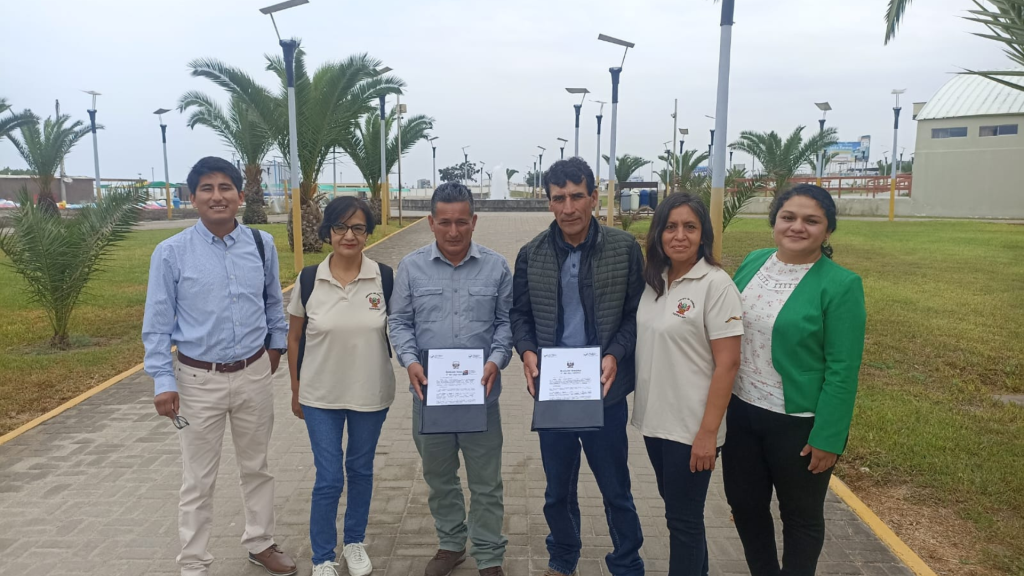
Last month Nature and Culture Project Managers, Lleydy Alvarado and Elvis Allauja attended the National Service of Protected Natural Areas (SERNANP) annual meeting. SERNANP, an agency of Peru’s National Ministry of Environment, presented the official declaration of two new Private Conservation Areas (ACP) Yasgolca-Santa Lucia, Montevideo in Amazonas, and Utco in Cajamarca. Both areas were declared in February of this year, and together they protect more than 19,000 acres of the dry forests of Marañón, Yungas, and montane forests.
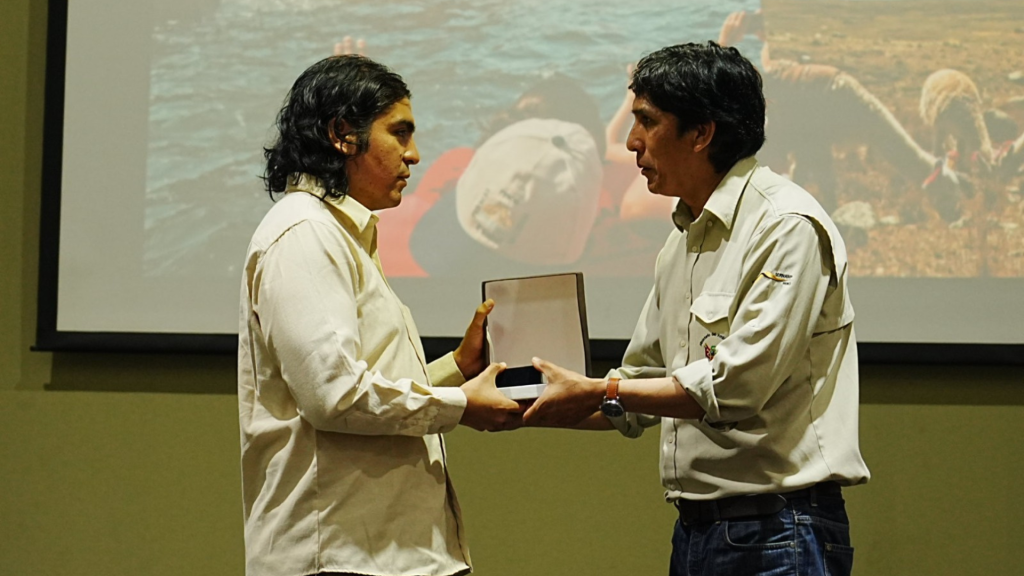
SERNANP meeting in Peru where the team was recognized for their work with Utco and Montevideo Private Conservation Areas.
Our team in Peru was recognized along with the presidents of each of these two new Private Conservation Areas, with whom Nature and Culture’s technical team collaborated to create the new areas. In response to our team’s dedication to supporting the local effort, SERNANP recognized Nature and Culture for its important contribution to the declaration of both areas and for being an ally in the departments of Piura, Cajamarca, Amazonas, Huánuco, Loreto and Ucayali.
Alan Sánchez, Nature and Culture’s Environmental Legal Coordinator accepted the recognition award on behalf of the team.
Two new protected areas cover more than 19,000 acres
The Yasgolca-Santa Lucia Private Conservation Area, Montevideo protects 11,677.43 acres and is an important water source for communities in the Amazonas region of Northern Peru. Establishing this protected area was crucial for the local community because it plays a fundamental role in water regulation. This ecosystem is also a significant carbon capture and connects to other nearby protected areas. According to Lleydy Alvarado, both newly declared areas connect with other conservation areas, which creates a larger wildlife habitat. It’s not enough to simply establish areas, says Lleydy, they need to be connected so the team’s environmental services are more effective.
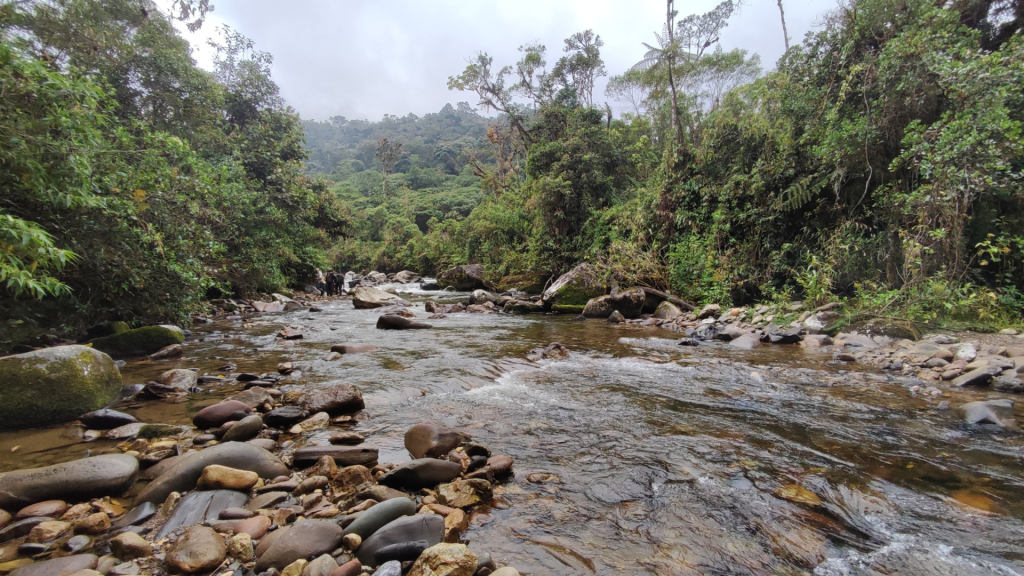
The Yasgolca-Santa Lucia Private Conservation Area, Montevideo protects 11,677.43 acres and is an important water source for communities in Amazonas.
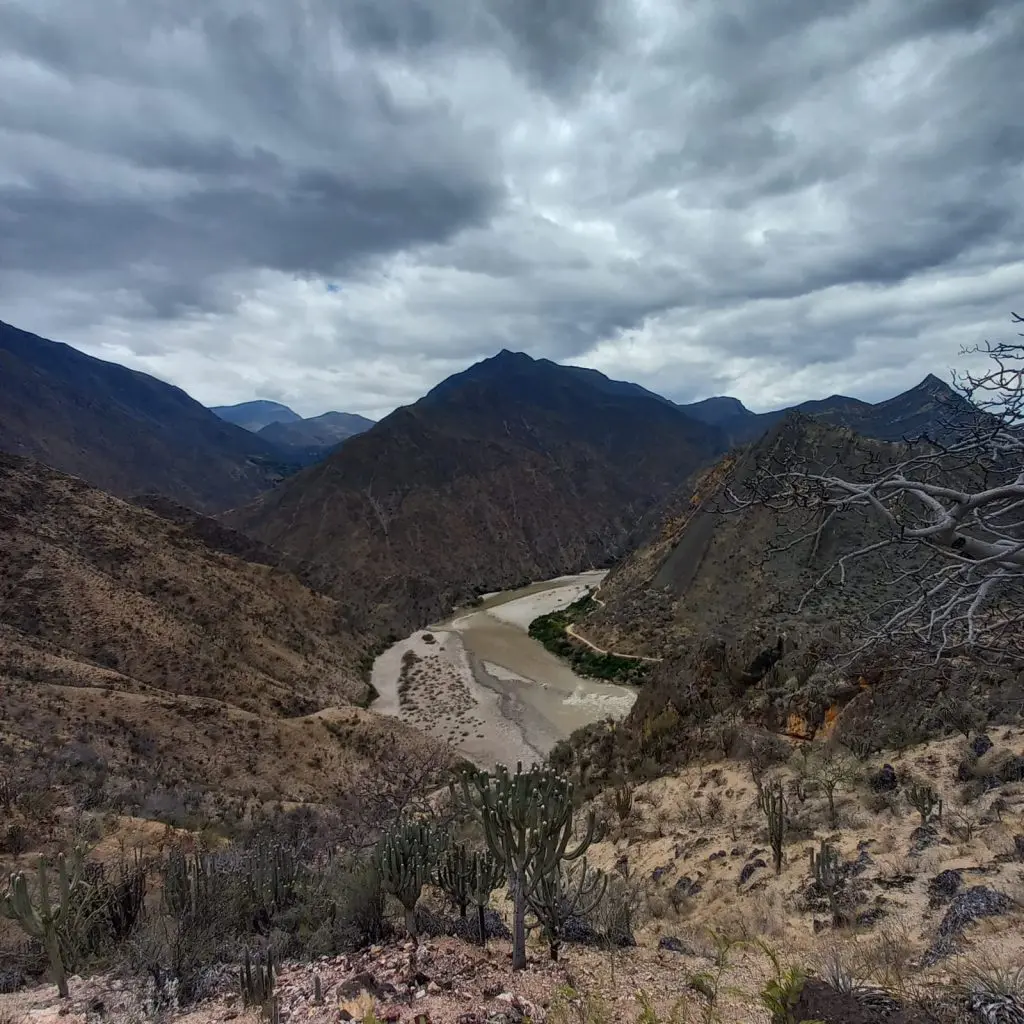
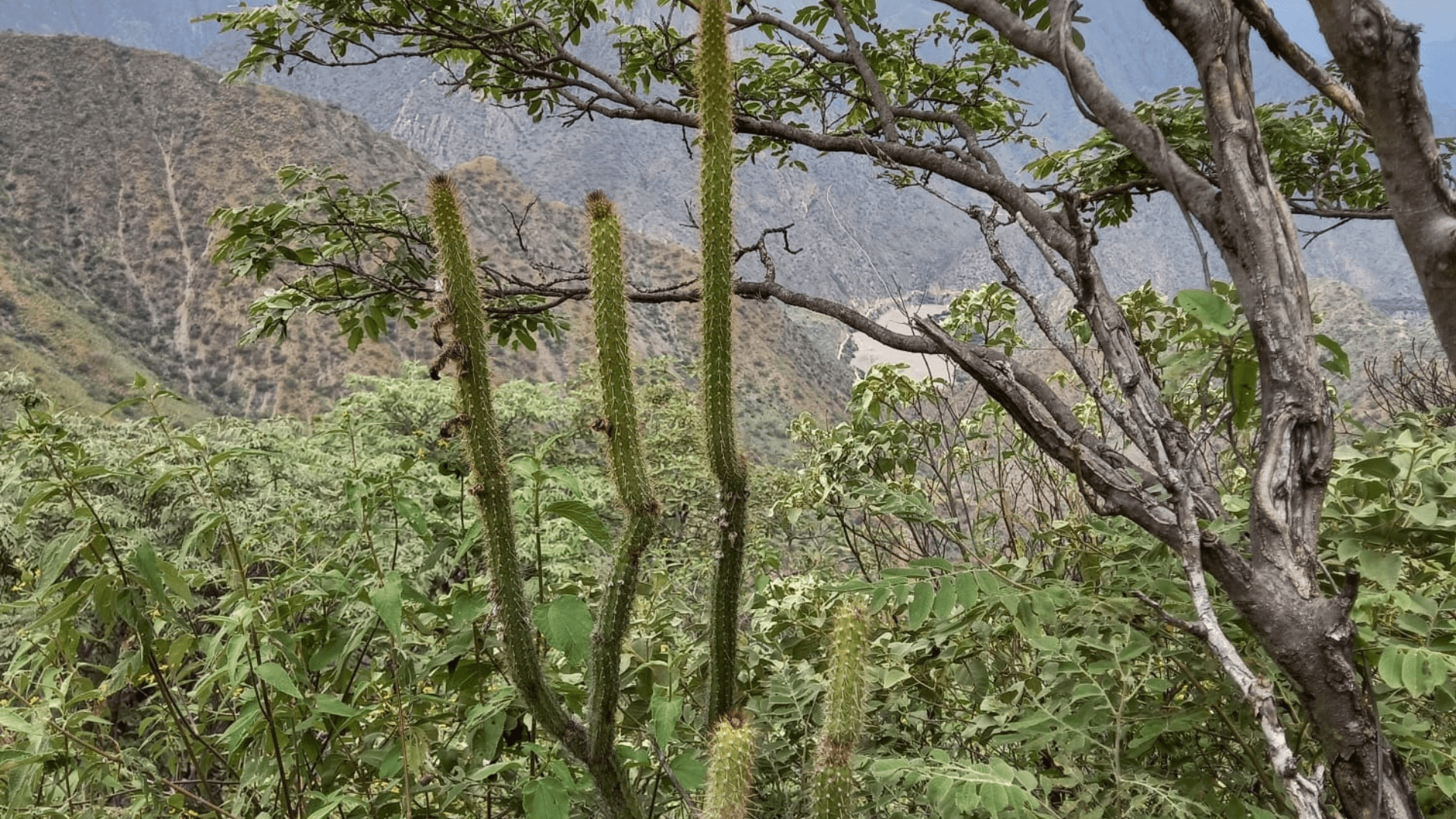
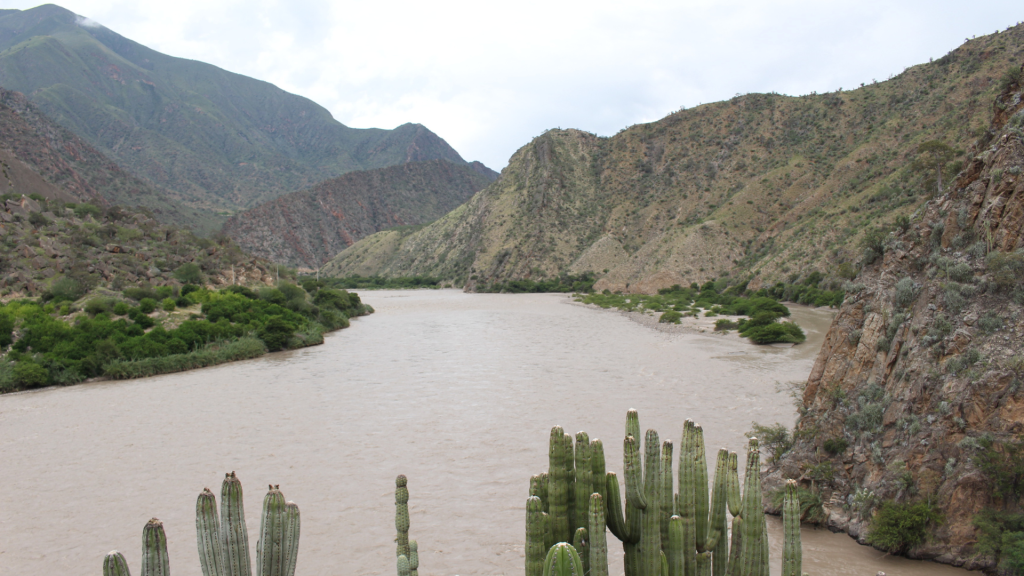
The Utco Private Conservation Area protects 7,562.31 acres of dry forest. This unique ecosystem is known for being an epicenter of biodiversity. It is home to a large number of endemic birds, reptiles, amphibians, and plants. Together these two new areas protect over 19,000 acres and are critical to local inhabitants’ well-being.
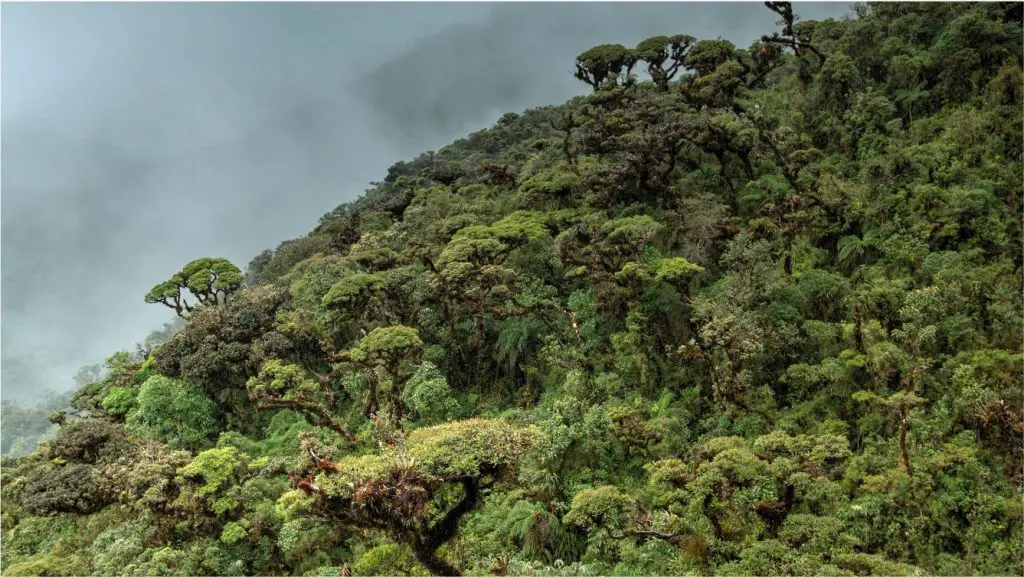
View from within the Utco Private Conservation Area that protects 7,562 acres of dry forest. Photo courtesy of Elvis Allauja
Congratulations to our team in Peru and the communities of Utco and Montevideo for their determination to conserve their ecosystems.
Real Stories. Real Impact.
New protected areas, beekeeping for conservation, and gender equity in reforestation are a few of the stories you’ll explore in our 2023 Spring Newsletter!
Make a donation today to continue supporting projects like these!
The 6th Assessment Synthesis Report from the Intergovernmental Panel on Climate Change (IPCC) warns that despite progress in climate mitigation efforts, the current pace of action is insufficient to keep global temperatures below the threshold of 1.5°C. That is the threshold beyond which scientists say climate impacts increase significantly and damage becomes rapidly irreversible. Below is a summary of the report’s findings.
Action needs to happen now, this is the decisive decade
To ensure temperatures do not exceed the threshold of 1.5°C, global greenhouse gas (GHG) emissions will need to peak within this decade, decline by 43% by 2030, and 60% by 2035. Adverse climate impacts are already far more extreme than initial reports anticipated. The current global surface temperature has already warmed 1.1°C above preindustrial levels. With this alone, there has been an increase in biodiversity loss, drought, extreme heat, and flooding, among other impacts. Despite a decrease in the cost of green energy, improved technologies, and national commitments to reduce GHG emissions. These measures have continued to increase and will fall short. Unsustainable energy use, land use, lifestyles and patterns of consumption and production all contribute to the GHG emissions. A rapid scaling of policy and increased funding to climate is needed to achieve climate stabilization.
Even small increases in overall temperature matter
The report defines the risks, adverse impacts, and related losses and damages from climate change at varying degrees of temperature rises. At each tier, the loss of biodiversity increases, access to clean water and food decreases, and sea levels rise. There is no question that any positive changes to keep global warming in check will help to avoid further loss of life and encourage ecosystem health. At a certain point, it is no longer reversible. As certain losses and damage occur, reversal and adaptation options are far less feasible, if even effective at all. It is important to take every action possible at this very moment. Hope lies in the prevention of further tipping the warming scales.
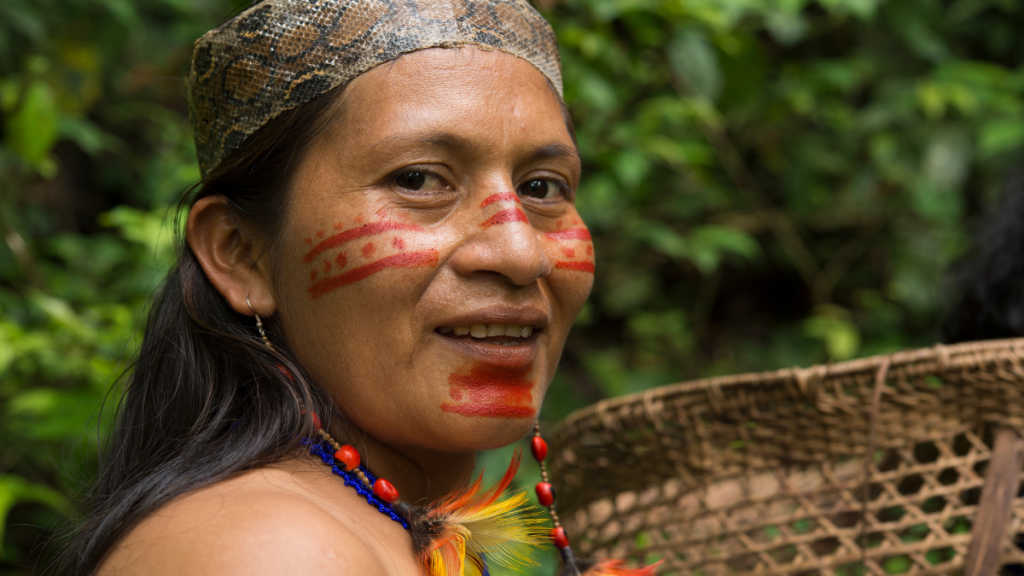
A member of the Shuar Indigenous nationality in the province of Morona Santiago, Ecuador.
Biggest impacts threaten those who have historically contributed the least to climate change
According to the IPCC, nearly half of the global population lives in areas where their lives or livelihoods are under threat of climate change. It is said that between 3.3 billion and 3.6 billion people live in countries that are highly vulnerable to climate impacts, including those within Central and South America where Nature and Culture operates. In addition, many of these areas face extreme poverty, governance challenges, and limited access to financial resources or technical support. In this 6th Assessment Report, the IPCC also notes that climate adaptation challenges are often “exacerbated by inequity and marginalization linked to gender, ethnicity, low income or combinations thereof, especially for many Indigenous Peoples and local communities.”
Data on the global inequalities of CO2 emissions reveals that higher-earning countries as well as higher-earning individuals produce more of the world’s GHGs and yet it is those who are producing the least who are most heavily impacted. The highest income-earning households contribute around 45% of the world’s consumption-based CO2 emissions, while the bottom 50% account for only around 15%.
The threats of climate change weigh more heavily on regions that are not historically responsible for the production of GHGs; however, the world is looking to many of these areas for quick adaptation efforts or asking for limitation on development that could provide an immediate higher standard of living. That is why it is important to allow these most vulnerable groups or regions inclusive governance, and transparent and participatory decision-making for mitigation and adaptation efforts.
Tropical forests provide ecosystem services such as food security and clean water and air.
What is Nature and Culture’s role?
Protecting Earth’s remaining oceans, plants, animals, and soils is the most cost-effective climate adaptation option. The most potential exists in preventing deforestation in tropical regions. For Nature and Culture that means maintaining tropical forests in the Amazon and Andes. Long-term management of our protected areas supports biodiversity resilience in the region and supports ecosystem services at a global scale, including the sequestration of billions of tons of carbon. Beyond the protection and management of these threatened forests, reforestation and agroforestry (or sustainably cultivating native crops) also contribute to climate mitigation. All these efforts can positively affect local communities if they are done in coordination with the people who live in these areas. Reforestation can improve air quality, access to clean water and food, and agroforestry techniques include economic benefits that have potential to reduce poverty and improve local livelihoods.
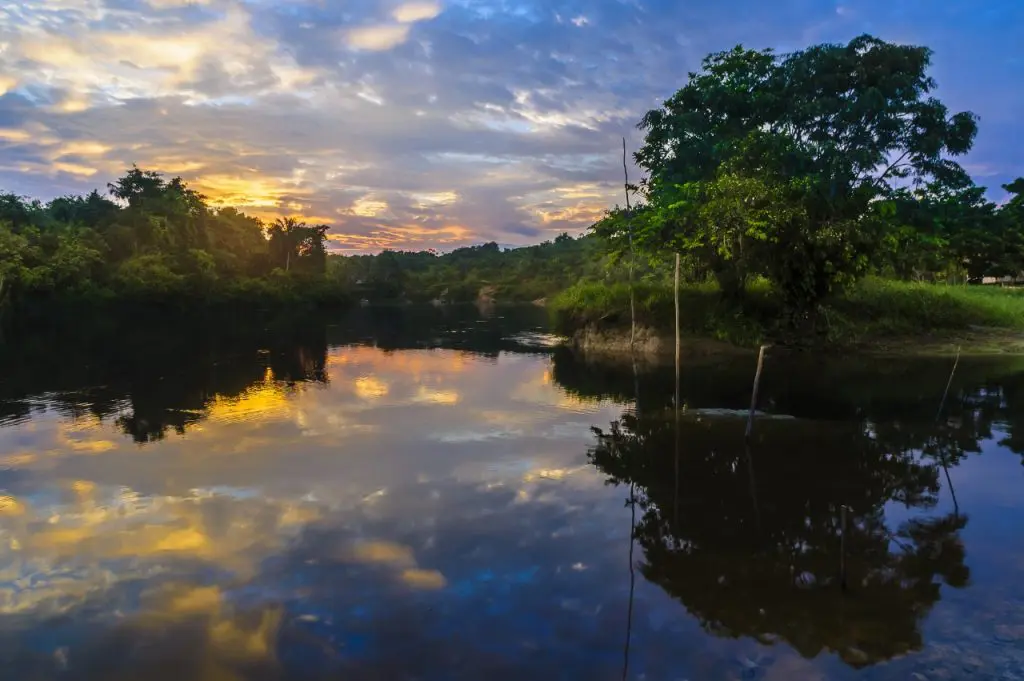
The Amazon Rainforest stores billions of tons of carbon and provides ecosystem services to the entire planet. Protection and long-term management of these tropical forests benefits all life on the planet.
Many climate adaptation solutions already exist and positively impact global well-being
According to the report, there are feasible, effective, low-cost, low-trade-off options already available, and many include wider societal benefits. A major conclusion of the synthesis is the need to prioritize equity, climate justice, social justice, and inclusion in the near-term actions to mitigate climate change.
Focusing on societal enhancements like education, hunger, poverty, gender, and energy access can support regions and people with the highest climate change vulnerabilities. It not only supports overall societal well-being, but it can also scaffold climate adaptation development programs. Recognition of the inherent rights of Indigenous Peoples is also crucial to successful adaptation across forests and other ecosystems, according to the report. This has always been a cornerstone of Nature and Culture’s work, prioritizing the needs of the local communities we work with.
Looking to communities, governments and businesses for leadership
Cooperative climate mitigation is essential. This means including climate adaptation practices that are informed by Indigenous Peoples and local communities. Truly effective climate action will involve coordination among many stakeholders. A prime example of this in action is in our work on the Amazonian Platform, This is a agreement between 7 Indigenous nationalities and local governments to manage 11 million acres of the Amazon rainforest. Nature and Culture supports projects that require buy-in from varying levels of government and marketplaces and include frameworks that hear a multitude of voices, including Indigenous Peoples and local communities.
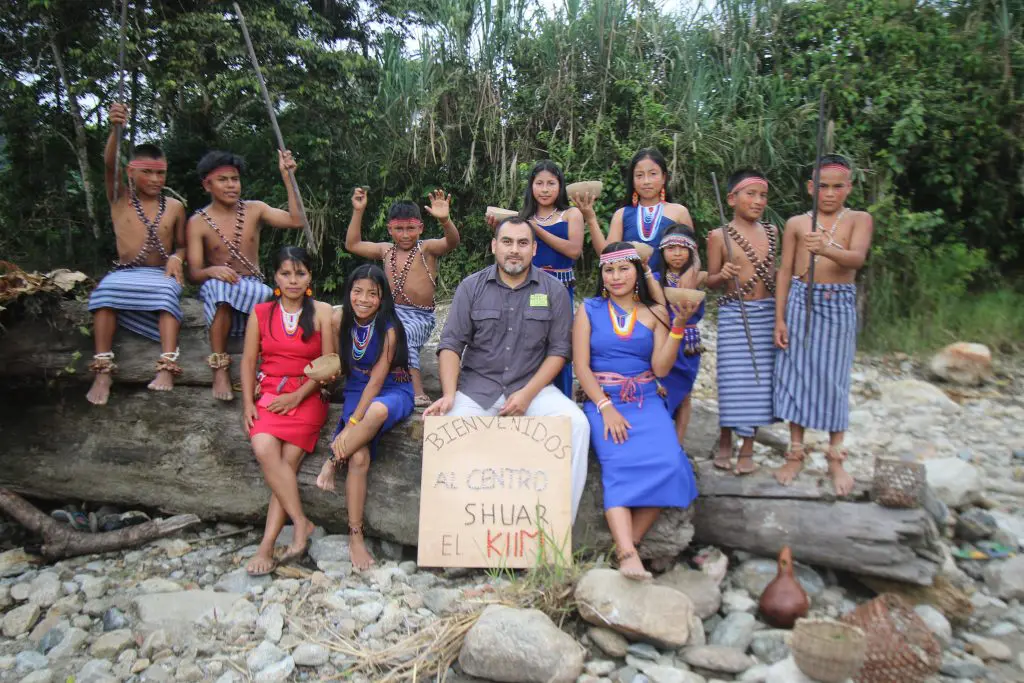
At the Shuar El Kiim Center, the first Indigenous-managed, nationally recognized conservation area is celebrated by members of the Shuar community with Nature and Culture technician, Trotsky Riera.
The climate adaptation measures we implement are done in close collaboration with Indigenous Peoples and local communities and in partnership with local government. These types of projects put people at the heart of the outcome and provide access to finance and technology that would otherwise be unavailable. They often also provide other economic benefits, such as food and water security and improve the overall health of the human populations while safeguarding biodiversity and promoting carbon sequestration.
Please join us in safeguarding our climate future by making a donation today!
Peruvians are a resilient, united, strong, and proudly biodiverse country. We have shown that together we are capable of making small actions to generate big changes. On International Forest Day we want to recognize the efforts of Peruvians who joined the “Plant a tree and sow life” campaign.
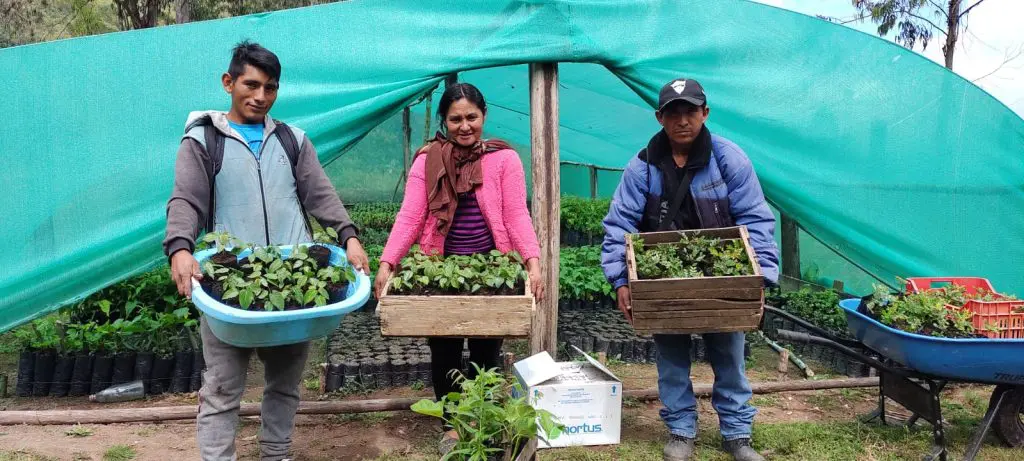
A few months ago, we involved the general public in Peru in the “Plant a tree and sow life” campaign with the aim of giving back to the forest of the peasant communities of Llamapampa La Jalca and San Pedro de Chuquibamba in Amazonas and thereby recovering ecosystem services such as climate control, water regulation, and flood control.
This campaign was born as part of an agreement between the Amazon Voluntary Conservation Network – AMA, which brings together voluntary conservation initiatives, and Nature and Culture International, which works in the Private Conservation Areas of both communities.
#Residents of the communities of Llamapampa La Jalca and San Pedro de Chuquibamba in Amazonas who took part in the campaign
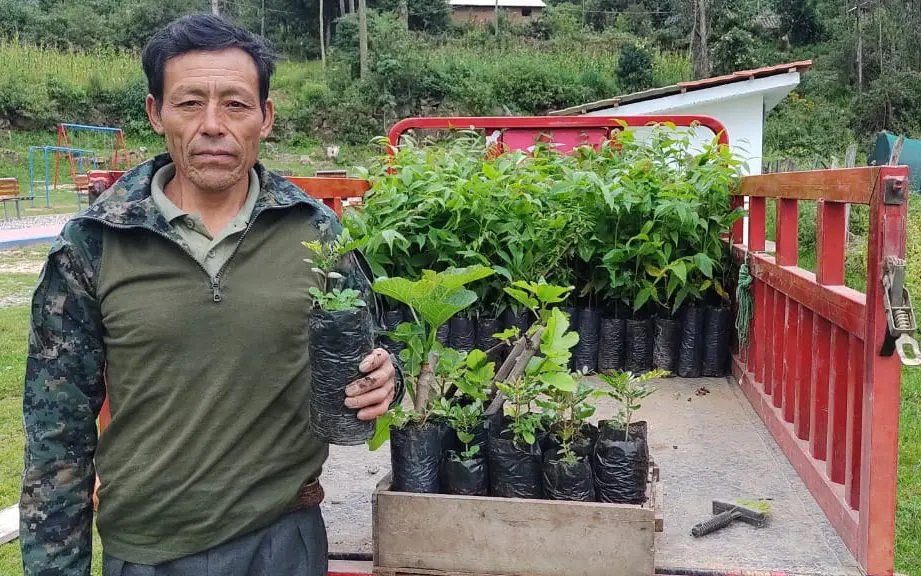
During the campaign, the main protagonists were the residents of the communities, who took care of the native plants in the community, until they had the resources to move them to the forest and plant them in degraded areas. Now, these trees are monitored and receive the necessary care to develop.
#Napoleón Vega Escobedo took part in the campaign
We spoke with Napoleón Vega Escobedo, president of the Palmira Forestry-Agricultural Association, in the Leymebamba district, and he describes the campaign as an opportunity to strengthen the propagation of native and medicinal species, the latter with added value for marketing.
Thanks to the “Plant a tree and sow life” campaign, dozens of Peruvians did their bit to maintain the good condition of the forest, improve the climatic conditions for humanity and the hundreds of animals that live in both ACPs, because there they find necessary food and ideal setting to reproduce.
As a supporter of Nature and Culture, take a moment to review our impact in 2022!
Our 2022 Annual Impact Report is a testament to our commitment to community-based conservation. As trailblazers in this field, the well-being of local communities is as important as protecting and conserving natural resources. For us, those go hand in hand.
Our work is organized into 5 key strategy areas: wild places, climate, water, people, and species. As you read through this report, you’ll see how our team approaches our projects through these lenses, ensuring the long term overall health of the areas we protect.
Please remember that none of this would be possible without the generous support we’ve received from so many of you!
There are two new conservation areas located in Cajamarca and Amazonas, Peru which protect 19239.74 acres of dry forest, pajonal, and montane forests.
The conservation areas will protect these ecosystems, the habitat of important species, and strengthen community organization.
The Ministry of Environment of Peru recognized two areas of private conservation (ACP) this week. The ACP UTCO in Cajamarca and the ACP Yasgolca-Santa Lucia, Montevideo in Amazonas. Both natural spaces have a unique natural wealth.
Utco
The UTCO conservation area protects 7562.31 acres of the dry forest, known for being an epicenter of biodiversity, thanks to the important endemism of flora and wildlife.
9 species of endemic birds, 9 species of endemic reptiles, and an endemic amphibian can only be found in the UTCO conservation area. In addition, “it is a natural research center, where 20 species of endemic flora have been reported in critical danger, such as Parkinsonia Peruviana, Cedrela Kuelapensis, Caesalpinia Celendiniana, and Piptadenia Weberbaueri,” said Elvis Allauja, Nature and Culture International.
The Yasgolca-Santa Lucia Private Conservation Area, Montevideo protects 11677.43 acres of pajonal and montane forest. The area is an important natural source of water, providing this vital resource to communities in Amazonas. Also, it is home to 140 species of birds, 9 species of amphibians, and 14 species of mammals.
Aegialomys xanthaeolus
The area protects threatened species, such as Polylepis Racosa and Cedrela. This area is also home to species such as Johnson’s spatulilla (Poecilotriccus luluae), spectacled bear (tremarctos ornatus), and night monkey (Aotus miconax).
Life and the forest
The officially declared areas connect with other conservation areas, allowing wildlife to have more habitable space, according to Lleydy Alvarado, of Nature and Culture International.
Montevideo’s main ecosystem services are carbon capture and water regulation, which is why Alvarado points out that it is not enough to establish areas, they need to be connected so that their environmental services are more effective.
Long-term protection
For years, it was believed that ecosystems possessed inexhaustible ecosystem goods and services, which has led to the overexploitation of forests. Due to this, the communities of Utco and Montevideo decided to return to the forest and work to achieve the official recognition of their conservation areas.
Photo by Michell León
The process to establish both private conservation areas was made possible thanks to the effort and perseverance of both communities, with the technical support of Nature and Culture International and the support of Re:wild, and Andes Amazon Fund in Utco; and U.S. Fish and Wildlife Service in Montevideo.
[vc_row][vc_column][vc_column_text]
Climate change adaptation, species discovery, and newly declared protected areas in Nature and Culture’s latest round-up of news from 2022.
[/vc_column_text][vc_column_text]
Our strength as an organization lies within the passion of people around the globe who share our same dream. As part of the Nature and Culture community, you help us achieve so much — diverse vibrant cultures; wild places alive with plants and animals, and clean water and other ecosystem services for communities throughout Latin America. Thank you!
President and CEO of Nature and Culture International
Matt started with Nature and Culture in 2015, as an advisor in the Loja, Ecuador office. For seven years prior to that, he was the Executive Director of the Johnson Creek Watershed Council, a conservation organization in his native Portland, Oregon and also served as treasurer on the board of an Oregon-wide network of conservation entities. Additionally, he’s worked extensively for Native American tribal governments in the US, supporting their treaty fishing and water rights. Matt first fell in love with Latin America — its vibrant cultures, stunning landscapes and incredible biodiversity — while in Honduras in the 1990s as a Peace Corps volunteer. He has a BA from Stanford University in English Literature and Human Biology and a Master’s in Environmental Management from Yale University.
Tropical forests have been in the headlines a lot recently, for all the wrong reasons. Wildfires, illegal deforestation, difficult politics, and the list goes on. However, amidst all the doom and gloom, there are also reasons for hope. One such bright spot is the multi-stakeholder efforts gaining traction in the Pastaza region of Ecuador.
But first, a step back. Why tropical forests? Because, at the moment, tropical deforestation puts only slightly less carbon pollution into the atmosphere than does the United States (and more than the entire European Union combined). Stopping tropical deforestation means keeping carbon out of the atmosphere and is one of the best nature-based solutions we have against climate change. By one estimate, tropical forests could contribute more than 20% of the climate mitigation needed to keep average global temperature rise below two degrees Celsius, the target agreed to in the Paris Climate Agreement.
Thankfully, the global community is taking action on tropical deforestation. For example, the Leaf Coalition, a public – private partnership of governments, businesses, and non-governmental organizations (including among the world’s largest) recently pledged $1 billion to protect tropical forests. The idea that tropical forests are critical to maintaining a livable, or at least comfortable, future on this planet is mainstream now, as it should be.
Despite the urgency, it behooves us to pause and consider not just why to protect tropical forests but how to do so most effectively. Otherwise, we risk pouring money into strategies that don’t work. There’s a saying that the Amazon rainforest is where conservation projects go to die. While I don’t take such a pessimistic view, conservation in the Amazon is complex for myriad reasons: conflicting legal systems, global commodity pressures, dams, roads and other infrastructure, corruption, gold-mining mafias. The list goes on.
“Indigenous peoples have lived on their lands, including those in tropical forests, since time immemorial and they know how to take care of them.”
To save tropical rainforests, let Indigenous peoples lead the effort. That’s the punchline of this essay. Indigenous peoples have lived on their lands, including those in tropical forests, since time immemorial and they know how to take care of them. When RAISG, a consortium of non-governmental organizations mapped and analyzed deforestation trends in the Amazon rainforest, they found that Indigenous territories there had lower deforestation rates even than protected areas. Indigenous peoples truly are nature’s greatest guardians.
This is easy to say but much harder to put into practice. There are entrenched political and economic interests that are indifferent or even hostile to meaningful, rights-based participation by Indigenous peoples because that would disrupt lucrative activities on Indigenous lands (that Indigenous peoples often don’t benefit from). Even when intentions are good, it’s a challenge to foster participatory decision-making that centers Indigenous needs, wants, and worldviews. It can be done though. Pastaza, a province in the Ecuadorian Amazon, shows how.
More than a decade ago, the Pastaza Provincial Government began incorporating conservation principles into the province’s Zoning and Development Plan. Concurrently, several of Pastaza’s Indigenous nationalities began, with Nature and Culture International’s support, enrolling portions of their lands into Ecuador’s SocioBosque program, which pays communities for conserving their communal forests.
These early achievements set the stage (more below on how) for the creation, in 2017, of a 6.2-million-acre provincial protected area. Subsequently, the partners in this effort — the provincial government, Pastaza’s seven Indigenous nationalities, the Confederation of Indigenous Nationalities of the Ecuadorian Amazon (CONFENIAE), and several conservation NGOs — developed and are now implementing a REDD+ plan to reduce deforestation and create a conservation-based economy in the protected area.
Reducing Emissions from Deforestation and Forest Degradation (REDD+ for short) is a United Nations framework intended to guide and fund developing countries in reducing greenhouse gas emissions from tropical deforestation. There’s a lively ongoing debate as to REDD+’s pros and cons. Some criticisms about REDD+ are ideological: nature shouldn’t be commodified. Some are practical: REDD+ payments are linked to reducing deforestation rates so areas with historically low deforestation have limited ability to secure REDD+ credits. In other words, REDD+ rewards improvement, not being good in the first place. One of the most salient criticisms is that, by and large, REDD+ benefits haven’t reached the Indigenous peoples who do the most to save tropical forests.
Although REDD+ has shortcomings, we should improve, not abandon it. And there are exciting advances creating REDD+ models that include Indigenous peoples in decision-making and ensure that Indigenous communities see real benefits. That’s what happening in Pastaza.
As a member of the Governors’ Climate and Forests (GCF) Task Force, the Pastaza Provincial Government has formally endorsed GCF’s Guiding Principles for Collaboration between Subnational Governments, Indigenous Peoples and Local Communities, as has CONFENIAE. These 13 principles, based on Indigenous rights recognition and security, participation, and benefits sharing lay out a collaborative framework between sub-national governments and Indigenous peoples to protect forests and mitigate climate change.
To operationalize these principles in Pastaza, an inclusive governance structure has been created to oversee and manage the provincial protected area and the REDD+ plan being implemented within. The governing consortium includes a Consultative Council comprising representatives of the seven Indigenous nationalities in Pastaza, each of whom have a vote, as well as a technical working group comprising 10 conservation non-profits. The Consultative Council recently forged an agreement that outlines a Free Prior and Informed Consent process before any REDD+ implementation activities proceed in indigenous territories. In terms of benefit sharing, the government, Indigenous and NGO partners in Pastaza are committed to incorporating Indigenous territorial life plans into the provincial area management plan. These life plans will be funded through REDD+.
Three other factors have contributed greatly to Pastaza’s success. First, we received generous funding support from several entities, including the Governors’ Climate Fund, the United Nations Development Programme, and Norway’s International Climate and Forest Initiative to develop the REDD+ Plan. Second, unlike many other Latin American countries, Ecuador has completed a national REDD+ Implementation Plan, which served as a support and guide for Pastaza’s subnational plan. And as mentioned above, efforts are being made to align provincial plans and Indigenous territorial life plans in meaningful ways. This is not to say that national, subnational and Indigenous conservation visions and policies always align, but when they do, it can have a positive amplifying effect. Last, Pastaza enjoys the peer support of the 39 other state and provincial members of the Governors’ Climate Fund.
Formal structures are important, but successful partnerships are based on trust. Twenty years ago, I heard a tribal leader from the Confederated Tribes of the Umatilla Indian Reservation say in a meeting with a US government agency, “Paper doesn’t talk to me.” What he meant was that there’s no substitute for face-to-face human connections to build trust: eating together, laughing together, just sitting together.
That’s why the early activities in Pastaza were important. We phased the milestones in Pastaza sequentially and achieved them gradually. Slowly but surely, we layered success atop success. This was deliberate, to build trust. In our world of fleeting attention spans and instant gratification, this kind of patience is hard to muster and rarely aligns with short funding and political cycles. But it’s necessary if we are to achieve the lasting results we want.
Nature and Culture is working to develop a connectivity corridor that spans 5 million acres, protecting key ecosystems and diverse habitats.
We are working with community partners and government officials to develop the first “bi-national” corridor in South America. The proposed Andean Corridor will connect mountain habitats in southern Ecuador and northern Peru, creating an intact biological corridor that crosses international borders. The end result will unite three of our existing landscape mosaics. With this corridor, wide-ranging species that traverse the area will have unencumbered mobility in their natural habitat.[/vc_column_text][vc_column_text]
Nature and Culture Spotlights Connectivity
The Andean Corridor was initially set in motion fifteen years ago with the establishment of our Sangay Podocarpus mosaic, Ecuador’s first connectivity corridor. The impetus for this mosaic was a noteworthy gap in protected areas between Sangay National Park and Podocarpus National Park in the southern Ecuadorian Andes. Because our conservation model values connectivity, we partner with local expert conservationists to customize conservation areas based on the needs of endangered species.
Since the establishment of the Sangay Podocarpus mosaic, we’ve added 11 protected areas in the region. The Andean Corridor will expand this area even further to 236 miles along the Andes thus linking a chain of protected areas.[/vc_column_text][vc_single_image image=”22203″ img_size=”large” add_caption=”yes” alignment=”center”][vc_column_text]
Three of our Landscape Mosaics Already Contribute to the Andean Corridor
The Sangay Podocarpus and Podocarpus El Cóndor mosaics in Ecuador span the páramo grasslands, montane forests, and cloud forest ecosystems. Whereas the North Andes mosaic in Peru encompasses some of the most diverse, fragile, and complex cloud forests on Earth.
Overall this region encompasses some of the most biologically diverse places on our planet. The Tropical Andes are a global biodiversity hotspot. For example, the area contains about one-sixth of all plant life in the world and boasts the largest variety of amphibian, bird, and mammal species. Its ecosystems help to regulate the natural cycles that produce and renew the planet’s air, water, and climate.[/vc_column_text][vc_column_text]
Species Monitoring to Improve Conservation Efforts
Habitat range is a strong indicator of species’ vulnerability. By combining ecosystems together into landscape mosaics, networks of wildlife movement are protected. This helps maintain whole species’ survival.
Some wildlife travel long distances to migrate seasonally, others need to disperse away from their natal groups to find new home ranges to prevent inbreeding and competition. For these wide-ranging species, like the Andean bear that can traverse up to 150 miles of terrain a day, protecting these far-reaching ecosystems means giving these animals adequate room to roam.[/vc_column_text][vc_column_text]To learn more about how we are partnering with local wildlife specialists, watch our panel discussion, Conserving Habitat for Wide-Ranging Species in the Andes. Our team and local species specialists presented on the conservation needs of three wide-ranging, endemic species — the Andean bear, black-and-chestnut eagle, and the pampas cat.[/vc_column_text][vc_video link=”https://youtu.be/nbhAHKdAPik”][/vc_column][/vc_row]
[vc_row][vc_column][vc_column_text]
The best defenders of nature, Indigenous nationalities live sustainably within the most biodiverse places on the planet.
That is why Nature and Culture prioritizes people in our conservation efforts. We provide extensive technical and legal support for communities to define and achieve their own conservation goals. From land protection and sustainable use of the land to the documentation of Indigenous culture, our conservation process examines all components of a potential project.
New protected areas, bioeconomy projects, environmental education, and some of our largest conservation efforts to date in Nature and Culture’s first round of highlights from 2022.
Nature and Culture International’s strength is in people who share the same dreams: of diverse vibrant cultures; of forests and savannas alive with plants and animals; of clean water and air and a livable climate.
The importance of biodiversity and the threats it faces
[/vc_column_text][vc_column_text]
Biodiversity describes the “biological diversity” of life, whether that be throughout the entire planet or for an individual ecosystem.
It encompasses everything from variations in genetics to all the species in that area, including plants, animals, fungi, and even bacteria. The biodiversity that we know today is the result of billions of years of evolution and it dictates how life interacts with its environment.[/vc_column_text][/vc_column][/vc_row][vc_row][vc_column][vc_column_text]
Why is biodiversity so important?
[/vc_column_text][vc_column_text]We are much more reliant on the ecosystem services that biodiversity provides than it may appear. Biodiversity provides us with many services including clean air and freshwater. Biodiversity also acts as a barrier between us and zoonotic diseases and can also provide us with valuable medicines. There is also a great deal of evidence to show that there’s a positive link between increased biodiversity and our mental health. This makes maintaining biodiversity incredibly important for our survival, as well as all life on the planet.[/vc_column_text][/vc_column][/vc_row][vc_row][vc_column][vc_column_text]Global biodiversity is so rich that we haven’t come close to discovering the number of species there currently is across our planet. There is so much we still don’t know about how these unknown species contribute to their ecosystem. We may lose essential parts of our world before it has even been discovered.[/vc_column_text][vc_single_image image=”21556″ img_size=”large” add_caption=”yes” alignment=”center”][vc_column_text]This is particularly true for forests, which contain the largest amount of biodiversity on the planet. According to the UN Environmental Program (UNEP) more than 80% of terrestrial animals, plants and fungi species are found in tropical forests. Nature and Culture emphasizes the importance of saving large areas of rainforest to protect these valuable ecosystems. We partner with Indigenous and local communities who live in the areas we work to protect and are best equipped to manage their territory. This leads to more successful biodiversity conservation.[/vc_column_text][vc_single_image image=”20204″ img_size=”large” add_caption=”yes” alignment=”center”][/vc_column][/vc_row][vc_row][vc_column][vc_column_text]
What is threatening biodiversity?
[/vc_column_text][vc_column_text]Human activity is having an extremely negative impact on biodiversity. WWF’s 2018 Living Planet Report estimated that there has been a 60% reduction in global populations of mammals, fish, birds, reptiles and amphibians in last 50 years. When this report was published, it was a major shock to the world and highlighted our fears of how critical the situation is. This loss of life has put many species on the brink of extinction and whole ecosystems are suffering.
Major threats to biodiversity and individual species include habitat degradation, climate change, invasive species, over-exploitation and increased pollution, most of which are a direct result of human activities. In the Amazon rainforest, deforestation is occurring at an unprecedented rate for agriculture (e.g. soy bean and palm oil plantations and cattle ranching), mining, unsustainable logging and development (e.g. roads and infrastructure). This degradation is also exacerbating climate change since the Amazon retains a large proportion of the world’s carbon, which would otherwise be in the atmosphere.
To make matters worse, fires have been increasing across major forested habitat. Even though fires naturally occur in many areas, degraded forests are particularly susceptible. By reshaping the biodiversity in an area, we are restructuring the whole ecosystem and making them less resilient to natural disasters.[/vc_column_text][vc_single_image image=”21560″ img_size=”large” add_caption=”yes” alignment=”center”][/vc_column][/vc_row][vc_row][vc_column][vc_column_text]Other risks to biodiversity include the wildlife trade, which pulls large numbers of animals from their natural environment for pets, bushmeat or traditional medicines. These include keystone species that are critically important to the structure of the ecosystem. This trade has dragged animals such as pangolins, multiple primate species, elephants and rhinos to the brink of extinction. Causing the elimination of one species is a tragedy on its own, but it also threatens the biodiversity of the area.[/vc_column_text][/vc_column][/vc_row][vc_row][vc_column][vc_column_text]
What can you do to help to conserve it?
[/vc_column_text][vc_column_text]It may seem as if we are on an unavoidable slope toward disaster, but there is still plenty that you can do to help reduce biodiversity loss. Making more sustainable choices is key since most deforestation, over-exploitation, and other destructive activities are driven by demand. Switching to local and in-season foods or checking for sustainable materials on packaging is a first step in helping to reduce the demand for unsustainable goods.[/vc_column_text][vc_single_image image=”21573″ img_size=”large” add_caption=”yes” alignment=”center”][vc_column_text]You can also help by supporting efforts to return land to Indigenous peoples. It is becoming increasingly apparent that Indigenous communities are better stewards of their land and protect vital ecosystems. Donating to organizations like Nature and Culture will increase resources to help with this transition. By supporting our work, and the work of similar organizations, you can be part of the change to protect our remaining crucial biodiversity, and hence, securing our future.[/vc_column_text][/vc_column][/vc_row]
[vc_row][vc_column][vc_column_text]
Our Mosaic Model is part of our conservation strategy to connect protected areas.
[/vc_column_text][/vc_column][/vc_row][vc_row][vc_column][vc_column_text]Although protecting each individual ecosystem is important, whether it be the habitat of an endangered species or an ecosystem that stores large quantities of carbon, our Mosaic Model emphasizes connecting and protecting larger eco-regions which we call “mosaics.” This strategy considers the connectivity and dynamic processes across ecosystems and large landscapes. Helping to improve ecological flows and species movement in more dynamic conserved areas makes long-term protection more likely.[/vc_column_text][vc_column_text]So, what exactly are mosaics? [/vc_column_text][vc_column_text]In what is traditionally considered an “art mosaic,” an individual tile may be beautiful on its own, but when integrated with other tiles, working with varying colors, shapes and patterns a striking image emerges.
In the field of conservation ecology, “landscape mosaics” work similarly in that they combine varying ecosystems, or patches of land, ultimately coming together to form a networking, functioning landscape. While incredibly wonderful on its own, each ecosystem still relies on surrounding ecosystems to maintain full health.[/vc_column_text][vc_column_text]Why are mosaics important? And what do they have to do with connectivity?[/vc_column_text][vc_column_text]By combining ecosystems together in these landscape mosaics, networks of wildlife movement are formed. This helps maintain whole species’ survival. The movement of individuals is important for genetic flow, which allows for more adaptation to a changing climate and building resistance to degrading ecosystems. Some wildlife travel long distances to migrate seasonally, others need to disperse away from their natal groups to find new home ranges to prevent inbreeding and competition. For many animals, their movement across landscapes also pollinates or disperses seeds, which increases biodiversity.
Unfortunately, deforestation, development, and other extractive activities, are causing ecosystems or small areas of land to be isolated from surrounding ecosystems, thus making it harder for wildlife to roam. These ecological islands isolate wildlife, reducing landscape biodiversity and species’ genetic pools. Overall, the disruption of connectivity stifles ecological processes essential to the well-being of our planet – including clean air and water, nutrient cycling, food security, and climate regulation.
It is therefore vital to keep ecosystems interconnected and interacting, rather than just protecting individual ecosystems or small isolated habitats.[/vc_column_text][vc_column_text]Our Mosaic Model[/vc_column_text][vc_column_text]Our approach is unique in that we not only consider the dynamic web of nature across ecosystems but also work alongside communities and Indigenous groups, as well as national and subnational governments, to define and achieve conservation goals.[/vc_column_text][vc_single_image image=”21476″ img_size=”large” add_caption=”yes” alignment=”center”][vc_column_text]
This model allows us to approach each new protected area with a number of factors in mind, including: connectivity, intact forest, jurisdictional boundaries, shared cultural values, and/or economic similarities, just to name a few.
[/vc_column_text][/vc_column][/vc_row][vc_row][vc_column][vc_column_text]Partnering with local communities, Indigenous nationalities and local governments for long-term management of our protected areas.[/vc_column_text][vc_column_text]Gaining protection for these areas is just half the battle; our work is ongoing, and we must continue to ensure these areas maintain their protected status.In our 22 years, our strategy of partnering and building relationships with Indigenous communities and local governments has paid off, as we have not had a single protected area reversed.By working with Indigenous communities directly, we have a better chance of conserving these important landscapes for the long term. By protecting ancestral culture and the land they live on we are also helping mitigate climate change since millions of tons of carbon is stored in these ecosystems.[/vc_column_text][vc_column_text]Monitoring our Mosaics by examining “Vital Signs”[/vc_column_text][vc_single_image image=”21474″ img_size=”large” add_caption=”yes” alignment=”center”][vc_column_text]Nature and Culture has developed long-term strategies for the continued protection of our landscape mosaics. After an area is officially protected, it requires continuous monitoring and evaluation. In order to maintain healthy mosaics, we provide ongoing supervision, planning, and funding. We assess all our mosaics for “Vital Signs,” in the same way a doctor would for her patient. If the Vital Signs are in good health, we can protect the mosaic for the long haul.[/vc_column_text][vc_column_text]To demonstrate that the mosaic is healthy, the Vital Signs it must have are:
An official recognition of the mosaic by a state entity or international body.
A clear and recognized legal status of conservation areasby the corresponding state, through its different levels of government.
A governance mechanism and natural resource plansensures that there is an entity responsible for the management of the conservation areas, those entities could be public, community, Indigenous and /or private.
A multi-year action planaimed at guaranteeing conservation of the mosaic’s reserve areas.
A financial mechanism, such as conservation funds or water funds, that guarantees economic resources for the conservation and management of its protected areas.
A monitoring and control mechanismtracks the conservation status of natural ecosystems and assesses the effectiveness of the conservation measures that are implemented.
By evaluating these Vital Signs, we can make sure that the work we do has maximum impact and that your donations go to the most valuable causes, to protect important landscapes and the communities that rely on them. You can assist with our ongoing work and help our continued protection of these extraordinary landscape mosaics by giving now using the link below.[/vc_column_text][vc_column_text][vc_btn title=”Give Now” style=”custom” custom_background=”#0f7d3f” custom_text=”#ffffff” shape=”square” size=”lg” align=”center” i_align=”right link=”url:https%3A%2F%2Fgive.natureandculture.org%2Fprotectlargelandscapes%2F|target:_blank”][/vc_column_text][/vc_column][/vc_row][vc_row][vc_column][vc_column_text]
Nature and Culture’s 13 Large-Scale, Eco-Regional Mosaics
[/vc_column_text][vc_column_text]Nature and Culture International understands the importance of protecting these large landscape mosaics and we work hard to protect combinations of ecosystems to conserve the world’s most amazing wildlife and safeguard the communities that rely on them.
We currently concentrate our efforts on 13 large-scale eco-regional landscape mosaics, encompassing about 30 million acres across Ecuador, Peru, Mexico, Columbia, and Bolivia. We work to protect these amazing landscape mosaics for the long term, making sure that the policies put in place to protect them are enforced, which is why your support for our ongoing work in these areas is so important. Below are some highlights from the 13 mosaics that we currently protect across Latin America.
This mosaic is the country’s first connectivity corridor.
Extending 1.4 million acres, this mosaic is home to 101 mammal species, 580 bird species, 182 amphibian species, 45 reptile species, and 31 fish species, with new species still being discovered.
Contains important water resources for populations and contributes to climate change mitigation by storing 125 million tons of carbon.
[/vc_column_text][vc_column_text]Morona Santiago Mosaic[/vc_column_text][vc_column_text]
Contains the UNESCO World Heritage Site, Sangay National Park, and contains everything from tropical forests to glaciers.
Encompasses more than 30 ecosystems, including tropical lowland evergreen forest, which stores large amounts of carbon.
Holds cultural significance and resources that indigenous populations rely on.
Spans nearly 5 million acres including parts of the Amazon rainforest.
Considered one of the most biodiverse areas on Earth, and is home to multiple Indigenous nationalities, including Achuar, Shuar, and Andwa.
Captures 946 million tons of carbon, so assists in mitigating climate change.
[/vc_column_text][vc_column_text]
Peru
[/vc_column_text][vc_column_text]North Andes Mosaic [/vc_column_text][vc_column_text]
Encompasses some of the most diverse, fragile, and complex cloud forests on Earth. Connectivity between its ecosystems is important for species, such as the mountain tapir and the spectacled bear.
An important water source for 2 million people and over 1.2 million acres of agricultural land.
Much is unexplored so additional expeditions for research, which NCI aims to support, are planned.
[/vc_column_text][vc_column_text]Carpish – Rio Abiseo Mosaic[/vc_column_text][vc_column_text]
Spanning 3.6 million acres, and encompassing forest and paramo ecosystems, this mosaic is one of the most biodiverse places on Earth.
Contains a vast array of endemic bird species, including black-bellied tanager and endangered golden-backed mountain tanager.
Creates atmospheric moisture and rainfall and stores carbon, which helps with climate change mitigation.
Local communities rely on this area for freshwater and plants for medicinal purposes.
[/vc_column_text][vc_column_text]Dry Forest of the Marañon Mosaic[/vc_column_text][vc_column_text]
About one million acres of dry forest, savannah grassland, and montane forest located along the Marañon River between the Andean peaks.
Contains the most biodiverse area within the Tropical Andes Hotspot, known as the Grand Canyon of South America.
Home to hundreds of threatened and endemic species due to its unique microclimate and landscape.
Includes the world’s wettest rainforest, mangroves, rocky cliffs, and coastal plains.
One of the most biologically rich areas in the world. Many species here cannot be found anywhere else on Earth, such as the golden poison frog from the Chocó rainforests.
This 18-million-acre mosaic encompasses the Chaco dry forest, Pantanal forest, and Andean Yungas forest, which the Guaraní people rely on for resources.
80% of the mosaic is forest, storing large amounts of Carbon, and is important for species like jaguars (potentially 1000!), peccaries, and lowland tapirs.
Under the constant threat of deforestation from agriculture and cattle ranching.
[/vc_column_text][vc_column_text]Iñao – Tariquia Water Corridor Mosaic[/vc_column_text][vc_column_text]
An important biodiversity corridor for species, such as the military macaw, ocelot and spectacled bear.
Secures water for nearly half a million people, protected under the Reciprocal Agreements for Water.
Contains endemic plant species found nowhere else on Earth, such as the cactus Cleistocactus candelilla and the Guabiyu fruit tree.
[/vc_column_text][/vc_column][/vc_row]
[vc_row][vc_column][vc_column_text]When we think about the release of carbon dioxide (CO2) into the atmosphere, we often associate it with the burning of fossil fuels and not much else. When we see cars’ exhausts releasing black smoke or power stations puffing clouds into the sky, it’s as though we can see the CO2 accumulating in the air. However, there is another major contributor to CO2 emissions that is less often discussed — the destruction of ecosystems with irrecoverable carbon stores.[/vc_column_text][/vc_column][/vc_row][vc_row][vc_column][vc_column_text]
What is ‘Irrecoverable Carbon’?
[/vc_column_text][/vc_column][/vc_row][vc_row][vc_column][vc_column_text]Natural landscapes hold on to carbon in their ecosystems like air trapped in a balloon. When ecosystems are destroyed, it’s like popping that balloon. Just as the air in a balloon escapes, the carbon sequestered in an ecosystem will be released when the landscape is destroyed.
As vegetation such as trees grow, CO2 from the atmosphere is absorbed by the plant through the process of photosynthesis. This is then converted into carbon which is used by the plant like building blocks. Carbon helps them grow and build biomass like trunks, roots, and leaves.
When plants, which naturally store carbon are destroyed, CO2 is released. This is the plant’s biomass decomposing, or in some cases burning when mass areas are cleared. As we see more ecosystems destroyed to make way for agriculture, development, or mining, among other human activities, we see more of this carbon escape and a huge CO2 increase in the atmosphere.[/vc_column_text][/vc_column][/vc_row][vc_row][vc_column][vc_single_image image=”21390″ img_size=”large” alignment=”center”][/vc_column][/vc_row][vc_row][vc_column][vc_column_text]
Certain ecosystems such as peatlands and rainforests become an even bigger climate threat when destroyed because of the vast amount of carbon they store.
[/vc_column_text][/vc_column][/vc_row][vc_row][vc_column][vc_column_text]The increase in CO2 emissions from activities like deforestation in ecosystems where large amounts of carbon are stored would not be reversible in time to reach the 2050 net-zero emissions goal and prevent the significant impacts of climate change. In this case, we call the carbon stored in these ecosystems “irrecoverable carbon.” Meaning, it is vital to protect the ecosystems that hold large amounts of carbon to avoid irreversible damage to our world.
The Amazon rainforest is one of the most iconic rainforests in the world and is well known for being the “lungs of the planet.” With the amount of irrecoverable carbon trapped in its trees, vegetation, and soil, it doesn’t just have the potential for removing CO2 from the atmosphere, but also must be protected to prevent huge amounts of carbon from being released. [/vc_column_text][/vc_column][/vc_row][vc_row][vc_column][vc_column_text]
What does this mean for our world?
[/vc_column_text][/vc_column][/vc_row][vc_row][vc_column][vc_column_text]The whole planet is facing threats from human expansion and destructive activities, so it is difficult to know where to start with conservation. Forests are incredibly important to life on this planet. They provide habitat for plants, animals, and humans. They secure fresh water, release oxygen, and — of course — store carbon.
Threatened ecosystems that hold irrecoverable carbon stores include peatlands, mangroves, old-growth forests, and marshes. The protection of these ecosystems must be a priority in order to prevent major impacts from climate change.
It is estimated that fifteen billion trees are cut down each year globally and this deforestation is adding to the impact we are seeing from climate change. As we mentioned earlier, this puts irrecoverable carbon trapped in ecosystems at risk of being released. This is particularly true for old-growth forests, which are difficult to replenish. Simply planting trees will not recover the lost carbon from deforestation.
What makes the situation worse is the fact that the Amazon rainforest is now showing reduced resilience. In other words, it has a decreased ability to replenish lost areas of forest due to deforestation and extractive activities. As the rainforest loses resilience, we see more, larger-scale disasters, such as uncontrollable forest fires, causing further forest dieback.
With so much forest destruction, particularly in the Amazon, we are continuously seeing increases in CO2 levels in our atmosphere. This needs to stop if we are going to be able to reverse the effects of climate change and prevent the resulting disasters caused by changing weather patterns, famine and loss of biodiversity.[/vc_column_text][/vc_column][/vc_row][vc_row][vc_column][vc_single_image image=”21391″ img_size=”large” alignment=”center”][/vc_column][/vc_row][vc_row][vc_column][vc_column_text]
At Nature and Culture, we strive to safeguard large areas of forest, particularly in the Amazon.
[/vc_column_text][/vc_column][/vc_row][vc_row][vc_column][vc_column_text]We work tirelessly with local communities and governments to establish protected areas to help retain irrecoverable carbon storage, so it doesn’t make it into the atmosphere. We also partner with Indigenous communities to help protect their land and their ancestral sustainability practices. The best protectors of forests and other threatened ecosystems are the Indigenous communities that live within them. By protecting the rights of Indigenous communities, we can also defend natural areas threatened by human activities. This in turn will help prevent future climate change impacts through preserving irrecoverable carbon storage in these ecosystems.[/vc_column_text][/vc_column][/vc_row][vc_row][vc_column][vc_single_image image=”21392″ img_size=”large” alignment=”center”][/vc_column][/vc_row][vc_row][vc_column][vc_column_text]
There are many things you can do to help stop the destruction of irrecoverable carbon-storing ecosystems.
[/vc_column_text][/vc_column][/vc_row][vc_row][vc_column][vc_column_text]You can begin by buying sustainably and not purchasing products produced in threatened areas like the Amazon. Check labels and research companies to be sure that they are working towards more sustainable goals. Don’t buy from companies that encourage logging and clearance of land in these vital ecosystems.
You can donate to our work to protect important ecosystems holding irrecoverable carbon, which helps prevent the potential for uncontrollable consequences of climate change in our future. Find out more about our previous projects and the 22 million acres we have successfully protected so far. By contributing to our cause, you will be helping ecosystems, people, and the planet.[/vc_column_text][/vc_column][/vc_row]
Defining wildlife and ecosystems and how they’re linked
The term, “Wildlife” refers to all life in the wild. It encompasses all living things, including mammals, fish, reptiles, and birds, collectively known as fauna, and sometimes includes plants or flora. These are the components of habitat and play an important role within them.
In contrast, ecosystems are more like a network that includes all wildlife and living parts of the system (biotic factors), but also non-living parts of the environment (abiotic factors), including weather and landscape. Everything in this network is interlinked and is interacting with one another. Ecosystems can be either very small, such as a singular tide pool, or very large, such as a forest. The world is made up of many interlinking ecosystems and, in a few cases, the world itself is referred to as a singular ecosystem.
Why is wildlife so important to its ecosystem?
Picture 1: Food chain with fox as predator (top), rabbit as prey (center), and grass as rabbits’ food source (bottom).
So far, we’ve established that wildlife lives within an ecosystem, but why is it so important to the ecosystem, and why is there a push to protect individual species when whole ecosystems are threatened?
Imagine a simple food chain. In Picture 1, we have a fox as the predator, the rabbits as the prey, and the grass as the rabbits’ food source, also known as the primary producer. Each of these levels (more scientifically known as trophic levels) have a role to play in the chain. The grazing of the rabbits on the grass prevents too much vegetation growth, but the rabbit population is kept in check by the foxes who predate upon them.
Now, if we take one of these levels out, you end up with an interruption, which ripples through the rest of the food chain. For example, in Picture 2a, the grass has been removed. This could happen as a result of drought, or potentially habitat loss through human development. The result of this is that the rabbits do not have enough food and so many may die. This of course will pass on further up the chain and cause issues for the foxes since their food source is low, and it may result in the foxes dying.
Another example, in Picture 2b, is from the top-down, whereby the foxes may be removed or reduced from the chain. This is often seen in the wild when predators are hunted to near extinction or a fatal disease passes through the species. For this example, the rabbits have less predatory pressure and so their numbers increase dramatically. This may be good for the rabbits in the short-term, but if left to their own devices they could overgraze the area. Over time the grass would suffer since it would not be able to regenerate quick enough. Once the rabbits have overgrazed their food source, they then would not have enough food, would compete with one another, and many would be at risk of starvation.
Picture 2a (left) and 2b (right): Food chain where the red cross shows which level has been removed or reduced and images shaded in red show potentially threatened as a result.
The ecosystem network: Yellowstone National Park and the reintroduction of gray wolves
The food chain example is incredibly simple and does not consider the vast array of other wildlife and non-living parts of the ecosystem that could be affected by the loss of a single species like the fox. To truly understand how an ecosystem works, and why wildlife is so important to it, we need to expand further.
The most notorious case of how an entire ecosystem was altered by a singular species is the reintroduction of gray wolves into Yellowstone National Park. In the 1930s, the wolves in this world-renowned location were eliminated from the park through over-hunting, mostly due to the fear of them attacking people or killing livestock. Once wolves were gone, the elk, which had been important prey for the wolves, were able to thrive. With the elk under much less predatory pressure, their numbers increased dramatically and the changes in the ecosystem began.
In Picture 3, you can see a simple idea of what the Yellowstone National Park ecosystem looked like, with the elk at the center of the network. The elks’ increase in number caused a series of indirect consequences for the ecosystem (otherwise known as a trophic cascade) because they were over-grazing and over-browsing the land, including many of the berries that also fed the songbirds and grizzly bears. The elk’s browsing on young plant shoots prevented the growth of shrubs resulting in prey species, such as rabbits, having fewer areas to hide from their own predators. If you think back to the example of the food chain with the fox and rabbit, you should now understand how that would affect all the levels.
The elk were not afraid of staying for long periods at the riverbanks, where previously they could have been attacked by the wolves. They overgrazed young vegetation along the rivers, which weakened the banks and caused riverbank erosion, resulting in the rivers widening. The water also became warmer since the lack of trees and vegetation at the bank meant that there were fewer shaded areas cooling the water down. These changes to the river caused a biodiversity shift in the fish populations. Beavers were also suffering because willow trees on the riverbanks could not grow past shoots. Willows provide beavers with food as well as being the resource that beavers use to create their dams. Without larger willow trees, the beavers were unable to survive winters and so in Yellowstone the population reduced to just one beaver colony.
In 1995, wolves were reintroduced to Yellowstone National Park. As expected, the wolves started to predate on the elk, which kept the elk on the move and so reduced the pressure the elk were putting on riverbanks and other young plants. Suddenly, things began to change and there were berries for the birds and bears, and shrubs for the rabbits and other prey species. Riverbanks were stronger as they held more vegetation, this prevented bank erosion and created more shaded areas, which provided cooler water for fish. However, by far the most remarkable change was due to the growth of willows allowing beavers to use them to create dams to survive the winter. The beavers began to return to Yellowstone and the dams they built raised the water table, so water was available more consistently throughout the year to surrounding vegetation. Since 1995, beaver colonies have been increasing and their dams have changed the course of rivers in Yellowstone National Park.
The whole ecosystem has benefitted from the reintroduction of wolves to Yellowstone because the wolves are what is known as a keystone species, which is an important species, without which, can cause the collapse of their ecosystem. Without the wolves, the elk were not controlled, and the network was falling apart. Now with the wolves returned to the park, the course of the rivers has been altered.
Picture 3: Yellowstone National Park network showing the connectivity of species in the park.
Protecting wildlife at Nature and Culture International
At Nature and Culture International, we believe in protecting wildlife and ecosystems. We are currently working on multiple conservation projects to protect endangered species, such as the spectacled bear in Peru and the Jaguar in Bolivia. Like the gray wolf in Yellowstone, these species are important to their ecosystems so, who’s to say what the consequences of their loss to the habitat would be? You can check out more of our ongoing work.
All wildlife is vital to keep the scales of life balanced. The IUCN estimates approximately 40,000 species globally are threatened with extinction: including mammals, amphibians, sharks and rays, birds, and plants. Our global biodiversity is declining so we all need to come together to prevent our ecosystems from collapsing by protecting every last species.
[vc_row][vc_column][vc_column_text]
Recent documentation of the distribution, population density, and habitat use of the tapir in Peru’s Northern Andes will aid in the conservation of one of the largest and most threatened mammals in the region.
[/vc_column_text][/vc_column][/vc_row][vc_row][vc_column][vc_column_text]The mountain tapir (Tapirus pinchaque) is categorized as a globally endangered species according to the International Union for the Conservation of Nature, despite its wide distribution in Colombia, Ecuador, and northern Peru. The population of this unique mammal has decreased in recent years due to habitat loss caused by forest fires, deforestation, cattle ranching, and agricultural activities. The global population is estimated at less than 2,500 mature individuals.[/vc_column_text][/vc_column][/vc_row][vc_row][vc_column][vc_single_image image=”21179″ img_size=”large” add_caption=”yes” alignment=”center”][/vc_column][/vc_row][vc_row][vc_column][vc_column_text]Nature and Culture International Biologists in Peru, Elio Núñez and Katty Carrillo, gathered information on the distribution and conservation status of the mountain tapir in Peru along with professionals from the Spectacled Bear Conservation Society (SBC Peru), Research Center of Biodiversity and Sustainability (BioS), and the Catholic University of Peru. Studies on the distribution of the tapir in Peru were previously lacking and obtaining an updated review of its preferred habitats would help with conservation efforts.
Based on the occurrence of the species from local sightings and camera trap records, between 2016 and 2018, the scientists expanded on a map of current tapir distribution in the northern Andes of Peru. The Study Area covers a total of 468,814 acres of páramo and montane forest in the provinces of Ayabaca and Huancabamba in Piura; as well as in the provinces of Jaén and San Ignacio in Cajamarca and in the province of Ferreñafe in Lambayeque, of which approximately 60% is within protected areas supported by Nature and Culture International.
This research was recently published in the Journal for Nature Conservation and thanks to this scientific article, recommendations were obtained for the conservation of the montane forests, páramo, and Yungas, all habitats of the mountain tapir. In addition, binational initiatives have been proposed to guarantee connectivity with the populations between Ecuador and Peru. With this new research, the tapir is promoted as a key species in the protection of mountain ecosystems and their water sources.[/vc_column_text][vc_btn title=”Click here to read the publication” style=”custom” custom_background=”#0f7d3f” custom_text=”#ffffff” shape=”square” size=”lg” align=”center” link=”url:https%3A%2F%2Fwww.sciencedirect.com%2Fscience%2Farticle%2Fabs%2Fpii%2FS1617138122000036%23|target:_blank”][vc_single_image image=”21180″ img_size=”large” alignment=”center”][/vc_column][/vc_row][vc_row][vc_column][vc_column_text]In a recent interview, Biologist Carrillo shared, “It is important to generate scientific information in order to provide tools for communities and public institutions to continue protecting Peruvian highlands and montane forests, the habitat of the species in our region.” According to Carrillo, Nature and Culture’s mosaic of conservation areas in the Andes of northern Peru and southern Ecuador protect the mountain tapir habitat, and conservation actions for the species are being promoted.
She also mentioned that the team is currently working in coordination with the Ministry of the Environment, the National Service of Protected Areas, the Binational Plan, the Regional Governments of Piura and Cajamarca, and the local governments to achieve official recognition of the Northern Andes Conservation Corridor. This initiative aims to reduce habitat degradation, forest loss, and fragmentation through connectivity to protect endangered species such as the mountain tapir, one of the emblematic species of the northern Peruvian Andes.
Read more about the mountain tapir by clicking here.[/vc_column_text][/vc_column][/vc_row]
[vc_row][vc_column][vc_column_text]
This newly approved conservation area will add to and unite with two other nearby protected areas.
[/vc_column_text][/vc_column][/vc_row][vc_row][vc_column][vc_column_text]On Monday, December 20, 2021, the Environmental Conservation Area of Cloud Forests and Páramos of Ambulco, was approved unanimously in a session of councilors from the Provincial Municipality of Ayabaca. Nature and Culture International worked with the Regional Government of Piura and the municipal councilors of Ayabaca to demonstrate the importance of the cloud forest and páramo ecosystems.
This new conservation area is located between the Samanga and Tapal communities in Ayabaca, Peru and will protect close to 3,000 acres of land. The protected territory will form part of a conservation corridor that connects the nearby páramos and cloud forests. The effectiveness of protected areas depends not only on whether they are intact and managed, but also on whether they are connected to other protected areas.[/vc_column_text][vc_single_image image=”21083″ img_size=”large” add_caption=”yes” alignment=”center”][vc_column_text]Nature and Culture International and the Regional Government of Piura, together with the local population of Ambulco, developed various field trips for the collection of information to delineate the protected area and carry out biological studies.
It is also noteworthy that both the regional manager of Natural Resources and Environmental Management Engineer, Yony Rivera Córdova and the Director of the SRCAN Engineer Raúl Cevallos Encalada, mentioned that this protected area represents an opportunity to generate sustainable tourist attractions for the benefit of local inhabitants.[/vc_column_text][/vc_column][/vc_row][vc_row][vc_column][vc_single_image image=”21082″ img_size=”large” alignment=”center”][vc_column_text]Iván Mejía Nature & Culture’s Coordinator for the Amazonas and Cajamarca areas indicated that the new environmental conservation area is home to at least 80 species of flora, 46 birds, 6 mammals and 18 insects. The biodiversity in the area contributes to ensuring environmental services and mitigating climate change in the long run.[/vc_column_text][/vc_column][/vc_row][vc_row][vc_column][vc_single_image image=”21081″ img_size=”large” alignment=”center”][/vc_column][/vc_row]
[vc_row][vc_column][vc_column_text]
Indigenous communities are the best defenders of carbon rich ancestral territories in the face of extractive activities such as mining and deforestation.
[/vc_column_text][/vc_column][/vc_row][vc_row][vc_column][vc_column_text]Indigenous people remain in small numbers all over the world. According to the FAO, although indigenous groups only make up 5% of the world’s population, their territories contain more than 80% of the world’s biodiversity. Understanding that indigenous territories encompass such a large amount of the earth’s remaining biodiversity, is the first step to realizing how these frontline communities can be a part of the management plan for the earth.[/vc_column_text][/vc_column][/vc_row][vc_row][vc_column][vc_column_text]
What is climate change?
[/vc_column_text][/vc_column][vc_column][vc_column_text]Climate change has been a topic of interest for several decades, but at the end of October 2021, the COP26 (Conference of the Parties) in Glasgow propelled this issue back to center stage. Climate change is the result of Greenhouse Gases emitted into the atmosphere, most notably Carbon Dioxide (CO2) and Methane (CH4). These gases are produced when burning fossil fuels, through large-scale livestock farming, and other big industrial processes. When these gases remain in the atmosphere, they prevent heat from escaping the earth and so cause a “Greenhouse effect,” causing the planet to warm. This increase may only be a few degrees, but these changes have disastrous consequences for the earth as weather patterns become unstable and wildlife struggles to keep up with rapid changes to their environment.
It would be easy to believe that significant climate change mitigation can only come from behavioral and policy change from large industries and national governments. However, including indigenous people in the decision-making is crucial.[/vc_column_text][/vc_column][/vc_row][vc_row][vc_column][vc_single_image image=”21015″ img_size=”full” alignment=”center”][vc_column_text]
Indigenous Peoples and climate change
[/vc_column_text][vc_column_text]So, how does such a small population have such a dramatic impact on climate change? It’s actually really simple. Much of indigenous territory, especially the Amazon rainforest, is considered a major carbon sink. This means that these areas absorb carbon and reduce the amount of CO2 in the atmosphere, hence reducing the warming of the planet.
Indigenous cultures and traditions are built around sharing nature’s resources rather than exploiting them. These communities depend on their natural environment, and protect their territories to secure their own survival. Indigenous Peoples work to maintain a symbiotic relationship by only taking what they need. This allows the ecosystem to replenish itself, and resources remain secure. Therefore, these vital territories are much more likely to be protected from extractive activities, such as deforestation and mining.
We have a lot to learn from Indigenous Peoples and we will need to, if we are to have a chance at combatting climate change. In the Amazon rainforest, an area the size of a football-pitch is destroyed every minute, meaning less CO2 will be stored and removed from the atmosphere. By protecting forests and other ecosystems, indigenous communities are also protecting the world. This is the reason why having the unique and valuable insight of indigenous community leaders in the decision-making process is so important to secure the earth’s future.[/vc_column_text][/vc_column][/vc_row][vc_row][vc_column][vc_column_text]
Outcomes of COP26
[/vc_column_text][vc_column_text]COP26 was the 26th United Nations Climate Change Conference, which aimed to address and to produce answers to slow, and even reverse climate change. Key outcomes from the COP26 for mitigating climate change included:
These were steps forward, but the conference was attended by many hoping for immediate action for a better future, and they left dissatisfied. A major criticism of the COP26 was the lack of presence from indigenous community leaders at the conference, who arguably know a lot more about the natural areas many countries are pledging to protect.[/vc_column_text][/vc_column][/vc_row][vc_row][vc_column][vc_single_image image=”21017″ img_size=”full” alignment=”center”][vc_column_text]
Why are Indigenous Leaders a focus of COP26?
[/vc_column_text][vc_column_text]Indigenous communities continue to fight for full ownership of ancestral territories, and policies that protect their rights. These rights have proven to decrease destructive practices such as deforestation. Indigenous Peoples can protect their land more effectively than anyone else, however, most funding goes to parks or conventional protected areas. Conflicting laws and policies still allow indigenous territories to be exploited.
Indigenous Peoples will need a lot more support if they are going to be able to conserve the earth’s most valuable territories. By sending indigenous leaders to COP26, there was hope that finally indigenous voices would be heard, and they could help protect their critical land and, in turn, the planet.
The President of the COP26, Alok Sharma, encouraged indigenous leaders to attend the conference and be included in discussions, raising hopes that this conference would be more productive than previous ones. Indigenous leaders who were able to attend COP26 were, for the first time, in the zones where discussions took place instead of the general public areas. This meant they could talk to world leaders and be part of the conversation about climate change rather than watch from the sidelines. Leaders from the Arctic, the Americas and Caribbean were more represented than other groups, however, this was still not enough. Many indigenous leaders were not able to participate due to COVID-19 restrictions, visa complications and lack of funding to travel to the conference, meaning it was not a fully representative event.
For the future of our planet, much more needs to be done to ensure that indigenous communities have their place at the table. There is so much ancestral knowledge and insight yet to be learned. If we can open opportunities for this small percentage of the population to show us how they have thrived for thousands of years, our planet may just have a chance. [/vc_column_text][/vc_column][/vc_row][vc_row][vc_column][/vc_column][/vc_row]
[vc_row][vc_column][vc_column_text]
Thanks to your support, there is a new conservation area in the Peruvian Amazon.
Nature and Culture International celebrates the declaration of a new conservation area in the department of Ucayali in central Peru. The newly established Alto Tamayo Communal Regional Conservation Area (CATA) protects 370,684 acres of threatened habitat, including the last remnants of bamboo forest in Ucayali.